
Pet Care
Pet Grooming MOQs Explained: Stock Lines, Custom Branding and the Numbers Behind a Launch
Pet grooming MOQs span 100 to 10,000 units — bottles, packaging and finished goods are different numbers. How to read the structure behind the quote and plan a first pet line.
Ask five pet grooming manufacturers for their MOQ and you will get five numbers between 100 and 10,000 units — and every one of them can be correct. The spread is not marketing noise; it reflects three different things being counted (bottles, packaging, finished goods) and two different levels of customization. Understanding the structure behind the number is what turns MOQ from a stumbling block into a planning tool.
The three numbers behind every quote
A finished-goods MOQ is what most buyers think they are asking for — how many sellable units per SKU. But manufacturers price around two upstream numbers: the bottle or component minimum (custom bottle components often carry minimums in the tens of thousands) and the packaging minimum for labels and cartons. The quoted finished-goods number is reachable only when the packaging basis supports it. Always ask a supplier to consolidate their answer into one finished-goods figure per SKU before comparing quotes.
The market ranges, honestly
Industry guides place white-label programs on stock formulas and stock packaging at roughly 100–500 units per SKU, with some suppliers allowing minimums to be split across scents or sizes. Private-label programs with custom branding commonly start around 500 to 1,000 units per SKU. Custom bottles push the packaging minimum into the tens of thousands of units, which is why fully custom lines carry the highest entry volumes. None of these numbers is better — they are different points on the same trade-off between entry cost, unit cost and differentiation.
What moves a factory's MOQ up or down
The biggest lever is packaging: stock bottles and caps keep the component minimum near zero, which is what makes low finished-goods MOQs possible at all. The second lever is the formula: stock formulas are already production-proven, while custom formulas commit line time and raw materials at higher minimums. A brand that launches on stock packaging with one custom label design sits at the friendly end of every range.
Comparing quotes without getting lost
Normalize before comparing: same packaging basis, same finished-goods unit count, one-off charges amortized in. The hidden-cost patterns inside small-batch quotes — setup fees, premium formulation charges, rush premiums — are covered in our low-MOQ quote guide; the same logic applies to pet grooming lines.
What our pet programs look like
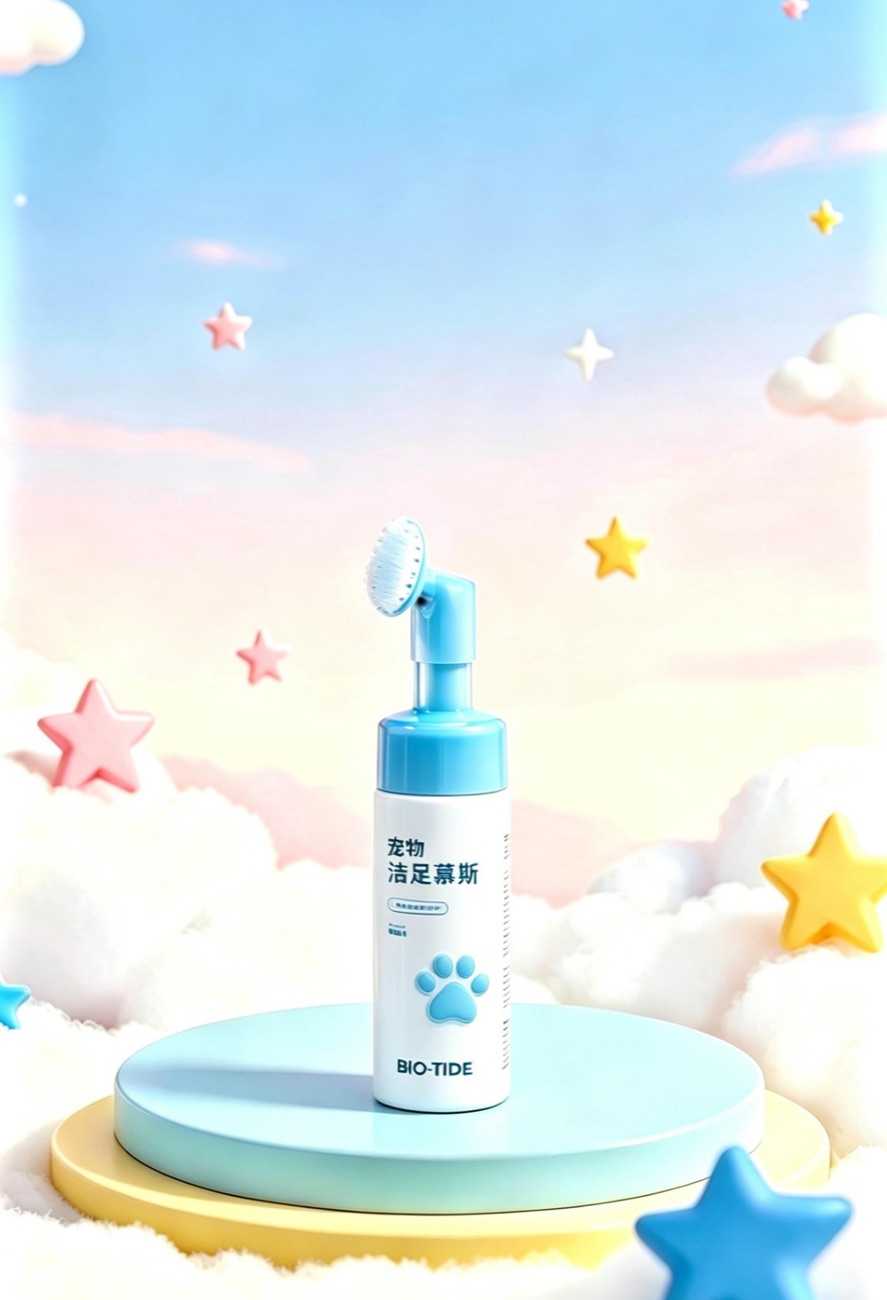
BIO-TIDE's pet grooming programs start at 1,000 units per SKU for a first order, with standard programs at 3,000 and above — a level built for brands that want a production-proven stock-formula launch with room to extend. The line covers 24 coded formulas across shampoos, no-rinse mousses, sprays, ear, eye and paw care, and similar products can be derived or custom-developed on demand. The regulatory and documentation side — claim-safe formulation and export documentation — travels with the program.
Frequently Asked Questions
Why do MOQs differ so much between manufacturers?
Because different things are being counted. White-label programs on stock packaging can run at 100–500 units; custom-branded programs commonly start at 500–1,000; and custom bottles push component minimums into the tens of thousands. The packaging basis explains most of the spread.
Can a MOQ be split across scents or sizes?
Some manufacturers allow minimums to be split across variants within a formula family — it is a specific question worth asking, because a split turns one large commitment into a wider first line at the same total volume.
Is a bigger MOQ cheaper per unit?
Yes — fixed setup costs amortize across more units, so unit pricing improves with volume. The question for a first order is not which unit price is lowest but which total commitment matches the sell-through risk you can carry.
What is realistic for a first pet line?
Three to five SKUs on stock packaging with a finished-goods program in the low thousands is a workable, honest entry — wide enough to test the story, tight enough to afford. The formulas, codes and documentation for such a line are covered in the private label pet shampoo guide.
To see the 24-formula pet line and the 1,000-unit entry program, talk to our team — the formula list travels with the samples.