
Sep 11, 2026Manufacturing & Quality
Raw Material Qualification for Skincare Manufacturing: A Practical Brand Checklist
Learn how skincare brands can qualify cosmetic raw materials through supplier documents, incoming checks, formula trials and controlled change review.

A raw material can arrive with the correct INCI name and still be the wrong grade, concentration or batch for your formula. Raw material qualification is the control process that connects supplier information, incoming checks and formulation performance before an ingredient is released for use.
For a skincare brand, the goal is not to collect the thickest document pack. It is to confirm that the material is identified, suitable for the intended product, consistent enough for production and supported by records that can be reviewed when something changes.
Why raw material qualification matters to a skincare brand
Ingredients influence more than the label. A change in solvent, carrier, particle size, active level or preservation system can affect color, odor, viscosity, processing, stability and the finished skin feel. Two materials sold under a similar commercial description may not behave as direct substitutes.
Qualification creates a clear answer to three questions: what is the approved material, how is each received batch accepted, and what evidence is needed before a supplier or grade changes. This is one part of the wider BIO-TIDE R&D and product development approach.
Step 1: Define the material before asking for documents
Start with the formula need, not the supplier brochure. Record the INCI name, material function, required grade or concentration, carrier system, physical form, target use level and any market limits that matter to the project. If the formula is still being designed, align these points through a structured custom formula development process.
Separate the INCI identity from the supplier trade name.
State whether the material is a neat substance, blend, solution, dispersion or extract.
Record the active or solids level when it affects formula calculation.
Name the target markets and intended product type.
Identify properties that are critical to process or sensory performance.
This definition becomes the approved-material reference. Without it, purchasing may compare prices for materials that are not technically equivalent.
Step 2: Build a focused supplier document pack
The exact documents depend on the ingredient and market, but the review normally begins with a current specification and a representative certificate of analysis. Safety data, composition or technical information, storage conditions, shelf life and regulatory statements may also be relevant.
Evidence | Question it should answer | Brand decision supported |
|---|---|---|
Material specification | Which identity, purity and physical limits define the approved grade? | Sets the acceptance reference |
Certificate of analysis | Does this batch meet the agreed specification? | Supports batch release or hold |
Safety data and handling information | How should the material be stored, handled and controlled? | Supports receiving and production controls |
Composition or active-level data | What is present and at what declared basis? | Supports formula calculation and label review |
Origin and process statements | Are source or processing details relevant to the brief or market? | Supports claim and market screening |
Change-notification commitment | How will the supplier report a grade, site or process change? | Supports controlled requalification |
Do not treat every statement as permanent. Check issue dates, product codes and whether the document applies to the exact manufacturing grade. A generic brochure for a product family cannot replace batch-specific evidence.
Step 3: Control receipt, quarantine and status
Qualification continues when the shipment arrives. The receiving team should compare the supplier, material name, lot number, quantity, packaging condition and documents with the purchase and approved-material records. The material should remain on hold until the required review is complete.
FDA cosmetic GMP guidance describes controls that help prevent mix-ups and contamination, including labeled containers, lot identification, control status and examination or testing against procedures. See the FDA cosmetic GMP guidelines and inspection checklist.
Use a unique internal material code where possible.
Keep approved, quarantined and rejected status clear.
Check seals, damage and transport conditions before sampling.
Link the received lot to its certificate and inspection record.
Define who has authority to release or reject the lot.
Step 4: Match incoming checks to the material risk
A certificate is useful, but it does not remove the need for an incoming control plan. The plan should define what is checked on every lot, what is verified periodically and what requires external or specialist testing. The level of control should reflect the material, supplier history, intended use and consequence of failure.
Identity, appearance, odor, pH, density, viscosity, active level or microbiological quality may be relevant, but not every test fits every ingredient. Methods and acceptance limits must be technically justified. FDA also notes that cosmetic firms remain responsible for safety and should use scientifically sound testing appropriate to the product; its cosmetic product testing overview explains this responsibility at a high level.
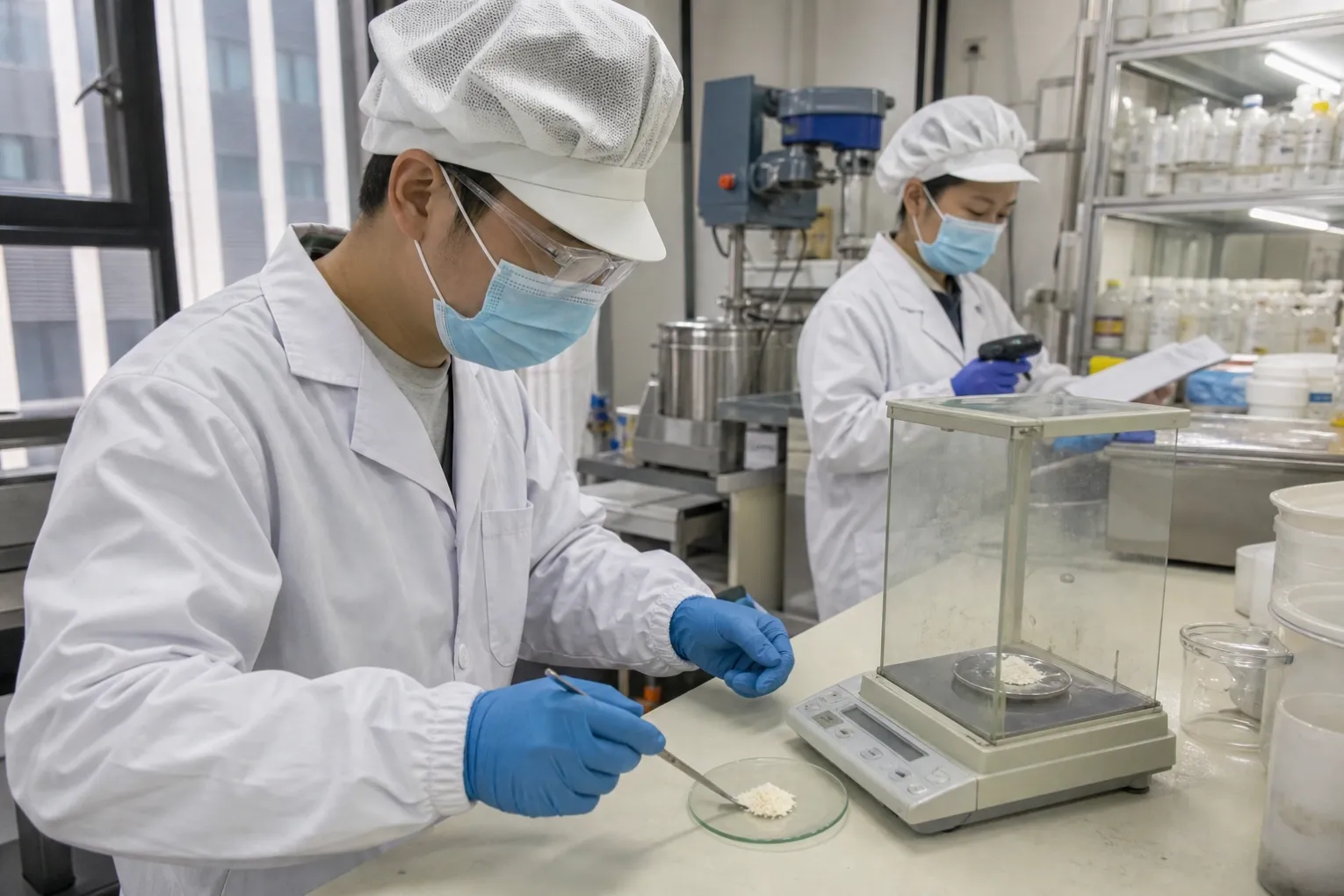
Step 5: Confirm performance in the actual formula
Passing an incoming specification does not prove that a new material will perform the same in your formula. For functional ingredients, emulsifiers, thickeners, surfactants, pigments, fragrances and botanical extracts, a controlled laboratory comparison may be needed.
Use the same formula version, process sequence and batch size for the comparison.
Record mixing temperature, time, shear and addition point.
Compare appearance, odor, pH, viscosity and the product features that matter to the brief.
Check the filled package when material changes could affect compatibility or dispensing.
Decide whether stability or other targeted testing must be repeated.
You can review relevant dosage forms and delivery systems in the BIO-TIDE product portfolio. For programs that connect formulation, testing, packaging and production planning, see the full-cycle ODM and OEM service.
Step 6: Keep a traceable approval file
The approval file should make the decision understandable months later. Keep the approved specification, supplier and grade, review notes, test results, formula comparison, approval date and responsible reviewer together. Link each production lot to the received raw-material lots used.
Retained samples can help investigations, but the plan should state the sample amount, container, storage condition and retention period. The record is only useful if the sample still represents the received material.
Step 7: Requalify changes instead of making silent substitutions
A supplier change is not the only trigger. A new manufacturing site, carrier, concentration, extraction method, preservative system, specification limit or packaging format can change material behavior. The change should be reviewed before purchasing treats it as equivalent.
Connect the decision to your finished-product controls. The guide to a skincare product specification sheet shows how approved material decisions flow into scale-up and release criteria.
Common raw material qualification mistakes
Approving a trade name without confirming the exact grade and composition basis.
Accepting expired, generic or mismatched supplier documents.
Using a certificate of analysis as the only incoming control.
Testing a new grade in a different formula or process and calling it equivalent.
Letting purchasing substitute suppliers without technical review.
Keeping documents in separate inboxes with no approved-material record.
Making safety or efficacy claims from supplier marketing alone.
What to send your skincare development partner
Share the product brief, target markets, formula version, approved supplier information, exact grade, specification, representative certificate, safety and technical data, intended use level and any known claim restrictions. State whether the material is mandatory or whether a technically equivalent option may be assessed.
Ask who reviews the documents, which incoming checks are planned, how changes are notified and what evidence would trigger formula or stability work. To discuss a qualification plan for a new skincare project, contact the BIO-TIDE team.
Raw material qualification FAQ
Is a certificate of analysis enough to approve a cosmetic ingredient?
Usually not by itself. It supports a batch decision, but the team still needs an approved specification, exact material identity, supplier review, receiving controls and any checks justified by the material risk and intended use.
Does every incoming lot need the same tests?
The control plan can vary by material and supplier history. Some checks may apply to every lot, while deeper verification may be periodic or triggered by a change. The rationale, method and release authority should be documented.
When should a raw material be requalified?
Requalification should be considered when the supplier, grade, composition, concentration, process, manufacturing site, specification or regulatory status changes, or when incoming results and formula performance show an unexplained trend.
Final takeaway
Strong raw material qualification connects paper evidence to the material that arrives and the product it must help create. Define the grade, review focused documents, control receipt, verify the right properties, confirm formula performance and manage every change. That discipline reduces avoidable substitutions and gives brand, laboratory and production teams one defensible approval trail.