Barrier-comfort
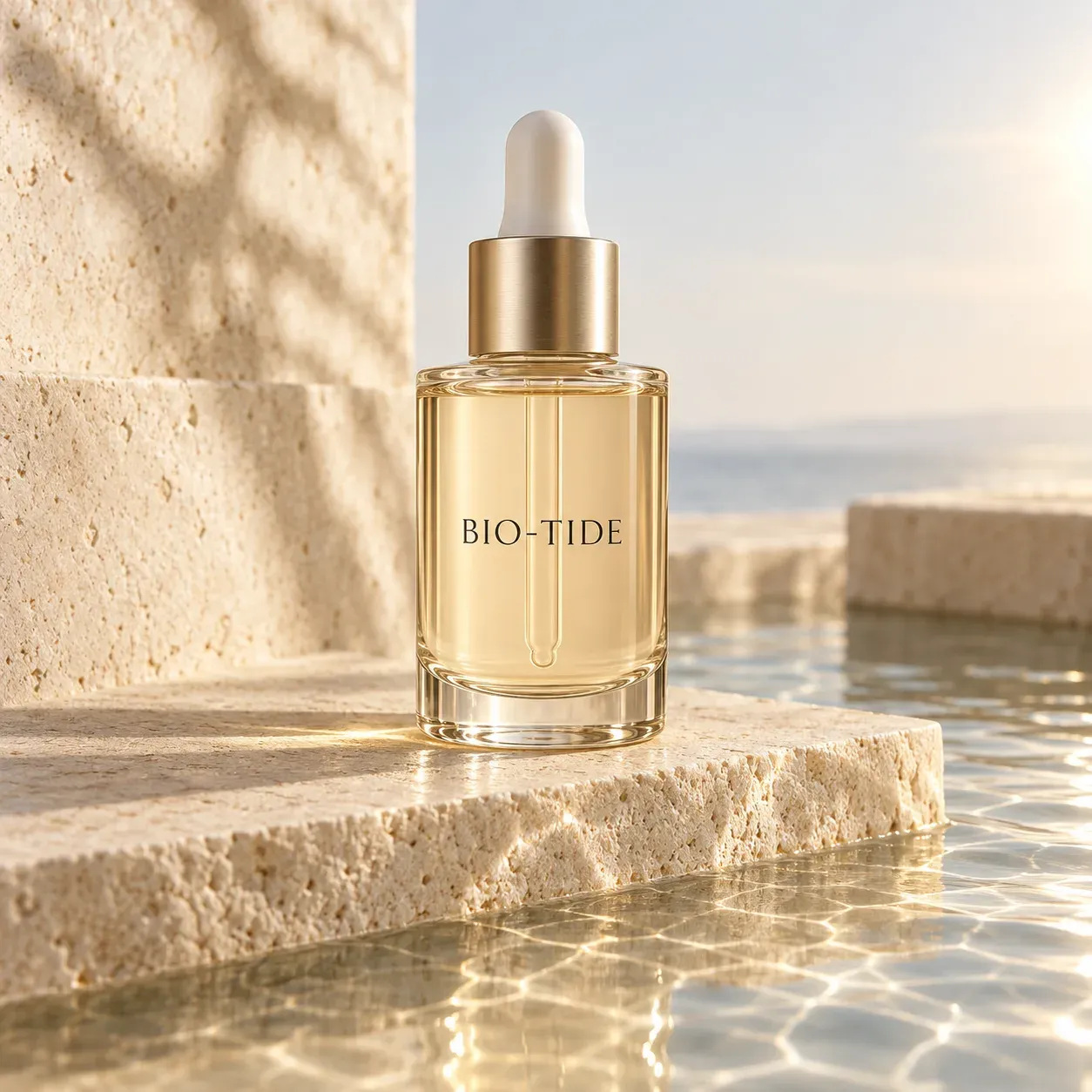
3:7 LIGHTWEIGHT COMFORT ESSENCE OIL
A facial essence-oil concept designed around three parts oil to seven parts water, pairing Bifida ferment filtrate and jojoba seed oil with ectoin, ergothioneine, hydrolyzed sodium hyaluronate and two named peptides.
Specifications
- Brand
- BIO-TIDE
- Product Format
- Lightweight Facial Essence Oil
- Design Ratio
- 3 parts oil : 7 parts water
- Oil-Phase Highlight
- Jojoba Seed Oil
- Ferment Ingredient
- Bifida Ferment Filtrate
- Comfort Ingredients
- Bisabolol + Dipotassium Glycyrrhizate + Centella Asiatica Extract
- Hydration Ingredient
- Hydrolyzed Sodium Hyaluronate
- Supporting Ingredients
- Ectoin + Ergothioneine + Tocopherol
- Peptide References
- Acetyl Hexapeptide-8 + Palmitoyl Pentapeptide-4
- Primary Use
- Daily face-conditioning step after cleansing
- Application
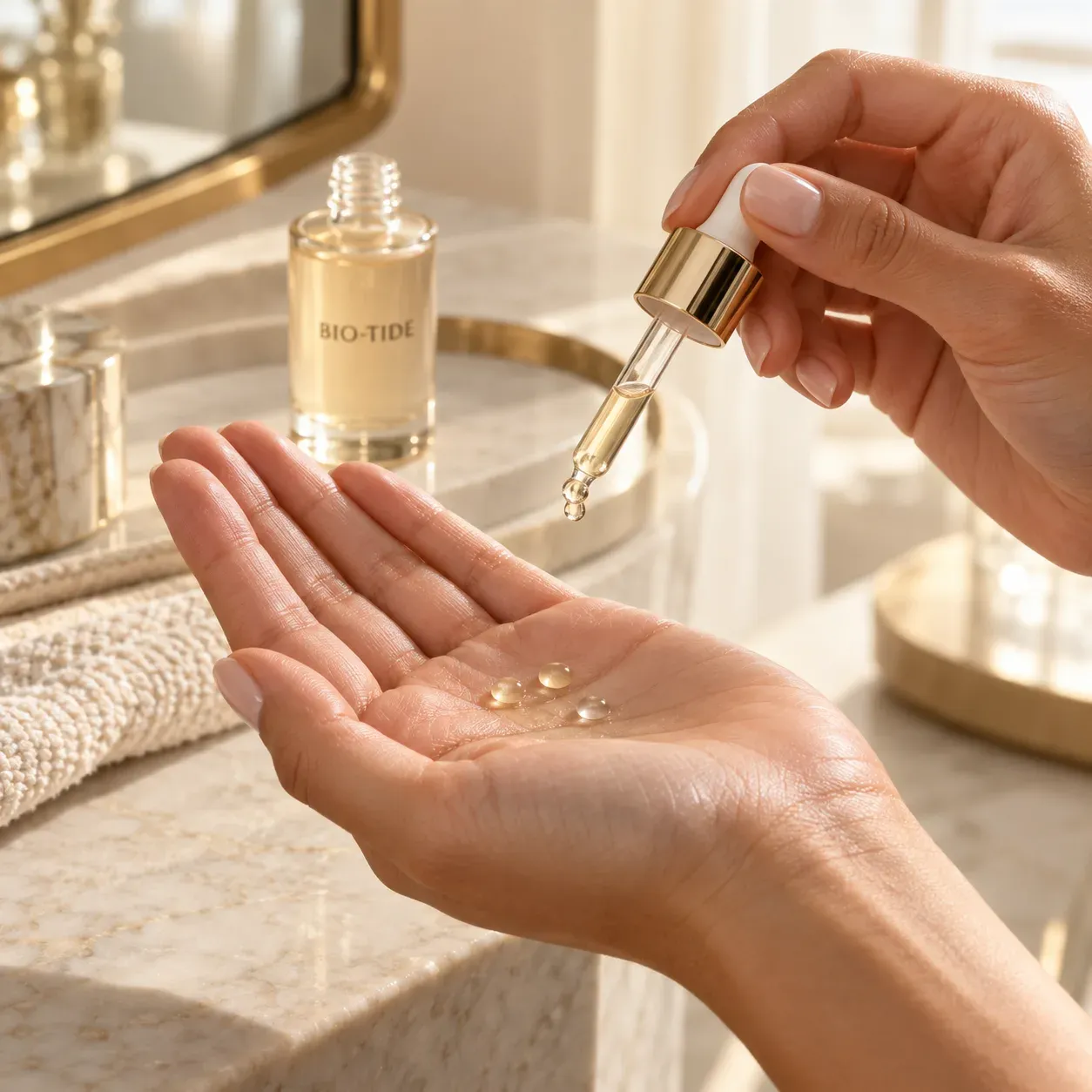
- Use 3–5 drops; work between the palms until semi-translucent, then press onto the face
- Routine Pairing
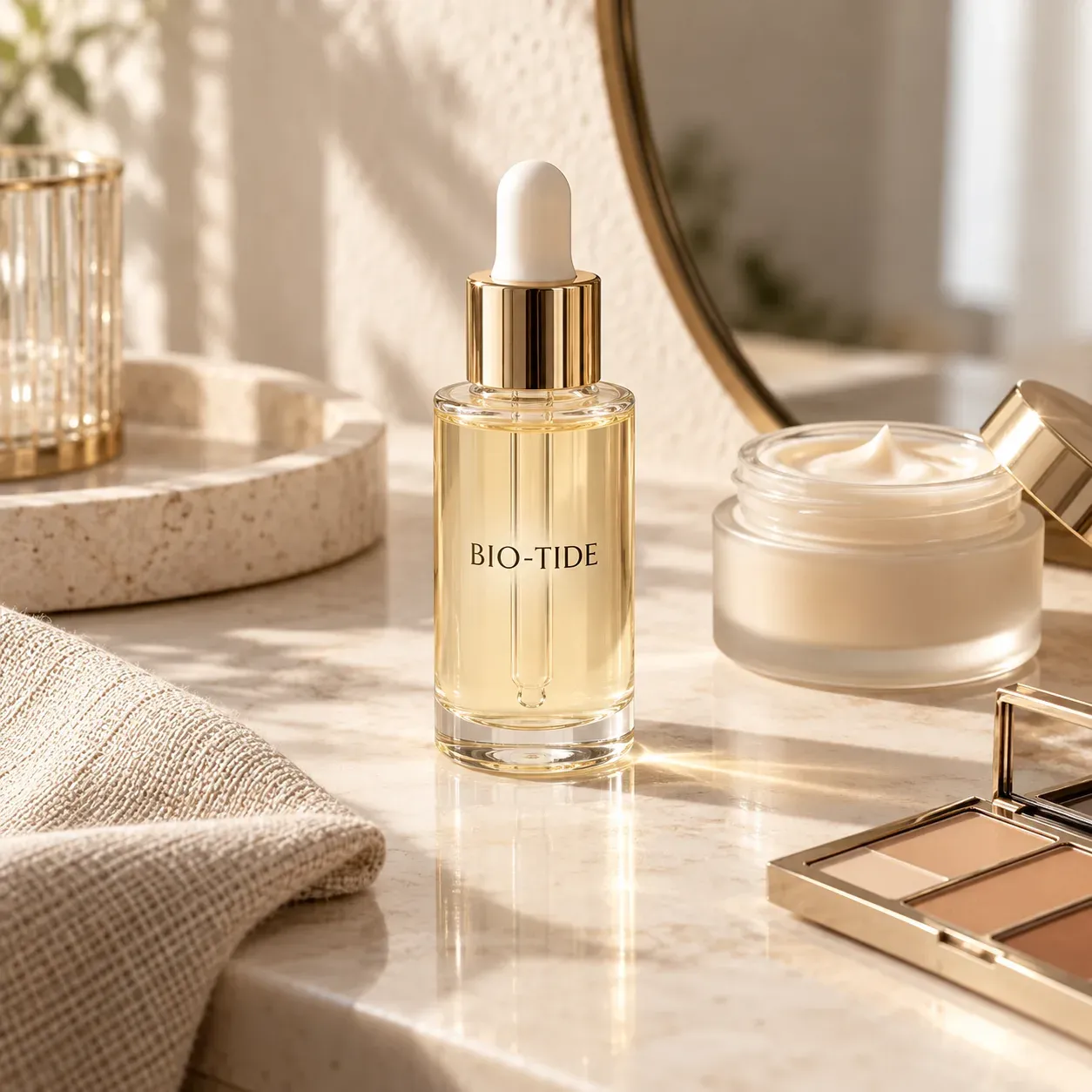
- Use alone or assess with a compatible cream or foundation during sample review
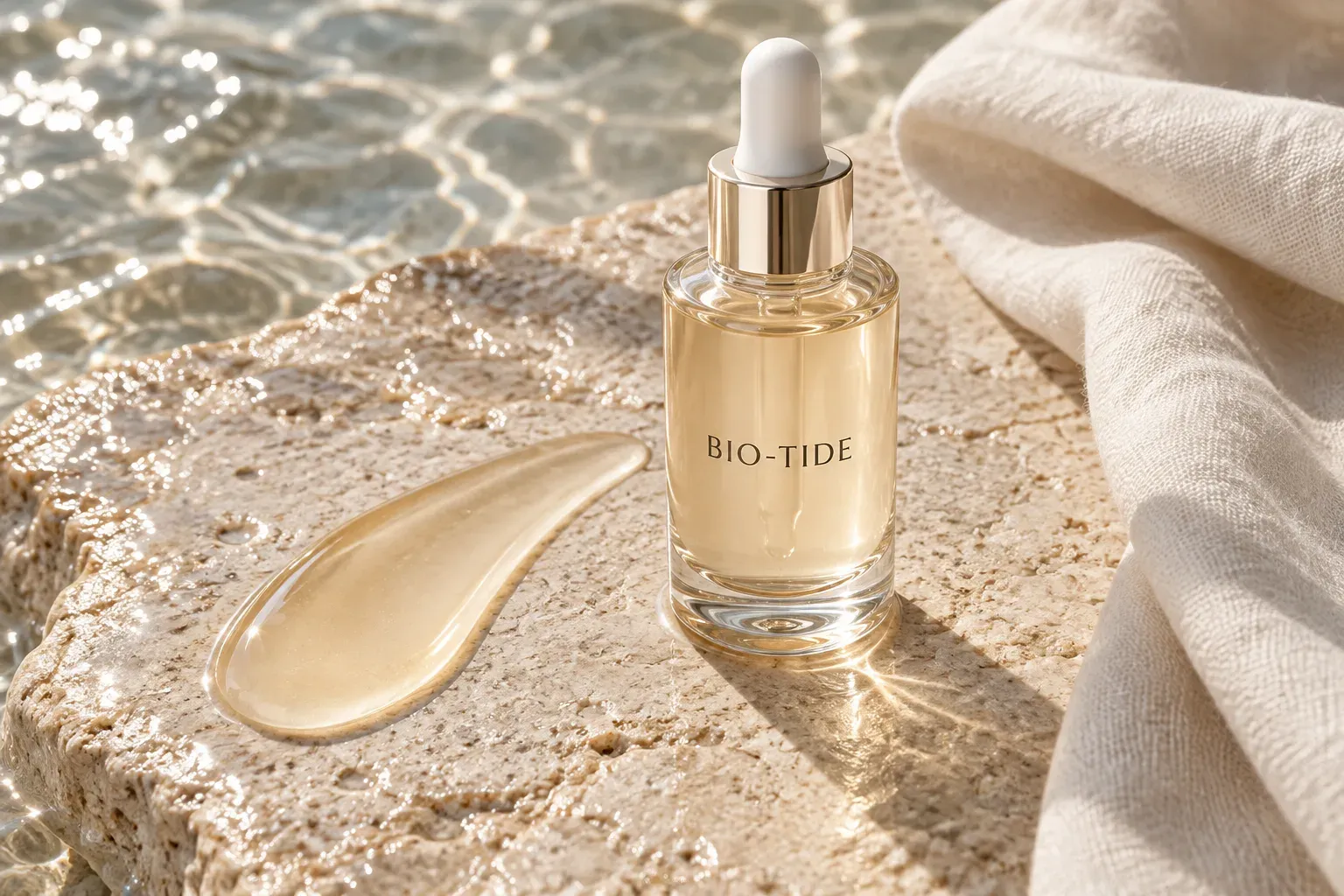
Facial oils can be difficult to position when buyers want comfort without a dense finish. This essence-oil concept begins with a clear development brief—three parts oil to seven parts water—giving brands a more approachable route into oil-led care for everyday routines.
Give oil care a lighter starting point
Jojoba seed oil anchors the oil direction, while Bifida ferment filtrate, ectoin, ergothioneine and hydrolyzed sodium hyaluronate give the surrounding formula a complementary skincare story. During sample review, the useful questions are practical: how quickly does it spread, how much slip remains, and does the finish feel balanced enough for repeat daily use?
Use 3:7 as a development benchmark
The ratio is most valuable as a fixed point for comparing prototypes. It lets a buyer discuss cushion, absorption, after-feel and clarity against the same oil-to-water starting point, then decide whether the approved sample should lean richer, drier or more fluid for the intended market.
Keep the ingredient story coherent
Bisabolol, dipotassium glycyrrhizate and Centella asiatica extract can support a comfort-focused ingredient narrative, while acetyl hexapeptide-8 and palmitoyl pentapeptide-4 provide two recognisable peptide references. Rather than placing every ingredient into one oversized promise, the final label and sales copy should prioritise the few ideas that match the approved formula and destination market.
Test the ritual, not only the formula
The intended routine uses three to five drops after cleansing, worked between the palms until semi-translucent and then pressed over the face. Because the concept may also be paired with a compatible cream or foundation, sample evaluation should include both standalone use and the exact combinations the brand plans to recommend.
Choose the pack after dosing is agreed
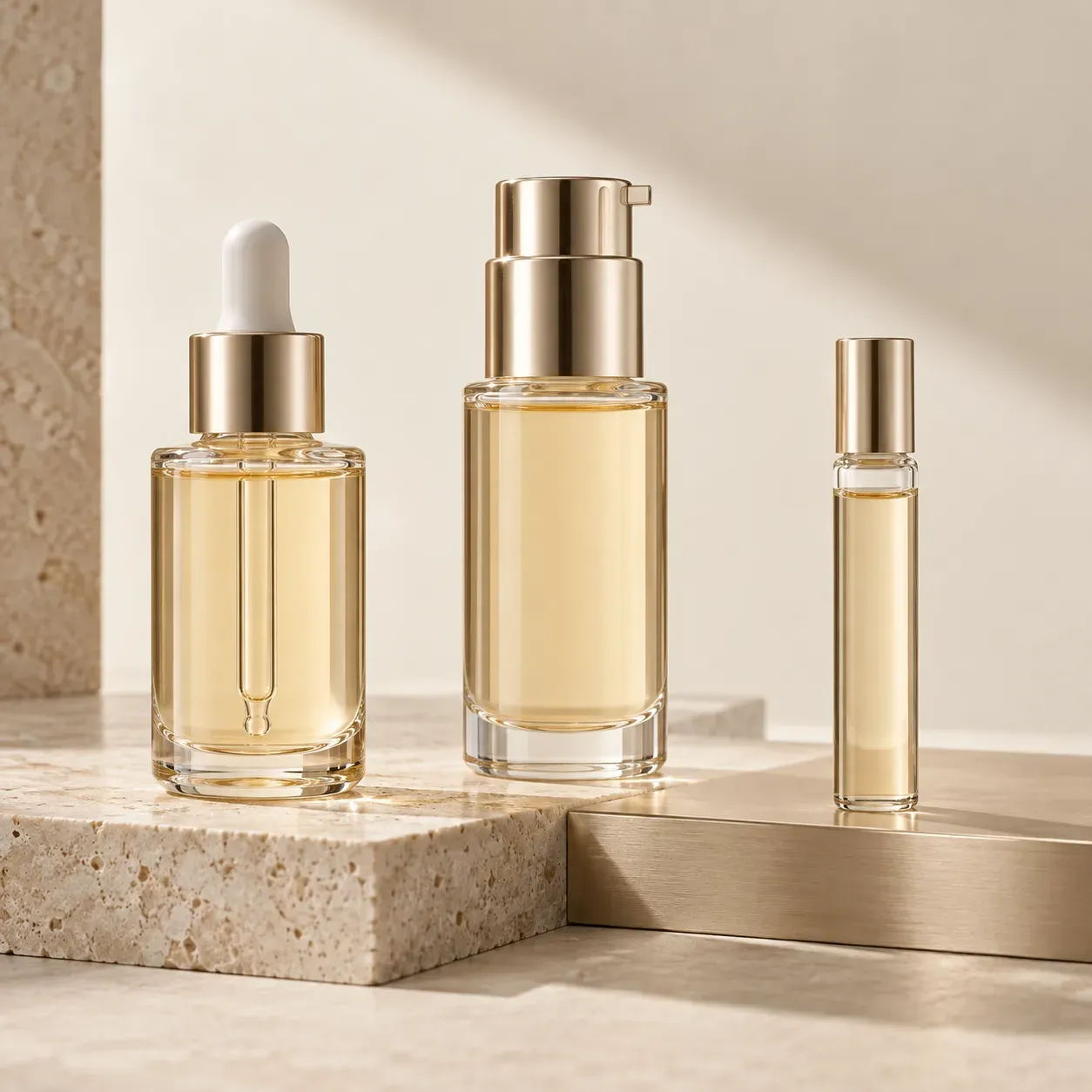
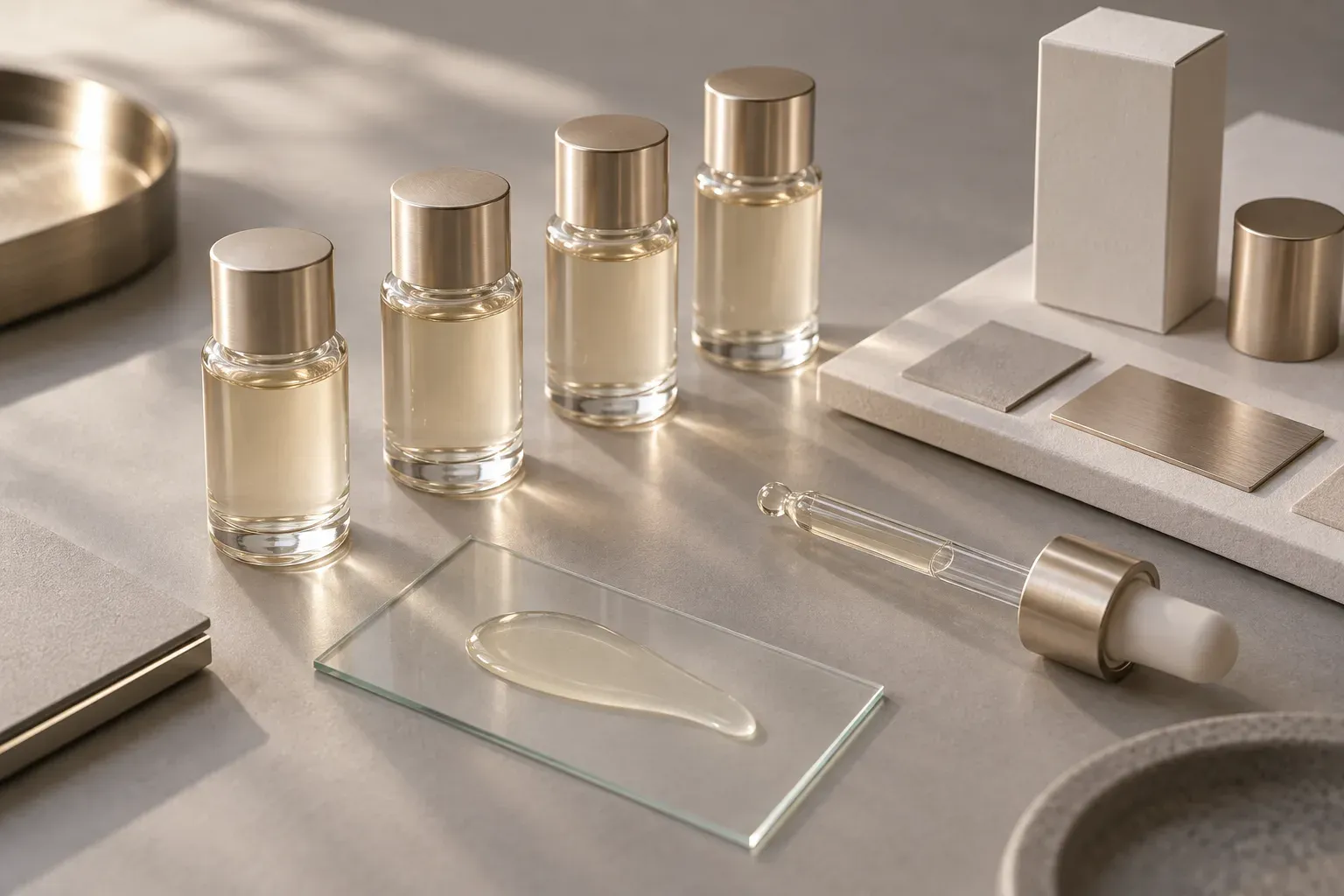
A dropper reinforces the measured ritual, while a controlled-dose pump is another route to assess against the final viscosity and dose target. The final component should follow prototype behaviour, fill appearance, dose repeatability and product-pack compatibility rather than being selected from appearance alone.
Share the target residual feel, preferred dosing style and intended routine pairing so the first sample brief can be built around those decisions.