Sep 11, 2026Market & Brand Development
Cosmetic Claims Substantiation: A Practical Plan Before Skincare Launch
Build a cosmetic claims substantiation plan that connects wording, finished-product evidence, market rules and launch review before skincare goes live.
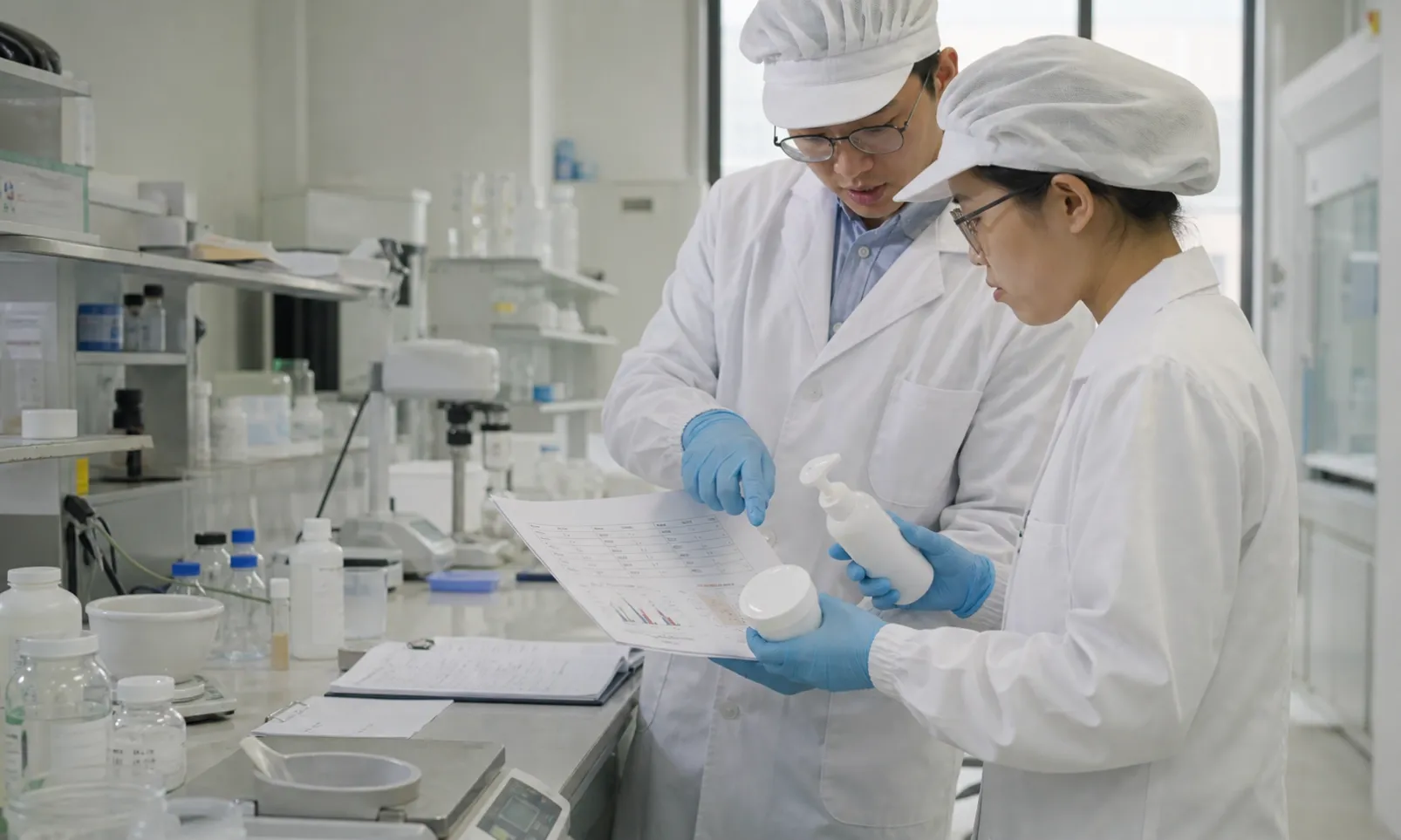
A strong formula does not automatically create a supportable claim. “Helps skin feel smoother,” “reduces the look of fine lines” and “clinically tested” each ask a different evidence question. If a brand writes the claim after testing, it may discover that the study measured the wrong outcome, used the wrong product or cannot support the final wording.
Cosmetic claims substantiation should therefore begin during product planning, not at the last label review. The goal is to connect the intended market, exact words, product design, test method and marketing context before money is committed to a study.
This guide gives growth skincare brands a practical sequence. It is general development guidance, not legal advice. Local rules and the risk of each claim still need qualified review.
Why claims planning belongs in product development
A claim influences more than copy. It can affect ingredient choices, finished-product testing, packaging, instructions, target users, launch timing and the evidence kept on file. A late change in wording may also change what the evidence needs to prove.
In the United States, cosmetic labeling claims must be truthful and not misleading. The FDA explains that claims about treating disease or affecting the structure or function of the body can move a product into drug territory. The FTC also looks at advertising messages, including what consumers may reasonably understand from words, images and context.
For the European Union, Commission Regulation (EU) No 655/2013 applies common criteria to explicit and implicit cosmetic claims. It states that claims should be consistent with the evidence held for the product and that ingredient properties should not be presented as finished-product benefits without adequate support. The exact development route must still be set market by market.
Step 1: Define the market, product and claim boundary
Start with the places where the product will be sold. Do not build one global claim list and assume every market will treat it the same way. Record the product type, intended use, target user, sales channels and any words that may imply treatment, prevention or a change to body structure or function.
This information should sit in the skincare product brief used before sampling. It gives the formulation, testing and marketing teams the same boundary from the start.
- List every target country or region, plus the launch sequence.
- State the cosmetic purpose in plain language.
- Identify the target user and normal conditions of use.
- Flag words, visuals or comparisons that could imply a therapeutic result.
- Name the person responsible for market-specific regulatory review.
Step 2: Build a claim inventory before choosing tests
Collect every message the consumer may see: pack copy, product name, website text, before-and-after images, charts, social posts, influencer briefs and sales materials. Separate direct claims from messages that may be implied by the full presentation.
The FTC Health Products Compliance Guidance advises marketers to consider both express and implied messages, then check whether the evidence is sound and relevant to the specific product and claim. That is a useful working rule even when a skincare claim is not framed as a health claim.
Write one row for each proposed claim. Add the channel, target user, qualifying words, likely consumer takeaway and business priority. This prevents a dramatic headline from bypassing the evidence review used for the label.
Step 3: Match the claim to the evidence question
Do not begin with a favorite test. Begin with the exact statement the brand wants to make. Then ask what observation would need to be true for that statement to be accurate and not misleading.
Claim direction | Evidence question | Development implication |
|---|---|---|
Sensory or appearance | Can users or trained assessors consistently observe the stated feel or visible effect under defined conditions? | Set product amount, use method, timing, comparator and scoring language. |
Measured cosmetic performance | Does the finished product change the selected instrument or image-analysis endpoint by the stated amount and time? | Define the endpoint, baseline, schedule, population and analysis before the study. |
Consumer perception | Does the target group report the stated experience using clear, non-leading questions? | Match the panel to the intended user and keep the wording tied to what was asked. |
Ingredient-led message | Is the ingredient present, and does the evidence support the finished product message rather than only the raw material? | Review concentration, formula context, use conditions and any finished-product confirmation needed. |
Comparative claim | Is the comparison fair, current and based on equivalent products, conditions and measures? | Predefine the comparator, metric and time point; keep the basis of comparison available. |
One claim may need more than one evidence source. A moisturization story, for example, can include formulation rationale, instrumental data and user perception, but each source should support the wording actually used. More evidence is not automatically better if it answers a different question.
Step 4: Test the finished product, not only the ingredient story
Supplier studies can help explain why an ingredient was selected. They do not always prove that the final serum, cream or mask delivers the same benefit. Formula composition, concentration, processing, packaging, application amount and use pattern can all affect relevance.
EU claim criteria specifically address this risk: ingredient properties should not be carried over to the finished product without adequate and verifiable support. Review the official EU common criteria for cosmetic claims before finalizing EU-facing messages.
Ask four questions when using ingredient evidence:
- Is the tested material the same grade and form used in the formula?
- Is the level and route of use relevant to the finished product?
- Does the study endpoint match the proposed consumer claim?
- What finished-product evidence is needed to close the gap?
Step 5: Lock the claim wording before the protocol
Small wording changes can change the evidence burden. “Skin felt softer after use” is not the same as “improves skin softness for 24 hours.” A number, time point, target group or comparison makes the claim more specific and should be reflected in the study design.
Give the testing partner a claim sheet, not a loose product description. For each priority claim, define the exact draft wording, target market, use instructions, product amount, assessment time, population, comparator and decision rule. Ask the reviewer to state what the planned method can and cannot support before the study begins.
The same discipline improves sample review. Use a separate skincare sample evaluation process to confirm product fit and sensory direction; do not treat informal sample preference as proof of an objective performance claim.
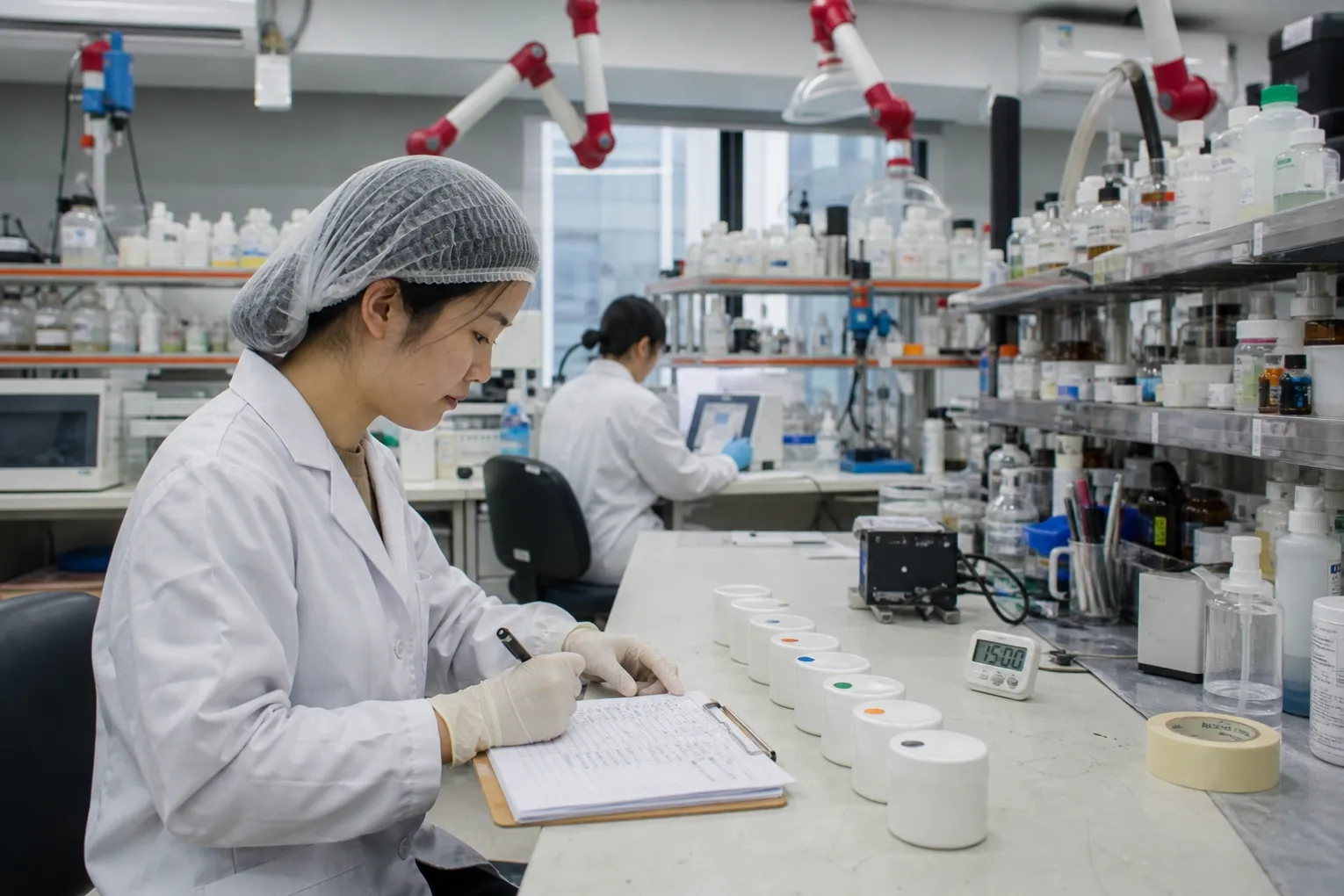
Step 6: Review the whole message, not only the headline
Consumers see the product name, photos, layout, qualifiers and nearby statements together. A technically careful sentence can still create a broader implied message when paired with dramatic images or before-and-after framing.
Before launch, review every claim in context:
- Check the headline, body copy, visuals and product name as one message.
- Confirm that important limits are clear, close to the claim and easy to understand.
- Make sure a disclosure does not contradict the main impression.
- Use the same approved claim wording across the pack, website, sales deck and creator brief.
- Remove percentages, superlatives or time claims that the final evidence does not support.
Step 7: Connect claims to stability, packaging and change control
A claim study describes the product tested under defined conditions. The commercial product should remain meaningfully connected to that test item. Formula revisions, fragrance changes, new suppliers, packaging changes or different use instructions may affect whether the original evidence is still relevant.
Link the claims file to the skincare stability testing plan and the finished-product specification sheet used before scale-up. These controls do not prove efficacy by themselves, but they help show that the manufactured product remains aligned with the version reviewed and tested.
Set a change-review trigger. The team should ask whether a change affects the claim mechanism, tested population, application, exposure, package delivery, product quality or consumer message. Record the decision to retain, qualify, retest or remove the claim.
What a practical claims evidence file should contain
Keep one controlled record for each approved claim. It should be easy for product, regulatory, quality and marketing teams to understand without reconstructing the project from email.
- Approved claim wording and permitted channels.
- Market and product classification review.
- Evidence summary with full report references.
- Study product identity, batch and package details.
- Protocol, population, methods, time points and analysis.
- Limits, qualifiers and prohibited variations.
- Approval owner, version, date and change history.
- Retest or re-review triggers.
BIO-TIDE can connect a claim direction with its R&D and product-development process, including formula planning, sample development and coordination of testing inputs. The exact testing and regulatory scope should be agreed for the product, claim and market; no single evidence package fits every launch.
Common claims substantiation mistakes
- Choosing a test before the claim wording is agreed.
- Using an ingredient study as automatic proof for the finished product.
- Changing a modest study result into a stronger marketing promise.
- Ignoring implied claims created by names, images or comparisons.
- Mixing informal sample feedback with controlled performance evidence.
- Testing one version and launching a materially changed product.
- Keeping reports without a short, controlled claim-to-evidence summary.
Cosmetic claims substantiation FAQ
Does every cosmetic claim need a clinical study?
Not necessarily. The suitable evidence depends on the claim, market, product and risk. Some messages may be supported by sensory assessment, consumer perception, instrumental measures, formula facts or other relevant evidence. Stronger and more specific claims usually need stronger, more specific support.
Can a supplier study support an ingredient claim?
It can be part of the evidence, but relevance must be checked. Confirm the ingredient identity, concentration, formula context, route of use, tested outcome and proposed wording. Do not imply that the finished product has a proven benefit when the evidence covers only the raw material.
Should claim testing happen before or after stability testing?
The sequence depends on the product and launch plan. The test item should be sufficiently defined and representative, while stability and quality controls help confirm that the commercial product remains aligned with it. Plan the studies together so timing, sample batches and package versions are clear.
Who owns the final claim decision?
The brand or responsible market operator should assign a clear approval owner and obtain qualified market-specific review. A manufacturer or testing partner can coordinate technical inputs, but should not be treated as a guarantee of claim acceptance or market access.
Build the evidence plan before the launch clock starts
A claims substantiation plan works best when it is part of the product brief. Define the market, inventory the messages, match each claim to an evidence question, test the relevant product and control every later change. That turns claims review from a last-minute copy exercise into a development decision.
Need a claims-ready skincare development plan?
- Target market and product position
- Priority claim wording
- Formula and sample route
- Testing inputs and launch timeline