Sep 28, 2026Formulation & Testing
Cosmetic Viscosity Testing: Make Lab and Bulk Results Comparable
Define the instrument, spindle, speed, temperature, sample handling and timing before comparing skincare viscosity across lab samples and production batches.
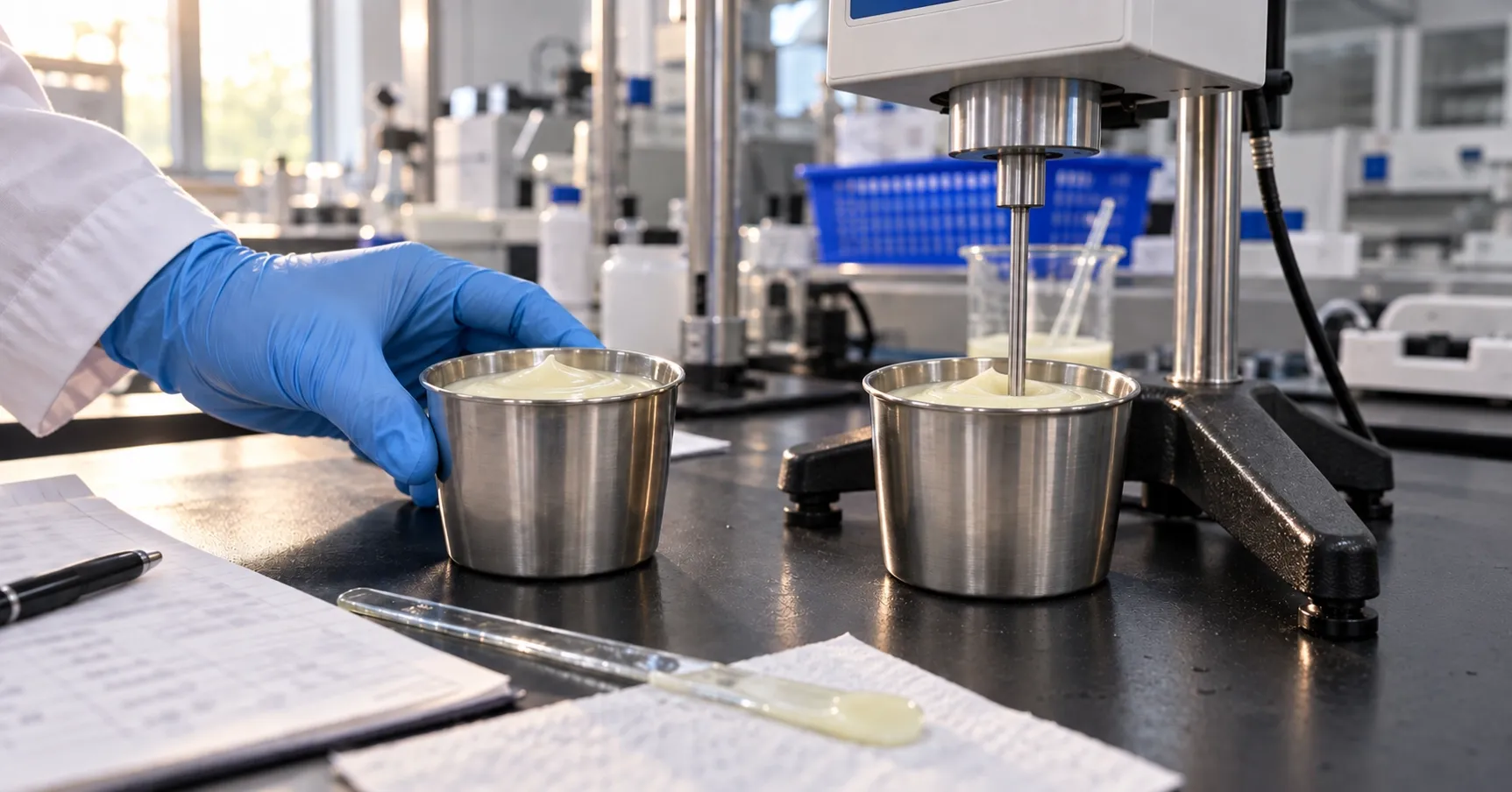
A viscosity number is comparable only when the measurement method is the same. Before approving a lab sample or judging a production batch, lock the instrument, spindle, speed, temperature, container, sample handling and reading point. If one of these changes, the result may show a method difference rather than a formula difference.
For a skincare brand, the practical goal is not to chase one impressive number. It is to create a repeatable method that helps the brand and manufacturer make the same decision on a lab sample, pilot batch and commercial bulk.
Why one viscosity number can mislead a development team
Many creams, lotions and gels do not behave like simple liquids. Their apparent viscosity can change with shear, temperature, rest time and previous handling. A reading taken after vigorous mixing may differ from a reading taken after the same sample has rested. Two instruments can also give different results if geometry or operating conditions are not aligned.
The ISO 2555:2018 rotational-viscometer method illustrates the measurement principle: apparent viscosity depends on the defined rotational test conditions. It is not a cosmetic compliance requirement. Its useful lesson for a skincare project is simple—record the method with the result.
Lock these seven method details before comparing results
Method field | What to define | Why it matters |
|---|---|---|
Instrument | Model and measuring system | Different systems may not produce interchangeable values. |
Spindle or geometry | Exact type and immersion position | Changes the way the sample is sheared. |
Speed | Rotational speed and any speed sequence | Many cosmetic systems are shear-dependent. |
Temperature | Target temperature and allowed range | A small temperature change can alter the reading. |
Sample container | Cup type, fill volume and depth | Geometry and wall effects can influence the result. |
Sample handling | Mixing, bubble removal and rest time | Handling creates a different shear history. |
Reading rule | When to record, units, range and retest rule | Prevents selective or inconsistent result picking. |
Write these items into the working method, not only into a technician's notebook. The approved method should also identify the product code and formula version so an old instruction is not used for a revised formula.
Compare lab, pilot and bulk at defined sampling points
Do not compare a cooled laboratory sample with hot bulk taken directly after mixing and expect the numbers to match. Define where the sample is taken, how much is collected, the target cooling condition, the container, the conditioning time and the time window for measurement.
For production, record the batch number and sampling point. If a vessel can develop top-to-bottom variation, the sampling plan should say which locations are checked. If filling or transfer adds shear, decide whether the specification applies before transfer, after transfer, or to a retained finished-product sample.

This method should connect to the wider sample-to-bulk control plan. A single laboratory result cannot explain a process unless the team knows when and how the sample was taken.
Separate method variation from process variation
Observation | First question | Next action |
|---|---|---|
Result changed and the method also changed | Can the original method be repeated? | Repeat under the locked method before changing the formula. |
Result changed under the same method | Did raw material, process, temperature or hold time change? | Investigate the batch and process record. |
Viscosity is in range but dispensing or feel is poor | Does the range represent the finished product experience? | Review the formula–pack system and specification. |
This order matters. Adjusting a formula before confirming the method can create unnecessary revisions. Passing a number without checking product use can create the opposite problem: a batch meets the test but does not dispense, spread or recover as intended.
Connect viscosity to the finished product—not just the beaker
Viscosity is one product attribute. It should sit inside a finished-product specification sheet with appearance, odor, pH, fill, packaging performance and any other relevant acceptance criteria.
The useful range depends on the product and package. A dropper serum, airless lotion, squeeze-tube cream and jar mask have different dispensing and use demands. Confirm the selected pack early enough to evaluate dose, flow, stringing, leakage, pickup and residue.
The ISO/TR 18811:2018 cosmetic stability guidance also reflects an important planning principle: the manufacturer should define and justify the protocol, test methods, specifications and conditions that fit the product. Do not copy a viscosity range or test condition from an unrelated formula simply because it is already available.
What to send your ODM before scale-up
- Product and formula code, including the approved sample version.
- Intended package and dispensing format.
- Target texture and use experience in plain language.
- Locked viscosity method with all seven method fields.
- Proposed range, units and decision rule.
- Sampling point, conditioning time and test timing.
- Retest, hold and escalation rule for an out-of-range result.
- Named approvers for the method and production specification.
BIO-TIDE's R&D and scale-up workflow can connect the formula, method, packaging and production discussion. The brand should still approve the target, method and commercial version in writing before bulk production.
A short review before you approve the method
- Can another trained person reproduce the test from the written instruction?
- Are lab, pilot and bulk samples measured at comparable temperatures and times?
- Does the result include the instrument, spindle, speed and units?
- Is the range connected to dispensing and sensory acceptance?
- Is the formula version linked to the method version?
- Is there a clear retest and escalation rule?
If the answer to any item is no, the number is not yet a reliable approval gate.
Viscosity testing FAQ
Does higher viscosity mean better skincare quality?
No. Higher viscosity can be right or wrong depending on the product brief, packaging and use experience. Quality means meeting an approved, product-relevant specification with a controlled method.
Can readings from two different viscometers be compared?
Only after the methods and instruments have been evaluated for comparability. Do not assume that the same spindle number or displayed unit makes two systems equivalent.
Should viscosity be checked during stability work?
It may be relevant when viscosity change could affect appearance, dispensing, use or product acceptability. The stability protocol should define the product-specific method and decision criteria rather than rely on one universal schedule.
Need help aligning the method?
Not sure whether your laboratory and production readings are truly comparable?
BIO-TIDE can help review:
- Product format and target texture
- Method and sampling conditions
- Scale-up risk points
- Acceptance and retest rules