Sep 11, 2026Formulation & Testing
Cosmetic Preservative Challenge Testing: What Skincare Brands Need to Plan
Learn what cosmetic preservative challenge testing evaluates, when to run it, and how formula, packaging and use conditions shape the test plan.
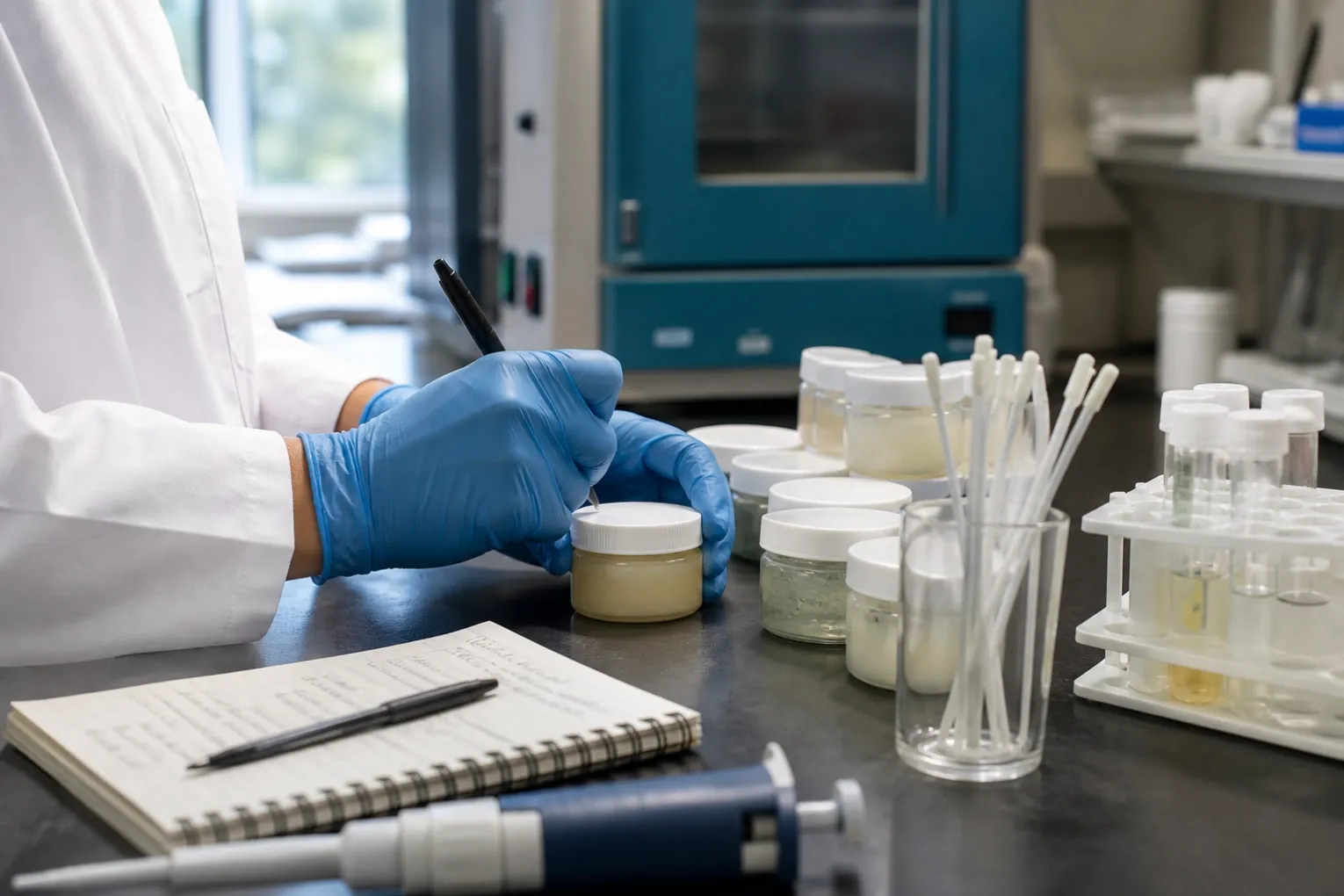
Cosmetic preservative challenge testing checks whether a product's antimicrobial protection can control microorganisms introduced under defined test conditions. For a skincare brand, the useful question is not simply whether a formula passes. It is whether the test sample represents the product you intend to sell: the final formula, in the intended packaging, with a realistic use case and an agreed decision plan.
ISO 11930 describes a preservation efficacy test and a broader procedure for evaluating antimicrobial protection. It also points to microbiological risk assessment for products considered low risk. That makes challenge testing part of a risk-based development process, not a box to tick at the end. Brands that are still defining the formula should align the test plan with the development route and the intended finished product.
What a Preservative Challenge Test Actually Evaluates
A challenge test introduces selected microorganisms into the product under controlled conditions and measures how their levels change over defined time points. The result helps assess the protection provided by the formulation. The current ISO 11930 overview explains that the standard is designed for cosmetic products in the marketplace and can also guide development work when methods or objectives need to be adapted.
It is important to separate three related questions:
- Does the preservation system perform under the selected challenge method?
- Does the finished product meet its microbiological specifications before release?
- Do manufacturing, packaging, transport and consumer use keep contamination risk under control?
These questions support one another, but one result does not automatically answer all three. The FDA's microbiological safety overview identifies raw materials, water, manufacturing conditions, an ineffective preservation system, packaging, storage and consumer use as possible contamination routes.
Step 1: Define the Product's Microbiological Risk
Start with the finished product rather than a generic test request. A water-rich cream in a jar, an airless serum and an anhydrous balm do not present the same exposure pattern. Document the factors that may support or limit microbial growth and the ways contamination could enter during production or use.
Risk inputs to record
- Product form, water phase, pH and other formulation characteristics relevant to microbial growth.
- Raw materials with higher contamination risk and how they are controlled.
- Manufacturing process, water quality, filling conditions and hold times.
- Primary packaging, dispensing method and repeated consumer contact.
- Target users, application area, storage environment and expected period of use after opening.
If these inputs are unclear, return to the skincare product brief before choosing a protocol. A test plan cannot compensate for an undefined product and use case.
Step 2: Test a Representative Formula and Pack
The sample should be close enough to the commercial product that the result supports a real decision. Changes to preservative level, pH, fragrance, botanical extracts, chelating agents, surfactants or other formula elements may alter antimicrobial protection. Packaging can also change exposure during use.
A jar invites repeated finger contact. A pump or airless pack may reduce direct exposure, but closure design, output path and pack performance still matter. A lotion format such as Hydra Peptide Lotion can serve as a product-format reference, but the actual formula-pack combination still needs its own assessment.
Step 3: Agree on the Method and Decision Criteria
Before testing begins, record the method, organisms, time points, acceptance criteria, sample identity and laboratory responsibilities. The method must suit the product. Difficult matrices may require validated preparation or recovery steps so the test measures the product fairly.
Build the decision tree at the same time:
- Pass: preserve the tested formula and packaging as controlled references.
- Borderline or unexpected trend: review method suitability, recovery, formula risk and manufacturing information before deciding.
- Fail: investigate the cause, revise the preservation strategy or product design, and define what must be retested.
Step 4: Connect Challenge Testing With Stability Work
Challenge testing and stability testing answer different questions, but the evidence should be reviewed together. Stability observations can reveal changes in pH, appearance, odor, separation or packaging performance that may affect the product's overall control strategy. Use a product-specific skincare stability plan rather than treating microbiology as an isolated final test.
When the formula or pack changes, decide whether existing evidence still applies. A small commercial change can be technically significant if it affects pH, preservative availability, water activity, dispensing or consumer exposure.
Step 5: Keep Traceable Records for Scale-Up
A useful report must connect the result to the exact sample. Keep the formula version, batch reference, manufacturing date, packaging configuration, test method, acceptance criteria, raw observations, deviations and final decision together. Record who approved the conclusion and which later changes require review.
The FDA's cosmetic product-testing guidance states that manufacturers or distributors are responsible for product safety and that testing should be scientifically sound. Clear records turn a laboratory result into evidence that development, quality and sourcing teams can use.
Common Planning Errors That Weaken the Result
- Testing an early base formula, then adding fragrance or actives without reviewing the need to retest.
- Selecting a preservative only from an ingredient list without considering the whole formula and process.
- Assuming airless packaging removes the need for product-specific risk assessment.
- Requesting a test before the sample identity, method and pass criteria are agreed.
- Treating one passing result as proof that manufacturing and consumer-use risks are fully controlled.
What to Send Your Development Partner
A focused request reduces delays. Share the target market, product form, formula version, intended packaging, user profile, use instructions, storage expectations, launch timing and any prior microbiology or stability data. State whether the formula is still being optimized or is ready for final verification.
BIO-TIDE connects product planning, formulation, packaging coordination, testing coordination and production decisions. Share the key inputs with the development team so it can identify what must be fixed before samples are submitted for testing.
Final Takeaway
Cosmetic preservative challenge testing is most useful when it is planned around the real product. Define the microbiological risk, test a representative formula and pack, agree on the method and decision criteria, connect the result with stability evidence, and keep traceable records through scale-up. That process gives a skincare brand a stronger basis for launch decisions than a pass certificate viewed in isolation.