Sep 11, 2026Formulation & Testing
Skincare Formulation for the Chinese Market: A Practical ODM Brief
Build a China-ready skincare brief around target users, climate, routines, sensory targets, claims and validation—not a copied overseas formula.
Localizing skincare for China is not a matter of translating packaging copy or replacing one trending active with another. It starts with a finished-product brief for a defined user, climate, routine, channel and claim. The goal is a formula that can be understood, tested, manufactured and used as intended.
This is the next step after a brand has defined ingredient requirements from the finished-product target. The question now is: what must change for the target market, and what should stay technically controlled?
Why copying an overseas formula often fails
A formula that works in one launch context may not fit another. Temperature and humidity, indoor heating or air conditioning, cleansing habits, layering routines, fragrance expectations, pack size and sales channel can all change the user experience.
China is not one uniform use environment. A useful development brief should identify:
- target users and the product problem they want solved;
- priority cities or regions and launch season;
- morning, evening or professional-use routine;
- expected texture, rub-in time, finish and fragrance level;
- price position, pack format and sales channel;
- claims that the finished product must support.
Do not begin with broad assumptions about a population. Begin with a defined use case, then validate samples with relevant target users. A practical skincare sensory profile makes feedback more useful than comments such as “too heavy” or “not premium enough.”
Put mildness and credible claims before active density
Cosmetics are not medicines. A crowded active list does not automatically create a better product, and a high concept count can make stability, skin comfort and claims review harder.
Start by deciding the product's role. Is it a daily barrier-support cream, a lightweight brightening serum or a richer night treatment? Then set a realistic claim hierarchy: one primary benefit, supporting benefits and language that can be substantiated on the finished formula.
For products filed in China, most efficacy claims require evaluation and a published summary of supporting evidence under the National Medical Products Administration's cosmetic efficacy claim requirements. Build that evidence plan before locking the formula and pack, not after artwork approval. Our claims substantiation planning guide explains how to connect wording, evidence and launch review.
Choose a delivery system by the failure mode
Peptides, recombinant collagen and fermented botanical ingredients may support differentiated product concepts. Their presence alone, however, does not prove finished-product performance.
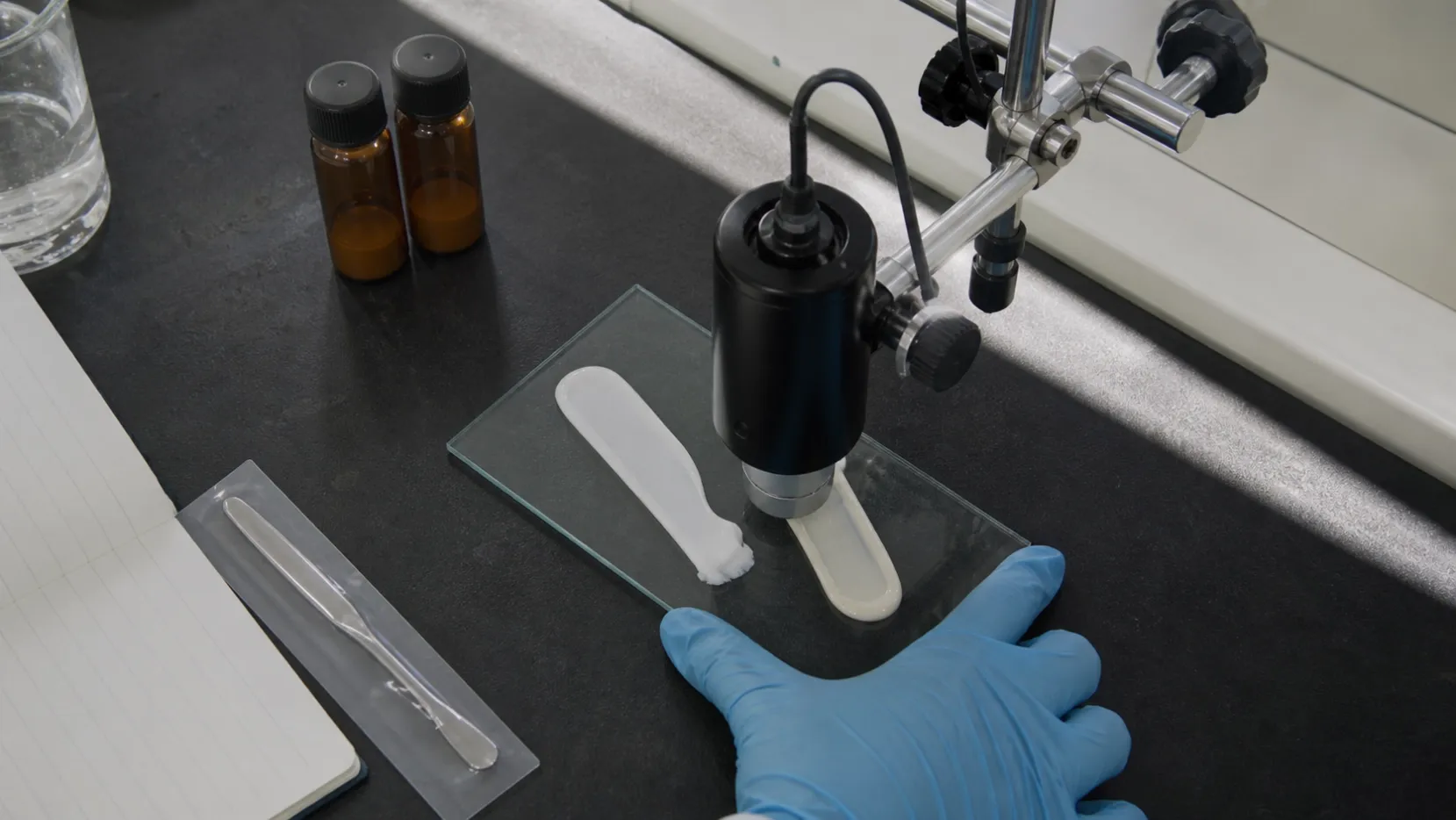
Before selecting encapsulation, microemulsification or another delivery approach, ask:
- Does the active remain stable at the intended pH and processing temperature?
- Is it soluble or evenly dispersed at the target use level?
- Does it interact with the preservative system, fragrance or packaging?
- Does the delivery system improve the required stability, release or sensory property?
- Can the process be reproduced at production scale?
A delivery system should solve a defined technical problem. It should not be added only to make the ingredient story sound more advanced. Any benefit still needs to be demonstrated in the complete formula, with suitable controls and test methods.
Ask the ODM for a complete development solution
A capable ODM should do more than provide a formula sample. The development route should connect the market brief to technical decisions and manufacturing controls.
- Brief and benchmark: confirm the target user, use context, sensory target, claims, pack, cost range and launch timing.
- Prototype and review: compare formula routes, document sample versions and score texture, rub-in and after-feel.
- Validation plan: agree on safety assessment, stability, microbiological controls, packaging compatibility and claim support appropriate to the product and market.
- Scale-up: define critical process parameters, finished-product specifications and acceptable variation before commercial production.
- Launch handoff: align formula version, artwork, evidence, batch records and change control.
Once development moves into production, ISO 22716 provides GMP guidance for cosmetic production, control, storage and shipment. It does not replace R&D validation, but it helps show why the development handoff must be clear and documented.
A China-ready skincare brief checklist
Before requesting samples, give the manufacturer enough information to make decisions:
- target market, user group and product role;
- climate, season and expected use routine;
- texture, finish, fragrance and packaging targets;
- primary and secondary claims;
- ingredient preferences and exclusions, with reasons;
- technical risks that may need a delivery or stabilization approach;
- required testing and written acceptance criteria;
- target cost, order quantity and launch window.
This brief does not need to be long. It needs to make the important trade-offs visible. If a requirement is still unknown, mark it as an open decision instead of hiding it behind a long ingredient wish list.
When is the formula ready to move forward?
A localized formula is ready for the next gate when the brand and manufacturer agree on the intended use, sensory target, claim boundaries, technical risks, testing plan and commercial constraints. A promising first sample is only one part of that decision.
Not sure how to localize your formula for the Chinese market?
BIO-TIDE can help evaluate:
- target users and market position;
- climate and use conditions;
- sensory and packaging requirements;
- development and validation priorities.
Frequently Asked Questions
Why does a formula that works overseas often need to be adapted for China?
Temperature and humidity, indoor heating or air conditioning, cleansing habits, layering routines, fragrance expectations, pack size and sales channel can all change the user experience, and China is not one uniform use environment. A useful brief defines target users, priority cities or regions, launch season, routine, texture and finish, fragrance level, price position, pack format, channel and the claims the finished product must support, then validates samples with relevant target users.
Should a China-bound formula include as many active ingredients as possible?
No. Cosmetics are not medicines, and a crowded active list does not automatically create a better product. A high concept count can make stability, skin comfort and claims review harder. Start by deciding the product's role, then set a realistic claim hierarchy: one primary benefit, supporting benefits and language that can be substantiated on the finished formula.
What evidence is needed for efficacy claims on products filed in China?
For products filed in China, most efficacy claims require evaluation and a published summary of supporting evidence under the National Medical Products Administration's framework. Build that evidence plan before locking the formula and pack, not after artwork approval, so that wording, evidence and launch review stay connected from the start.
When is a localized formula ready to move to the next stage?
When the brand and manufacturer agree on the intended use, sensory target, claim boundaries, technical risks, testing plan and commercial constraints. A promising first sample is only one part of that decision; the brief should also make trade-offs visible, with unknown requirements marked as open decisions rather than hidden behind a long ingredient wish list.