Sep 11, 2026Product Strategy
How Much Does It Cost to Manufacture a Skincare Product?
Skincare manufacturing cost depends on the formula route, packaging, testing, order quantity and launch market. Use this cost map to prepare a comparable quote.
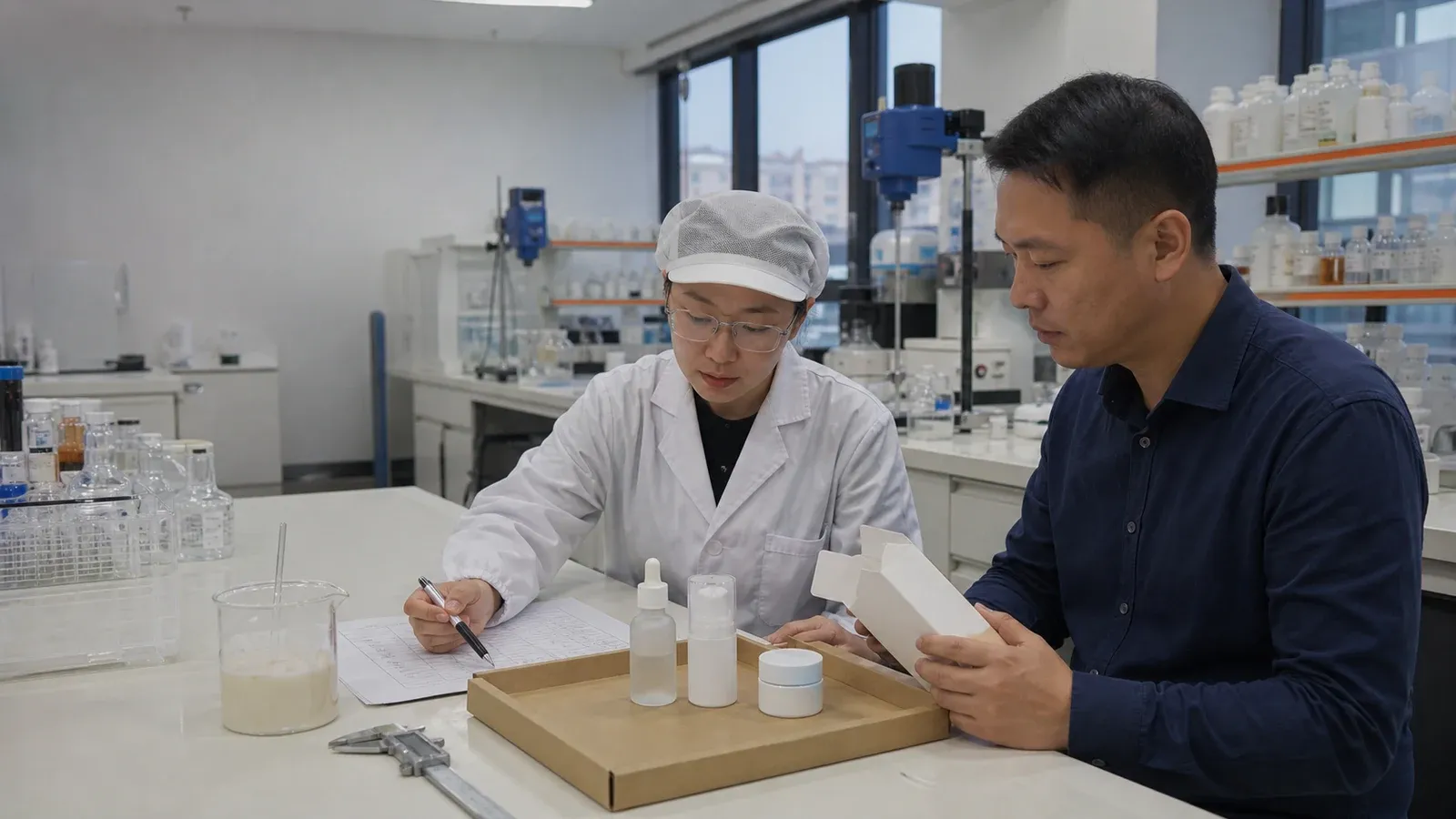
There is no useful universal price for manufacturing a skincare product. A reliable quote depends on five linked decisions: formula route, packaging, testing and documentation, order quantity, and launch market. The fastest way to get a comparable estimate is to submit these inputs together—not ask for a price per bottle in isolation.
The five inputs behind a skincare manufacturing quote
Cost layer | What changes it | What the brand should provide |
|---|---|---|
Formula route | Ready formula, formula adjustment or custom development | Product type, claims, texture and ingredient limits |
Packaging | Stock or custom components, decoration, carton and assembly | Pack format, size, finish and artwork status |
Testing and documents | Product risk, claims and target-market requirements | Launch countries, claims and required documents |
Order quantity | Batch size, component MOQ and production setup | Expected first order and reorder plan |
Delivery scope | Sampling, freight, duties and destination services | Ship-to market, incoterm and target date |
1. Formula route
A ready formula usually removes part of the development work. A custom formula may require more briefs, prototypes, revisions, raw-material review and validation before scale-up. The right choice depends on what the brand must own or differentiate—not on the lowest starting quote alone. Compare the routes in Ready Formula vs. Custom Formulation.
2. Packaging
The bottle, jar, pump, closure, decoration and carton can change both project cost and starting quantity. Stock components may reduce tooling and lead time. Custom colors, molds, printing processes or complex assembly add separate supplier decisions. Formula–pack compatibility still needs review; a cheaper component is not cheaper if it leaks, discolors or fails to dispense.
3. Testing and market documents
Testing is not a fixed global bundle. The FDA product-testing guidance says manufacturers or distributors are responsible for product safety and may need additional testing when available data leave gaps. For the EU, Regulation (EC) No 1223/2009 connects market placement with a safety assessment and product information file. These obligations make the target market, formula, claims and packaging part of the quotation brief. They do not support one standard test list or price for every product.
4. Order quantity
A larger order can spread setup work across more units, but it also increases total cash and inventory exposure. The practical starting quantity may be limited by bulk manufacturing, bottles, pumps, cartons or printing—not one factory-wide number. Review the linked skincare manufacturer MOQ guide before comparing unit prices.
5. Delivery scope
Confirm whether the quote includes samples, filling, coding, labels, cartons, assembly, finished-product checks, freight, insurance, duties and destination handling. A factory price and a landed project cost are not the same number.
Why unit price is not the full project cost
A quote can look low because it excludes work paid once or paid to another supplier. Separate one-time development costs, recurring unit costs and market-entry costs. Then compare suppliers on the same scope.
- One-time: formula development, custom color work, molds, artwork setup or first validation.
- Recurring: bulk product, components, filling, decoration, assembly and routine release checks.
- Market-entry: safety assessment, claims support, notification, translation, freight, duties or local responsible-party services where applicable.
What to send before asking for a quote
A short, specific brief produces a better answer than a long brand story. Send these six inputs:
- Product type and target user.
- Ready, modified or custom formula route.
- Target markets and intended cosmetic claims.
- Pack format, fill size and decoration level.
- Expected first order and 12-month reorder range.
- Sample deadline, launch date and delivery destination.
If these decisions are not yet settled, use the skincare product brief checklist or discuss the project through BIO-TIDE’s skincare R&D and development capabilities.
How to compare two manufacturing quotes
Put both quotations into the same three-column view: included, excluded and assumption. Ask each supplier to identify the formula route, component specification, quantity basis, tests, documents, number of sample rounds and delivery term. If one quote is lower, find the scope difference before treating it as a saving.
- Are the same packaging components and decoration included?
- Are sampling, revisions and scale-up work capped or open-ended?
- Which tests and documents are included, and for which market?
- What happens if a component MOQ is higher than the product batch?
- Which costs can change after the formula or artwork is approved?
Skincare manufacturing cost FAQ
Can a manufacturer quote from the product name alone?
Only as a rough screening estimate. “Serum” or “cream” does not define the formula route, ingredients, packaging, claims, quantity, tests or market scope needed for a comparable quotation.
Does a higher MOQ always reduce cost?
It may lower some unit costs, but it raises total inventory and cash exposure. The better decision is the lowest viable quantity that fits the component supply, production setup, sales plan and reorder timing.
Is a custom formula always more expensive?
It usually introduces more development variables than a ready formula, but the final project difference depends on the brief, revision count, ingredients, testing, packaging and rights agreed with the manufacturer.
Get a quote-ready manufacturing recommendation
Not sure which cost inputs fit your launch plan?
BIO-TIDE can help evaluate:
✓ Formula route and product positioning
✓ Packaging and order-quantity fit
✓ Target-market testing and documents
✓ Development budget and launch timeline