Pet Care
Latin America Pet Grooming: The 2027 Brand Opportunity
Latin America's pet care market is forecast at $18.88B by 2033. Where the demand sits, what the shelf is missing, and what a brand needs to list a line.
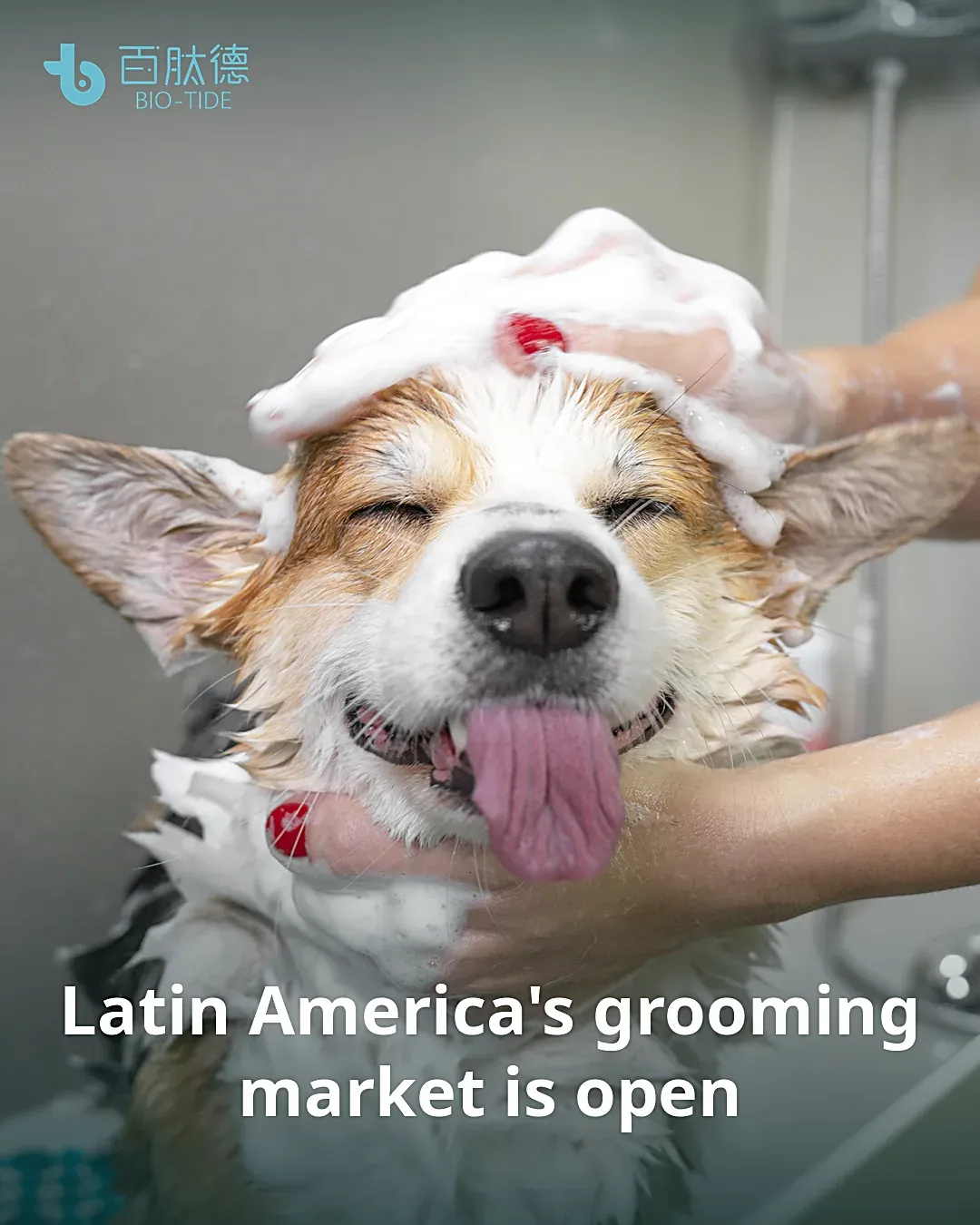
Latin America's pet care market is forecast to reach $18.88 billion by 2033, growing at 5.79% a year. The opportunity is the gap inside it: demand for premium, natural grooming is rising faster than local supply, and the fastest-growing segment still imports most of what it sells.
This guide explains where the demand is, what is missing on the shelf, what it takes to list a product, and why the window to act is now.
How big is the opportunity, really?
The region's pet care market is forecast at $18.88 billion by 2033, at a compound annual growth rate of 5.79%, according to IMARC. Dog grooming is growing faster than the market as a whole, at 7–10% a year, with premium and natural formulas taking share, according to IndexBox.
The demand is real, not forecast. Nestlé's pet business grew 5.3% organically in the third quarter of 2026, and close to 10% in emerging markets so far this year. Pet ownership in emerging markets grew 5% a year from 2019 to 2025, against 1.9% in developed markets.
In Mexico, Brazil and Colombia, commercial pet food now covers 60% to 80% of pets' calorie needs. Mars and Nestlé Purina are both expanding wet food capacity in Brazil. When the big food brands build capacity, the grooming shelf follows.
Where is the demand concentrated?
Brazil holds 40–45% of regional demand. Mexico holds 20–25%. Together, two markets are more than 70% of the region. A brand that enters Latin America starts with those two, and the country guides in this series cover Brazil, Mexico, Colombia, Argentina, Chile and Peru in turn.
Private label is gaining share in modern retail in both Brazil and Mexico. That matters for a supplier, because a retailer building its own label needs a manufacturer, not a finished brand. The shelf space is being created by the retailers themselves.
The demand is concentrated, the channel is open, and the buyer already exists. The question is what the shelf is still missing.
Brazil or Mexico first?
Brazil is the first market to enter, on size alone: 40–45% of regional demand, and the market where both Mars and Nestlé Purina are expanding wet food capacity. Brazil's ANVISA sets the evidence bar for efficacy claims, so a brand that can register in Brazil has a file that travels.
Mexico is the second market, at 20–25% of regional demand, with the clearest trade terms right now: the USMCA remains in force, and Mexico's government says more than 80% of its exports to the United States are still duty-free. Mexico's COFEPRIS applies its own evidence requirements, so the registration file must be built for Mexico, not copied from Brazil.
Colombia, Argentina, Chile and Peru follow in this series. Each has its own regulator, its own retail structure and its own shelf — and each country guide will give the numbers and the entry route for that market, instead of treating the region as one market.
What is actually missing on the shelf?
Treatment care is the fastest-growing grooming segment, at 6–8% a year, and the region still depends on imports for roughly 60–75% of its supply. That is a supply gap, not just a growth story.
Buyers who already import most of their treatment-care formulas are used to sourcing from abroad. They are not waiting to be convinced that a foreign supplier can deliver. They are waiting for a supplier whose file is ready: the formula, the ingredient list, the test reports and the manufacturing certification, in the form their registration team needs.
Premium and natural formulas are taking share, and the shelf is moving upmarket. A brand that arrives with a skincare-grade formula and a complete evidence file fits the shelf the retailers are already building.
What does it take to list a product in Latin America?
Brazil's ANVISA and Mexico's COFEPRIS are raising the evidence required for therapeutic and efficacy claims on pet products. A claim without published literature or trial data behind it is harder to list, and veterinary channels are keeping only brands that arrive with a complete evidence file.
The evidence is a file, not a sentence. Before you discuss price, ask any supplier for five documents: the formula file, the full ingredient list, the test reports, the manufacturing certification, and the claim language agreed in writing.
Our position is simple, and we state it up front: we make no therapeutic claims. We make skincare-grade pet grooming — shampoo, mousse and spray — and with every formula we provide the file, so your team can support its own registration under its own brand.
A launch blocked at registration costs the season: the listing fee, the packaging and the shelf plan that went with it. The brands that hold the shelf are the ones whose files are ready before the registration team asks.
Why is the window open now?
Two clocks are running. The first is the tariff clock. The US Section 301 investigation into industrial overcapacity is expected to report this week, with new tariffs that would stack on existing rates. No product list, no rates and no effective date have been published yet.
The US–China tariff truce runs to 10 January 2027: the 24% additional tariff stays suspended and 10% continues to apply. The USMCA remains in force, with Mexico's government saying more than 80% of its exports to the United States are still duty-free, and bilateral talks described as close to a deal.
None of this is a promise that tariffs will fall. It is a window in which the terms are known, and a quote written now rests on today's costs, at its normal validity. A quote written after the 301 findings land may not.
The second clock is the shelf itself. Private label is gaining share in modern retail in Brazil and Mexico, and the brands that will hold the premium shelf are the ones whose files are ready before the registration team asks. Waiting does not make the evidence appear. It only gives the shelf to a competitor whose file is already done.
How should a brand start?
Start with the range, not the bottle. A grooming line is not one product: the shelf needs a shampoo for the everyday wash, a mousse for the quick clean between baths, and a spray for the finishing touch at home.
Choose the variants from a ready-formula library, then approve the samples the way your customer will check the product — on the coat, not on paper. Confirm the minimum order in writing: from 1,000 units for a single stock item.
Agree the claim language before the label is designed, so the registration file and the shelf copy never contradict each other. Confirm the payment and logistics route before you commit to a launch date.
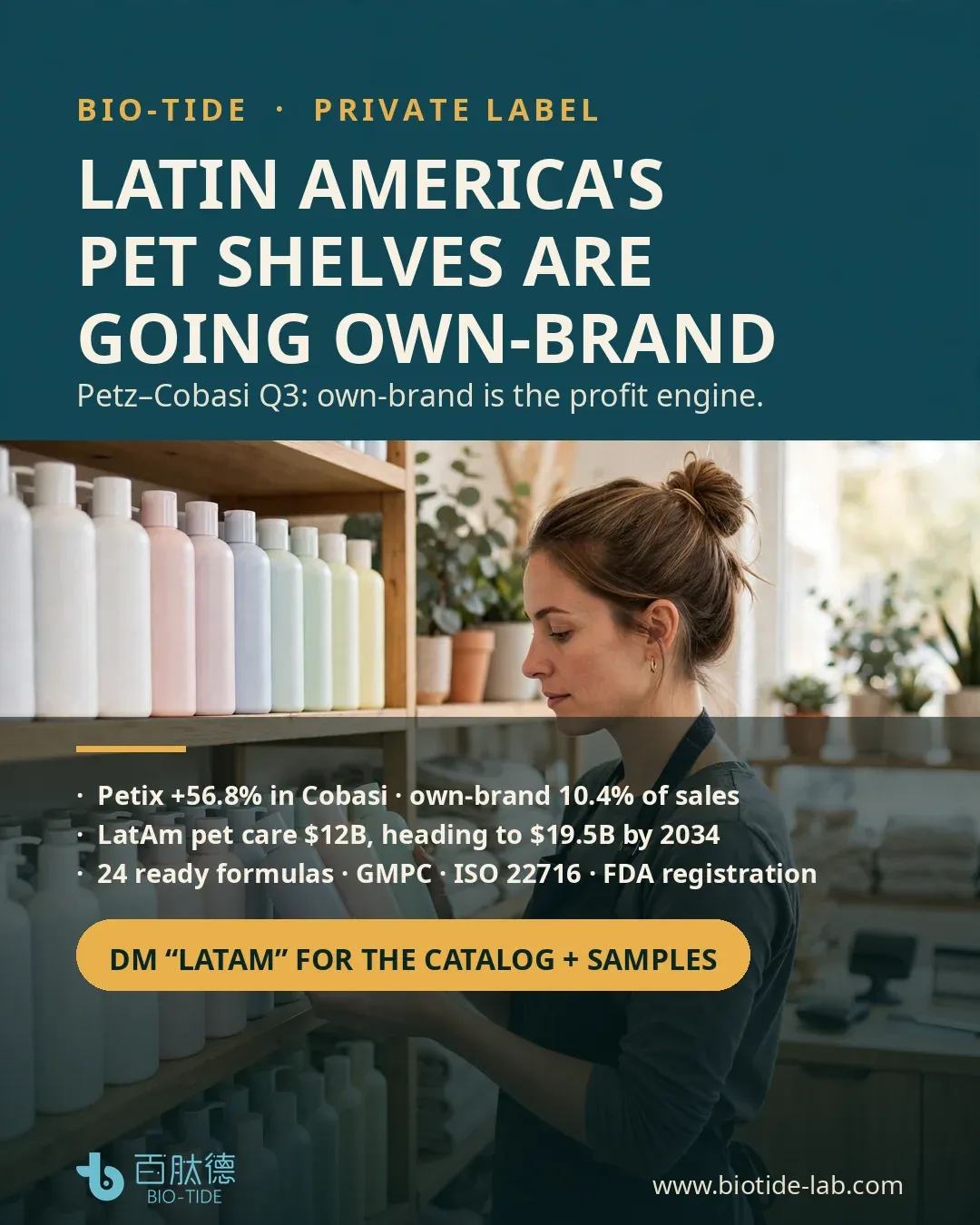
We make skincare-grade pet grooming for private labels: 24 ready formulas across shampoo, mousse and spray, made with the same discipline on ingredients, stability and testing that a skincare line gets. GMPC and ISO 22716, with FDA registration. Samples first, MOQ from 1,000 units. Made by the manufacturer behind MUSENTANG.
If Latin America is on your 2027 plan, send us your product line and your target volumes. We will send the catalog, the samples and an itemised quote — and the documentation file your registration team needs to see, so you can check the evidence before you commit. We reply within one hour. DM "OVERVIEW" for the catalog and samples.