Sep 11, 2026Manufacturing & Quality
Skincare Packaging Artwork Review: A Pre-Production Checklist for Brands
Use this skincare packaging artwork review checklist to align required copy, claims, dimensions, print proofs, coding and approvals before production.
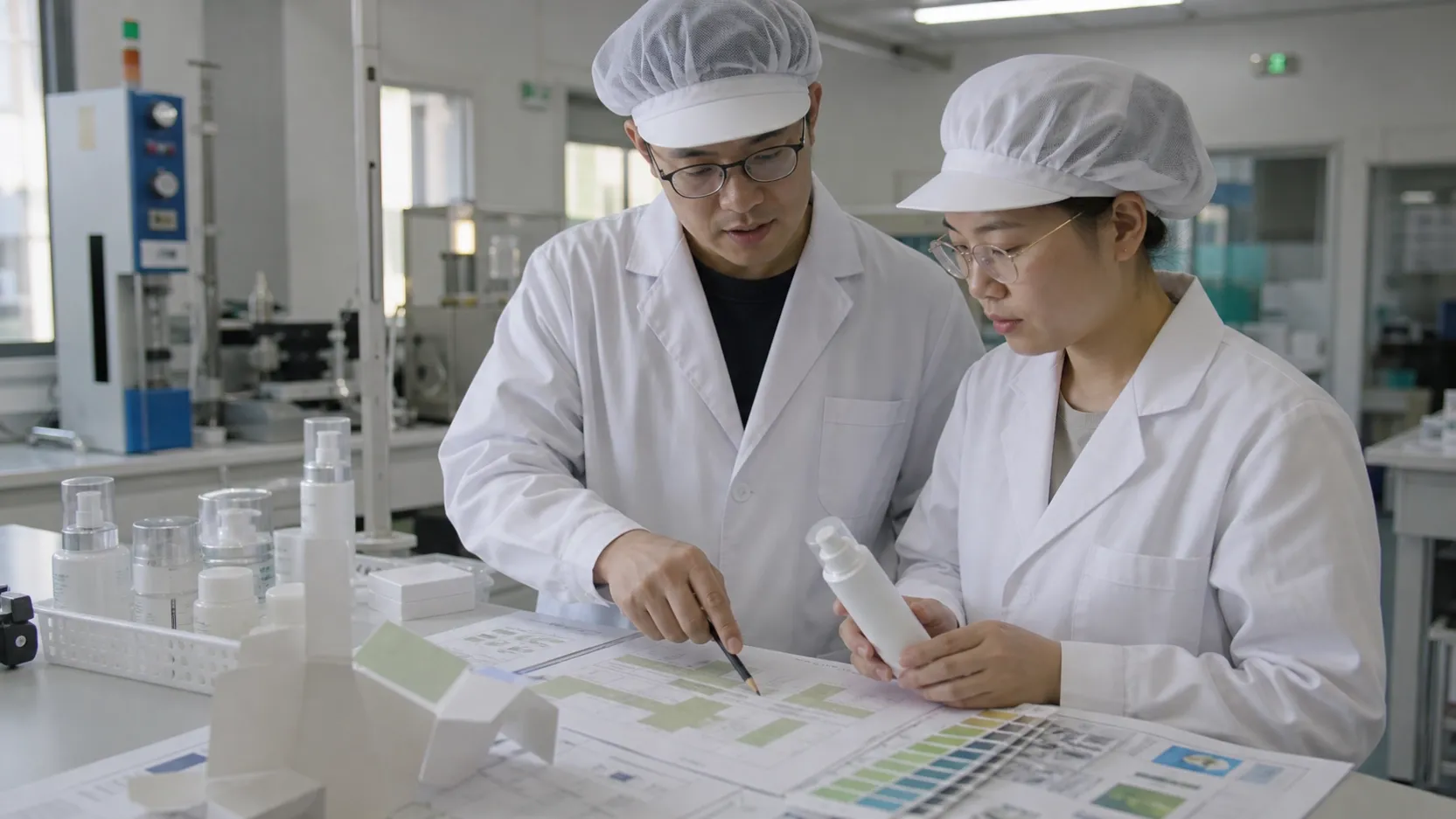
Packaging artwork often looks finished long before it is ready for production. A clean PDF can still contain the wrong formula version, incomplete market copy, an unsupported claim, text outside the printable area or a batch-code zone that the filling line cannot use. Once plates, cartons or labels are ordered, a small file error can become a costly physical problem.
A skincare packaging artwork review should therefore be treated as a pre-production control, not a design preference. The review connects the intended market, approved formula, pack structure, printer requirements and final marketing message in one controlled file.
This checklist is for growing skincare brands preparing labels, cartons and containers for first production or a packaging change. It uses United States and European Union examples to show the type of checks involved. It is general development guidance, not legal advice; every target market still needs qualified, market-specific review.
Why artwork review is more than proofreading
Proofreading checks spelling. Production artwork review checks whether the exact commercial pack can be printed, filled, coded, read and supported. That requires input from brand, regulatory, formulation, packaging, quality and production teams. Each team sees a different risk.
For a US launch, the FDA Cosmetics Labeling Regulations outline information such as product identity, net quantity, business details, warnings when needed and ingredient declaration. The FDA also explains that required information must be prominent and conspicuous. In the EU, Article 19 of Regulation (EC) No 1223/2009 covers items such as responsible-person details, nominal content, durability or period-after-opening information, precautions, batch identification, product function and ingredients. Language rules can also vary by Member State.
These are not interchangeable global templates. The useful operating principle is to identify the target market first, then map each required item to a visible place on the actual pack.
Step 1: Lock the market, product and pack hierarchy
Begin with the approved product brief. Record where the product will launch, how it is classified, what the consumer receives and which surfaces form the immediate container and outer packaging. A serum bottle sold inside a carton has different space and review needs from a jar sold without a box.
If this information is still moving, return to the skincare product brief used before requesting samples. Artwork should not become the place where teams quietly make unresolved product decisions.
- Target countries or regions and launch sequence.
- Product type, intended cosmetic purpose and directions for use.
- Primary container, closure, label, carton, insert and any secondary pack.
- Fill quantity, nominal content statement and measurement units.
- Responsible business details and the party approving local compliance.
Step 2: Create one controlled master-copy deck
Do not ask a designer to collect copy from emails, chat messages and old files. Build one master-copy deck with an owner, version number and approval status. The deck should separate mandatory information, approved marketing copy, variable production data and design notes.
The copy deck should reference the current formula and the finished-product specification sheet used before scale-up. If the formula, fill size or pack component changes, the artwork team should know which sections need review rather than assuming the old copy remains valid.
- Mark every field as draft, under review or approved.
- Keep translations in the same controlled record as the source copy.
- Name the owner for regulatory, brand and technical approval.
- Record the exact artwork file name and revision date.
Step 3: Separate required information from marketing copy
Required information should not compete with decoration. Review the principal display panel and information panels against the rules for the target market, then check that text remains readable after the artwork is placed on the real-size dieline.
The FDA Cosmetics Labeling Guide is a practical starting point for understanding which information commonly appears on the outer container and which details belong on information panels. It does not replace a product-specific review, especially when package size, bilingual copy or warnings reduce available space.
- Confirm product identity and net quantity are in the correct area.
- Check business name, address and distributor wording where applicable.
- Verify directions, precautions and warnings against the product use case.
- Check the ingredient declaration position, sequence and naming convention.
- Confirm required language is used for each intended market.
Step 4: Reconcile the ingredient list with the approved formula
The ingredient declaration should come from the controlled formula record, not from a previous product or an early quotation. Match the artwork list to the correct formula version, then review ingredient naming, order and market conventions. Pay special attention after fragrance, colorant, extract, preservative or supplier changes.
A useful approval record identifies the formula code and version used to create the list. This makes later change control possible. If the list cannot be traced to an approved formula, the artwork is not ready for print.
Step 5: Review claims, product names and visuals together
Consumers do not read claims in isolation. Product names, icons, before-and-after images, numbers and nearby qualifiers can create a broader message than the sentence alone. Review the entire panel as one communication.
Use the cosmetic claims substantiation plan prepared before launch to confirm that each benefit statement matches the evidence held for the finished product. Remove or qualify wording that is stronger, more specific or more therapeutic than the support allows. Do not imply FDA approval for a cosmetic label; FDA does not pre-approve cosmetic labeling.
A practical artwork approval table
Review area | What to verify | Approval evidence |
|---|---|---|
Product and market | Product purpose, classification, target markets and pack hierarchy are fixed. | Approved brief and market review record. |
Required label copy | Identity, quantity, business details, warnings, directions and local-language needs are mapped. | Controlled copy deck with field owner. |
Ingredient declaration | The list matches the approved formula version and target-market naming rules. | Formula code, version and signed ingredient-list check. |
Claims and visuals | Words, numbers, icons and images do not exceed the approved evidence or imply an unintended use. | Claim-to-evidence summary and marketing approval. |
Physical fit and print | Text, barcode, varnish, seams, curves and safe areas work on the real component and dieline. | Printer proof and physical mockup review. |
Coding and traceability | Batch, date and other variable-data zones suit the selected line and remain legible. | Coding trial or confirmed line specification. |
Step 6: Check artwork on the real pack and dieline
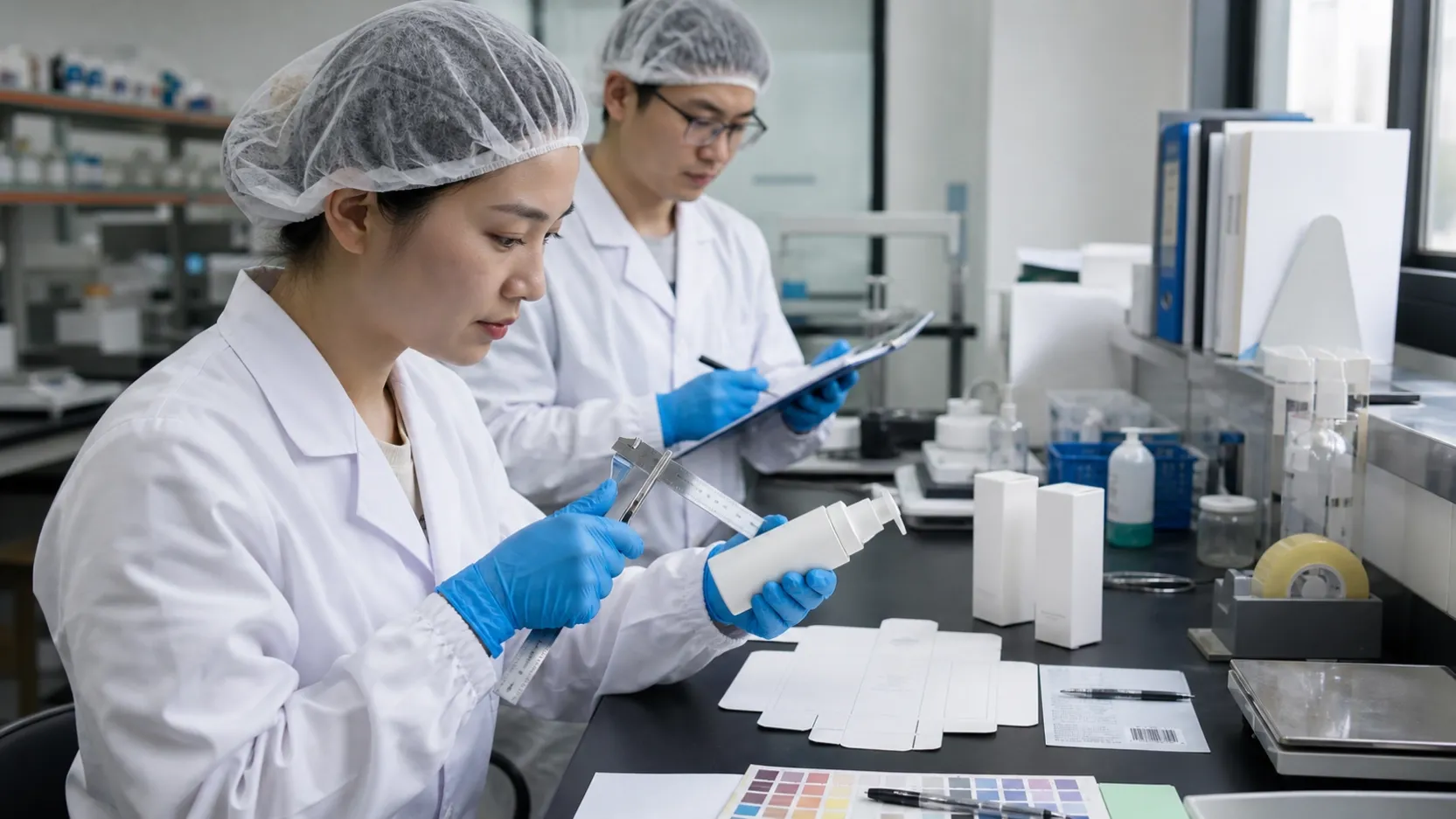
A screen view hides scale. Print the artwork at 100% and place it on the actual bottle, jar, tube or carton. Check curved surfaces, seams, overlaps, label gaps, pump orientation and the areas covered by caps or secondary packaging.
This step complements packaging compatibility testing for skincare. Compatibility asks whether the formula and pack remain suitable together; artwork review asks whether the printed information and graphics survive the physical format and production process. Both should be settled before a large component order.
- Measure the printable area against the supplier dieline.
- Keep critical text and codes inside agreed safe zones.
- Check line breaks, minimum readable size, contrast and crowded panels.
- Confirm barcode orientation and quiet areas with the relevant partner.
- Review how the front panel faces when the closure is assembled.
Step 7: Approve a printer proof and physical mockup
A PDF approval is not the same as approving printed output. Ask the packaging supplier which proof can represent color, opacity, foil, varnish, embossing, white ink and substrate behavior. For critical launches, review a physical mockup or production-representative sample before the full run.
Set expectations clearly: a color-managed contract proof may answer one question, while a digital sample on a different material may only confirm layout. Record what the proof does and does not represent. Compare the result under ordinary viewing light, not only a bright design studio screen.
Step 8: Verify variable data and filling-line needs
Batch codes, date marks and other variable data are often added during production. Their zone must be reachable by the selected printer or laser, stay away from folds and textured finishes, and remain readable after filling, handling and transport.
Send the line team a marked drawing, code format and sample pack. Confirm the available print area, character height, contrast, orientation and how the code will be checked during production. If the line or component changes, repeat this review.
Step 9: Use a controlled approval and change process
The final artwork file should have one unambiguous status. Avoid names such as final, final-new and final-v7. Use a controlled code, revision and approval date, then lock the approved source file. The printer purchase order should point to that exact version.
- Brand approval confirms positioning, spelling and visual intent.
- Technical approval confirms formula, directions, fill and pack details.
- Regulatory approval confirms the market-specific label and claim route.
- Packaging approval confirms dieline, decoration and component fit.
- Production approval confirms coding and line-handling requirements.
Any later change to formula, supplier, component, quantity, claim, address, market or language should trigger a documented impact review. The result may be no change, a revised file, new testing or market-specific artwork.
Common packaging artwork mistakes
- Starting design before the target markets and pack structure are fixed.
- Copying an ingredient list from an early formula or another product.
- Approving claims in a spreadsheet without checking the final visual context.
- Reviewing a zoomed PDF but never printing the dieline at actual size.
- Leaving no stable area for batch or date coding.
- Treating a digital color sample as proof of every decoration effect.
- Sending the supplier a file that lacks a controlled revision and approval record.
Skincare packaging artwork review FAQ
Who should approve skincare packaging artwork?
At minimum, the brand should assign owners for marketing, technical product data, market-specific regulatory review and packaging production. Smaller teams can combine roles, but the responsibility for each decision should still be visible in the approval record.
When should the artwork review begin?
Begin the copy and market map once the product brief and pack route are stable. Final print approval should wait until the formula version, fill quantity, component specification, claims and required market information are controlled.
Is a PDF proof enough before printing?
It can confirm copy and layout, but it may not represent substrate color, opacity, metallic effects, varnish, embossing or performance on a curved component. Agree with the supplier which physical or color-managed proof is needed for the risk of the project.
Does the manufacturer approve market compliance for the brand?
A development or manufacturing partner can coordinate formula, packaging and production inputs. The brand or responsible market operator should still assign qualified review for the final product, claims and target-market label. No general checklist guarantees market acceptance.
Approve the file before it becomes inventory
A reliable artwork review begins with a locked brief and ends with a controlled production file. Map market information, reconcile the formula, review claims in context, test the real-size pack, confirm coding and record every approval. The earlier these checks happen, the easier it is to correct the file instead of correcting printed stock.
BIO-TIDE can connect packaging decisions with skincare R&D and product-development planning, formula and sample work, testing inputs and production coordination. The scope should be agreed for the product, pack and intended markets.
Need a packaging-ready skincare development plan?
- Target market and product classification
- Formula and ingredient-list version
- Pack structure and artwork files
- Testing, proofing and production timeline