Sep 11, 2026Manufacturing & Quality
Cosmetic Equipment Cleaning Controls: What Skincare Brands Should Check
Use this practical review to discuss cosmetic equipment cleaning, product changeovers, release checks, records and exceptions with a skincare manufacturer.
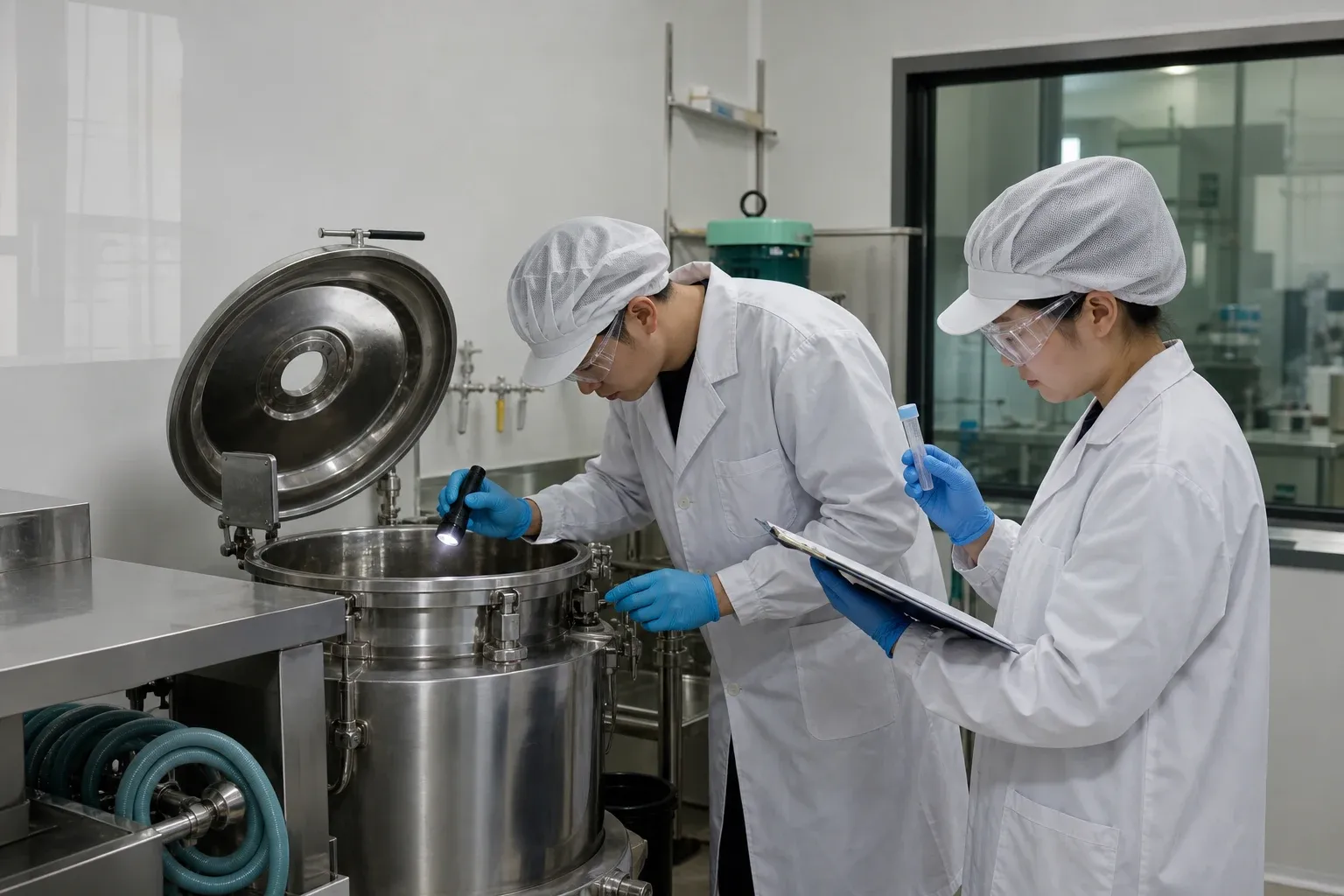
A cleaning procedure is useful only when it answers four practical questions: what was cleaned, how it was cleaned, who released it, and which batch used it next. For a skincare brand, that evidence matters more than a factory saying its equipment is “clean.”
Shared vessels, pumps, hoses and filling parts can retain colour, fragrance, oil, wax, powder or microorganisms from the previous product. The buyer’s job is not to design the factory’s procedure. It is to confirm that changeover risk is controlled before the first commercial batch.
The buyer test: can one cleaning event be reconstructed?
Ask the manufacturer to walk through one recent cleaning record from the previous product to the next batch. A useful record should let a reviewer reconstruct the event without relying on memory.
- Equipment and removable parts are identified.
- The previous product or product family is recorded.
- The approved cleaning instruction and version are named.
- The operator records completion, not just the start time.
- A separate check or release decision is visible.
- The equipment status is linked to the next production batch.
If the trail stops at “cleaned after use,” the control is too vague for a reliable investigation.
Five decisions to settle before production
1. Define the full product-contact path
The main mixing vessel is only one part of the path. Transfer lines, valves, gaskets, pump heads, holding containers, sampling tools and filling nozzles can all contact bulk product. Ask which parts are cleaned in place, removed for cleaning or replaced under a defined rule.
The answer should match the formula. A clear serum, a coloured mask and a wax-rich balm may use different equipment or require different attention even in the same room.
2. Match the method to the residue
A controlled instruction normally defines the sequence, disassembly points, cleaning agent, concentration, water type, temperature or contact time where relevant, mechanical action, rinse, drying and protected storage. It should also state who performs each step.
Treatment details are site-specific, but the logic should be visible: the method must remove the residue without damaging product-contact surfaces or leaving a new cleaning-agent residue. When water is used for the final rinse, connect the procedure to the manufacturer’s cosmetic manufacturing water controls.
3. Use a changeover rule, not one routine for every product
The previous product changes the cleaning question. Persistent colour, fragrance, high oil content, wax, powder or strongly adsorbing materials may justify enhanced cleaning, a restricted production sequence or dedicated parts.
Ask the manufacturer how it groups product families and what triggers a different route. A useful decision considers the previous product, the next product, equipment design, residue difficulty, target market restrictions, idle time and maintenance history.
4. Separate “cleaned” from “released”
Completion of the cleaning steps does not automatically release equipment. The release method may include a defined visual inspection, odour or colour review, rinse or swab testing, status labelling, supervisor review or another qualified check.
The method should have a clear acceptance result and owner. If a check fails, the response should be hold, reclean and investigate—not an undocumented judgment that the equipment “looks acceptable.”
5. Plan the abnormal cases
The control needs to work after a damaged gasket, unexpected residue, missed record, long shutdown or maintenance intervention. Maintenance can introduce lubricants, metal particles, tools or replacement parts into the product-contact area, so the return-to-service route should be defined before the line restarts.
What evidence should a brand request?
A brand rarely needs every factory log with every shipment. The practical document package depends on the relationship and risk. Agree which evidence is routinely provided, which records the manufacturer retains, and how quickly they can be retrieved for an audit, complaint or investigation.
The agreement may refer to:
- an approved equipment and parts list;
- a cleaning or changeover instruction;
- a completed equipment log;
- a release or status record;
- deviation and recleaning records;
- traceability to the previous product and next batch.
This should connect with the project’s cosmetic batch traceability plan, not become an isolated checklist.
Red flags during manufacturer review
- The answer changes depending on who is asked.
- Hoses, valves or filling parts are missing from the equipment scope.
- One cleaning routine is said to cover every formula without grouping logic.
- The person who cleans also releases the equipment with no defined review.
- Long shutdowns and maintenance have no return-to-service rule.
- Records cannot connect the cleaning event to the next batch.
These signs do not prove a batch is defective, but they identify questions that should be resolved before scale-up.
Regulatory context
ISO 22716:2007 remains the current ISO guideline for cosmetic production, control, storage and shipment. The FDA cosmetic GMP inspection checklist also asks whether processing, transfer and filling equipment is appropriately designed, maintained, clean and sanitized at suitable intervals. These sources establish the GMP context; they do not prescribe one universal cleaning method for every formula and factory.
A practical next step
Before approving the first production date, ask the manufacturer to show how one real changeover would be planned, recorded and released for your formula. That short walkthrough often reveals more than a generic certificate.
BIO-TIDE can help connect formula properties, scale-up, manufacturing controls and documentation into one development plan. Discuss your production control plan if you need a focused review before commercial manufacture.