Sep 11, 2026Manufacturing & Quality
Water Quality in Cosmetic Manufacturing: What Skincare Brands Should Confirm
Learn what skincare brands should confirm about manufacturing water specifications, treatment, monitoring, sampling, shutdowns and change control before production.
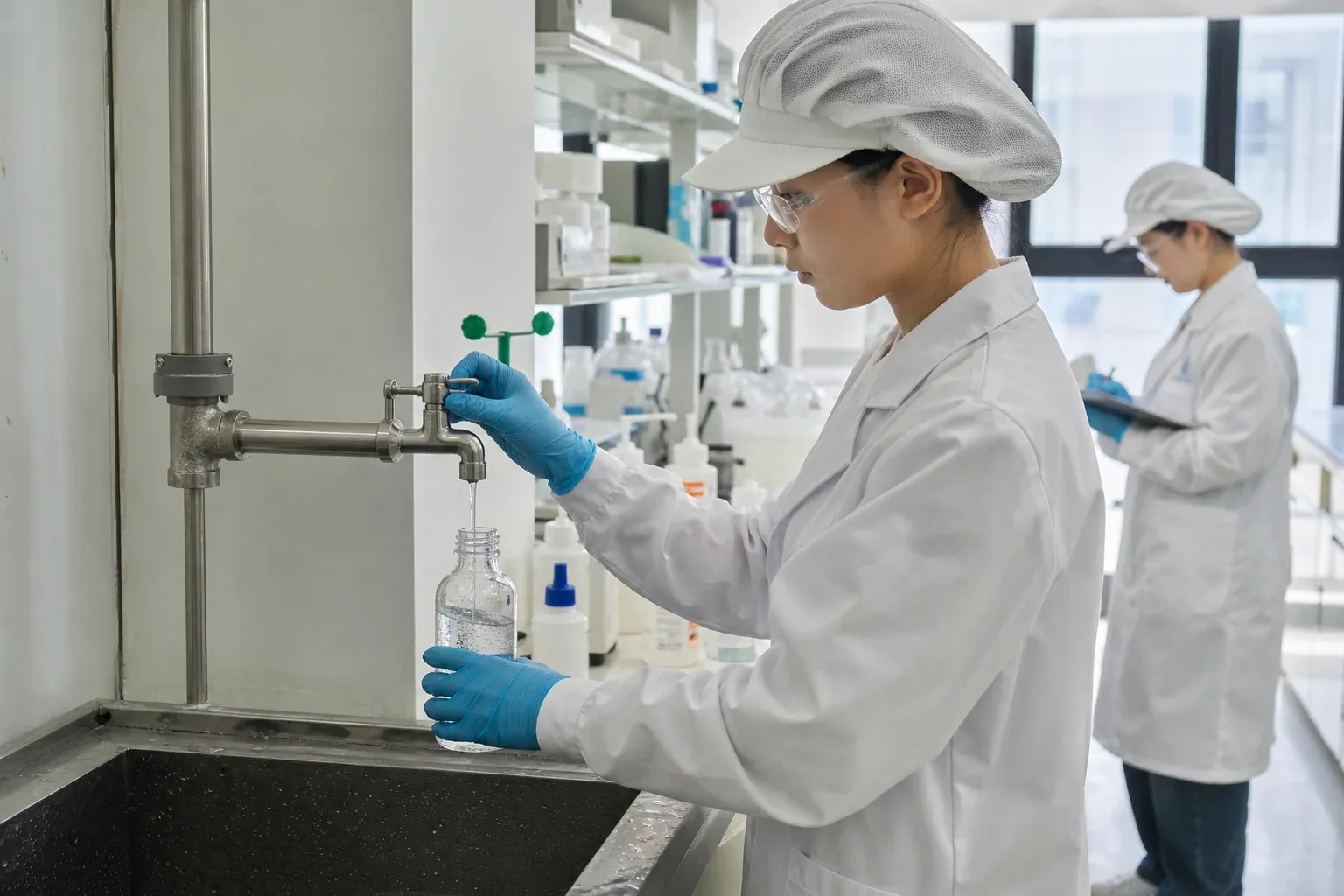
“Purified water” is not a complete specification. For skincare manufacturing, the useful question is whether the water system consistently produces water that meets an approved intended-use specification at the point and time of use.
This distinction matters because water can be a major formula ingredient, a product-contact rinse and a processing input. A single passing sample does not show whether the system remains controlled through routine production, maintenance, seasonal change or a long shutdown.
Start with use, not treatment technology
Reverse osmosis, deionization, softening and filtration describe treatment steps. They do not by themselves define the quality of water delivered to a mixing vessel or final rinse point.
Map where water is used:
- as a formula ingredient;
- for product-contact cleaning or final rinsing;
- in processing or laboratory work;
- at storage and distribution points before use.
Different uses may have different specifications. The manufacturer should be able to explain which specification applies at each point and why it is suitable for the formula and process.
The four records that make a water system reviewable
An approved specification
The specification should identify the chemical, physical and microbiological attributes relevant to the system and intended use. Brand teams do not need to invent limits, but they should know that limits, test methods and decision rules are defined and approved.
A sampling-point map
Sampling only at the treatment outlet can miss what happens in storage, distribution and points of use. The map should show where routine samples are taken, how those locations relate to production, and whether low-use or difficult sections of the system receive appropriate attention.
A monitoring and trend record
A result can remain within a limit while moving steadily in the wrong direction. Trend review helps the quality team see drift, recurring alerts, seasonal effects or changes after maintenance before a larger failure occurs.
A release and investigation pathway
The manufacturer should define what happens after an alert, an out-of-limit result, an unusual organism, maintenance or a prolonged shutdown. The pathway should identify who places the system or affected production on hold, what is investigated, and what evidence allows a return to use.
A compact brand review checklist
Ask these questions before commercial production:
- What incoming water feeds the treatment system?
- Which approved specification applies at the point of use?
- Where are routine samples collected?
- How are results trended rather than reviewed one by one?
- What triggers investigation, sanitization or production impact assessment?
- How is the water status linked to production dates and batches?
- What releases the system after maintenance or a long shutdown?
- Which system changes require customer notification or technical review?
The answers should describe a controlled system, not a brand name of equipment.
Water quality and finished-product protection are different controls
Controlled manufacturing water does not replace a suitable preservation strategy. The finished formula, packaging and expected consumer use still determine the evidence needed for microbiological protection. Plan the water review alongside cosmetic preservative challenge testing rather than using one result as a substitute for the other.
The same separation applies to cleaning. Water may meet its specification while a poorly designed rinse, dead leg or wet storage condition creates a different equipment risk. The equipment cleaning review should define how the final rinse and post-cleaning status are controlled.
What a brand needs to receive—and what it does not
The brand may not need every daily water result. A proportionate agreement can define:
- the routine document or release statement supplied with production;
- the source records retained by the manufacturer;
- notification triggers for significant excursions or changes;
- record access during audits, complaints or investigations;
- the person responsible for production-impact decisions.
This keeps oversight practical without turning the brand into the operator of the factory water system.
Regulatory context
The FDA cosmetic GMP inspection checklist asks whether water used as a cosmetic ingredient is tested regularly against chemical and microbiological specifications. ISO 22716:2007 provides broader GMP guidance for cosmetic production, control, storage and shipment. Neither source gives one universal water grade or monitoring plan for every cosmetic product; the manufacturer must qualify the system for its intended use.
Decision rule before scale-up
Do not approve the water discussion because a factory says it uses a familiar treatment process. Approve it when the intended use, specification, sampling points, trend review, exception response and change controls form one traceable system.
BIO-TIDE can help connect formulation, water-related inputs, testing and scale-up within a defined development scope. Review your skincare manufacturing plan before locking the commercial production schedule.