
Sep 28, 2026Manufacturing & Quality
Cosmetic Pre-Shipment Inspection: 7 Checks Before Your ODM Order Leaves the Factory
A practical buyer-side checklist for inspecting finished skincare goods after batch release and before an ODM order leaves the factory.

Pre-shipment inspection is a buyer-side check of selected finished goods after the manufacturer has released the batch and before the order is loaded or dispatched. It should confirm that the right goods were made, the shipment is complete, the agreed quality standard is met, and the evidence supports a clear ship, hold, or escalate decision.
It does not replace GMP controls, laboratory testing, or the manufacturer's cosmetic batch release process. Its value is different: it gives the brand one final, structured view of the physical order it is about to receive.
Where Pre-Shipment Inspection Fits
Control point | Main purpose | Typical timing | Main output |
|---|---|---|---|
Packaging incoming inspection | Check empty bottles, jars, pumps, labels, and cartons | Before filling | Accepted or rejected component lot |
Batch release | Review manufacturing, testing, and release evidence | After production and testing | Released or held batch |
Pre-shipment inspection | Verify selected finished units, cartons, quantity, and shipment identity | After release, before dispatch | Ship, hold, or escalate report |
Defect investigation | Find the cause of a confirmed problem | After a defect is detected | Root cause and corrective action |
The inspection should be written into the project plan before production. A skincare manufacturing quality agreement can define who selects the samples, which defect categories apply, what evidence is required, and who makes the final decision.
1. Freeze the Inspection Brief Before the Visit
Do not ask an inspector to “check quality” without a measurable brief. Provide the approved product specification, packaging artwork, master samples where relevant, purchase order, packing requirements, defect definitions, functional checks, and reporting format.
Use a cosmetic packaging defect standard to separate critical, major, and minor observations in a way that fits the product and market. The acceptance rules should be agreed before anyone opens the first carton.
2. Confirm the Shipment Population
Start by identifying the lot that is actually ready for inspection. Record the product name, SKU, shade or variant, batch or lot number, production quantity, carton count, and storage location. Compare these details with the purchase order and packing list.
If part of the order is unfinished, stored elsewhere, or mixed with another lot, the sample may not represent the shipment. Resolve that point before inspection continues.
3. Select Cartons and Units Across the Lot
Samples should come from more than one easy-to-reach carton. Select cartons from different positions in the finished-goods area, then record the carton numbers and unit locations so the selection can be traced.
ISO 2859-1:2026 provides a current framework for sample-based, AQL-indexed lot-by-lot inspection. It does not choose the correct defect definitions or risk settings for a skincare project. Those choices still need to reflect the product, packaging, market, supplier history, and commercial risk.
4. Check Finished-Unit Identity and Presentation
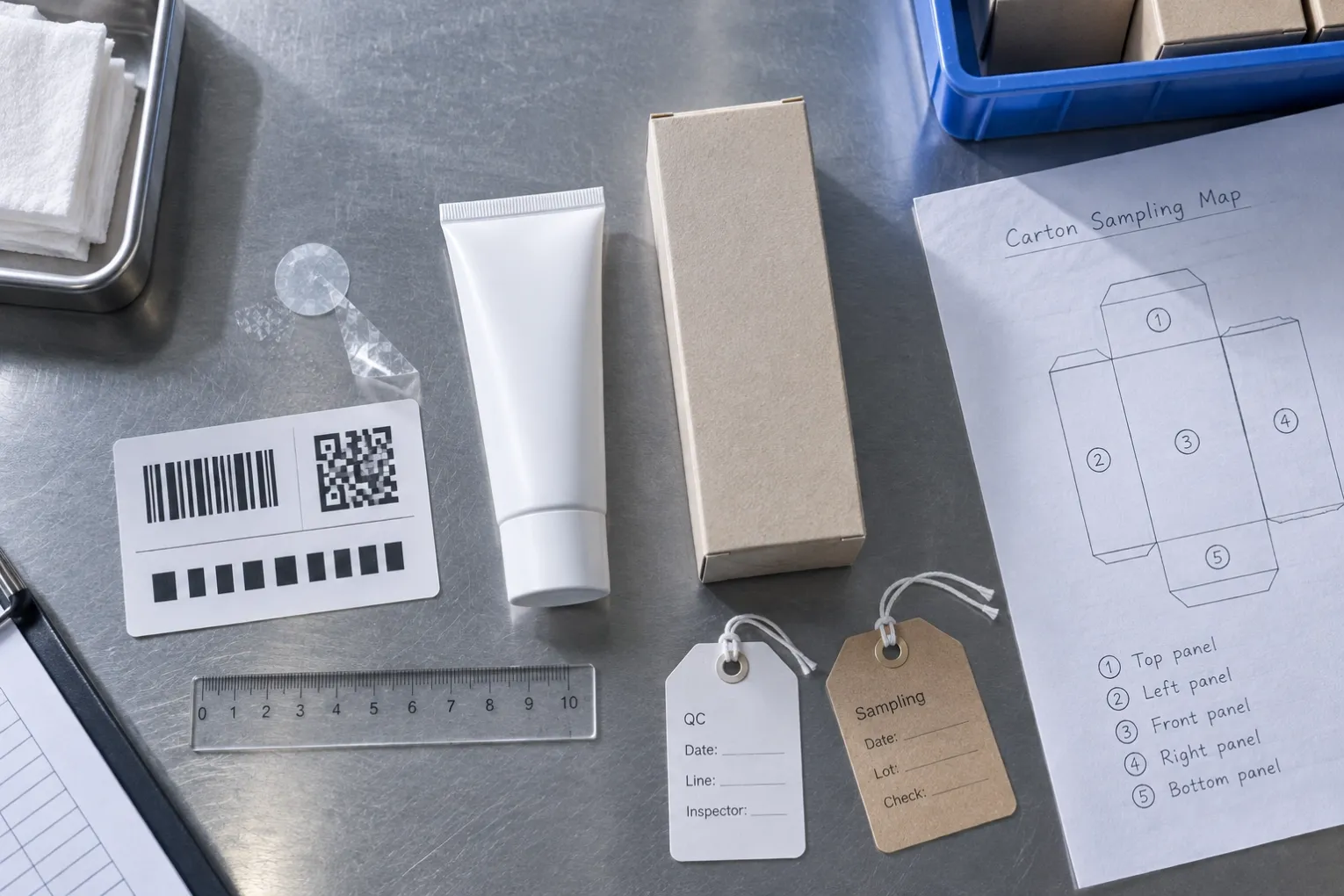
For each selected unit, compare the physical product with the approved specification. Checks may include:
- Product, variant, fill format, and pack configuration
- Component color, finish, fit, and visible cleanliness
- Label and carton version, placement, legibility, and language
- Batch coding, date coding, and code readability
- Seal, cap, pump, dropper, or closure condition
- Agreed cosmetic appearance, odor, color, and texture observations
Visual inspection is not a substitute for validated laboratory testing. It is a controlled comparison against approved criteria.
5. Test the Agreed Functions
Functional checks should reflect how the customer will use the pack. Depending on the format, that may include pump priming, dispensing, cap fit, dropper pickup, closure torque, tamper feature condition, label adhesion, or carton assembly.
Record the method and result. “Works well” is not useful evidence. A short test description, sample identity, observation, and photo make the result easier to review.
6. Reconcile Quantity, Carton Marks, and Traceability
Count selected cartons or verify packed quantities against the packing list. Check shipper marks, SKU identification, carton sequence, pallet labels, and destination information. Confirm that unit, inner carton, shipper, and paperwork point to the same batch identity.
This step should connect with the brand's cosmetic batch traceability requirements. When a later complaint refers to one unit, the records should make it possible to identify the related batch and shipment.
7. Close With One Disposition and Evidence Pack
The report should end with one unambiguous status: ship, hold pending correction, or escalate for a documented decision. List every nonconformity with its sample identity, defect category, photo, quantity found, and agreed follow-up.
The evidence pack should also include the inspection brief, shipment population, sample selection record, results, packing-list check, and final authorization. Matched cosmetic retain samples can support later investigations, but they do not correct a weak inspection record.
Questions to Ask Your Inspector or ODM
- Was the full order complete and available when samples were selected?
- How were cartons and units chosen across the lot?
- Which approved specifications and samples were used for comparison?
- Which functional checks were performed, and how were results recorded?
- How were unit codes, cartons, pallets, and documents reconciled?
- Who can approve shipment when an observation falls outside the agreed rule?
Need a Project-Specific Pre-Shipment Inspection Brief?
Not sure what to check before your ODM order leaves the factory?
BIO-TIDE can help evaluate:
- Finished-goods inspection scope
- Sampling and defect categories
- Product, packaging, and carton checks
- Report and shipment decision rules