
Sep 19, 2026Manufacturing & Quality
Cosmetic Packaging Defect Detection: Build a Clear Inspection Standard Before Production
A practical method for skincare brands to define packaging defects, inspection conditions, severity classes, and sampling rules before production begins.
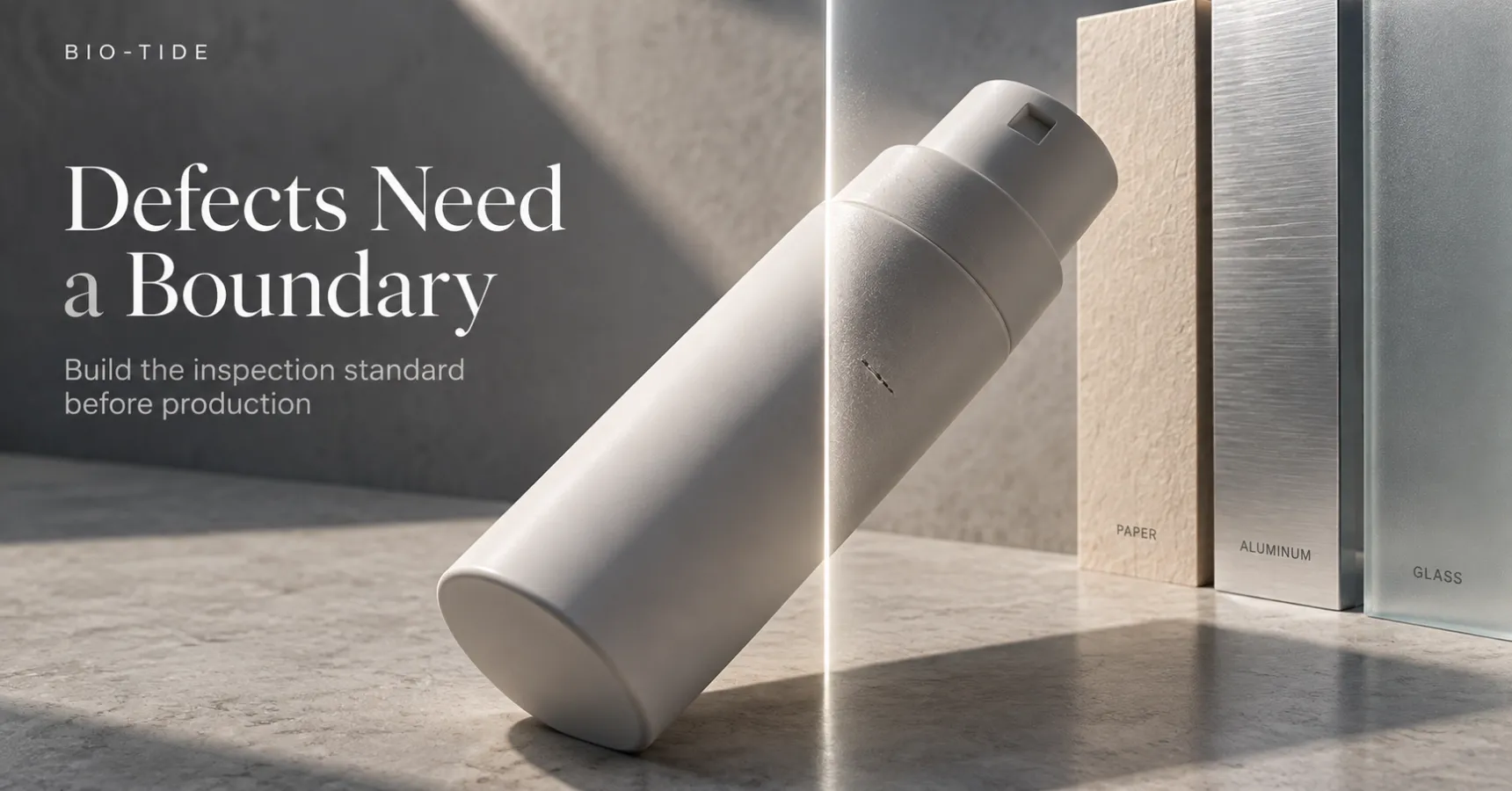
Cosmetic packaging defect detection works only when the brand and manufacturer share the same acceptance boundary. Define the defect, viewing conditions, severity, reference sample, and inspection method before mass production. Otherwise, one inspector may reject what another accepts—and the disagreement appears when the order is already at risk.
Why a visual defect list is not enough
Words such as “scratch,” “color difference,” or “poor printing” sound clear, but they leave room for interpretation. A faint mark seen under a bright inspection lamp may disappear in normal retail light. A pump that looks fine may still fail after repeated use.
Start with a signed sample or an approved reference image, then define how the component will be checked. This adds a repeatable boundary to the broader cosmetic packaging incoming inspection process.
Four inputs that make defect detection repeatable
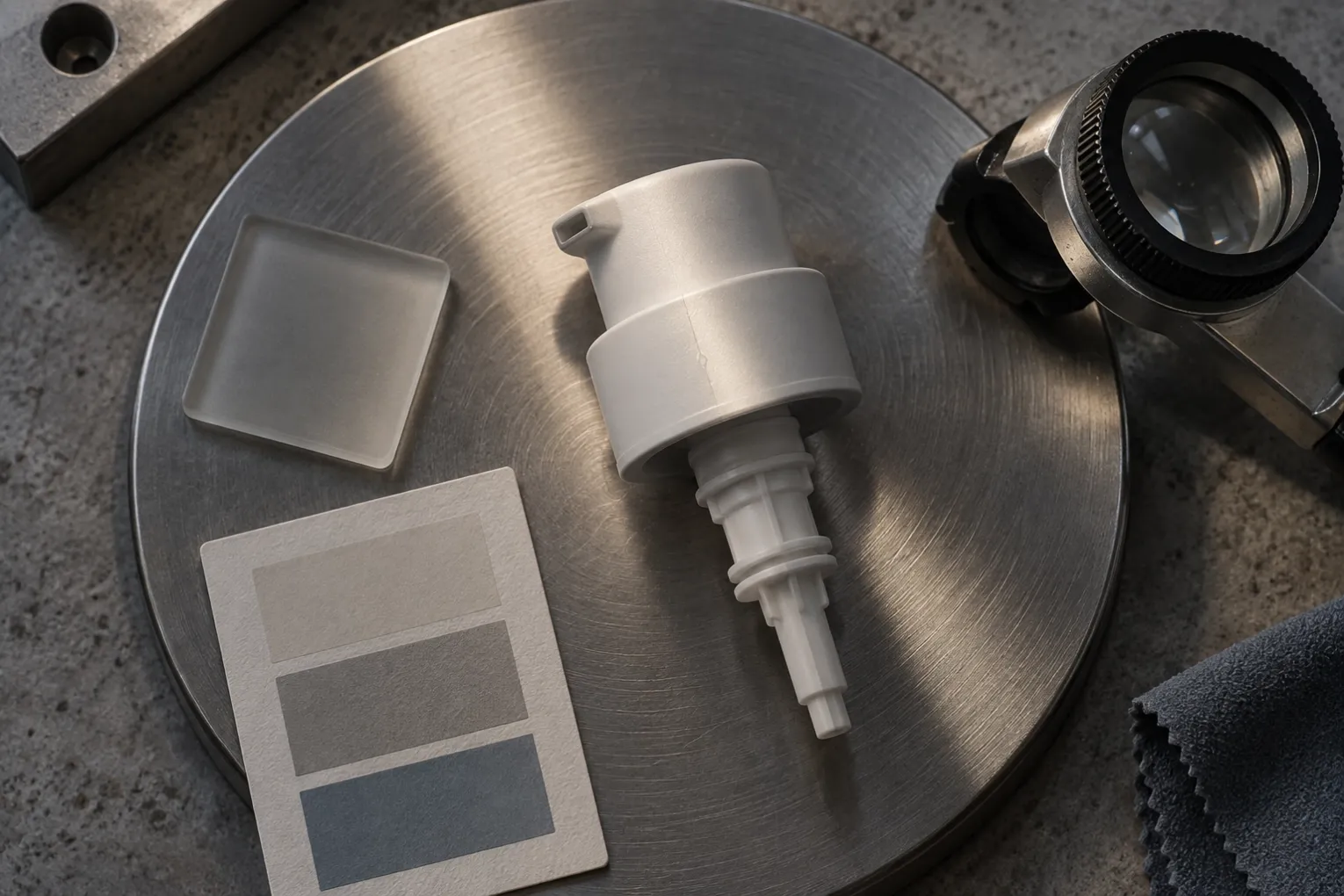
1. Define the inspection condition
Record the light source, viewing distance, angle, background, and inspection time. Use controlled conditions that match the defect risk. A decoration defect needs a visual standard; a pump or seal needs a functional test.
2. Approve a physical reference
Keep an approved component or controlled image set for color, gloss, print position, and surface finish. Label it with the version, supplier, component code, and approval date. Replace it through change control when the design or supplier changes.
3. Classify the consequence
The defect name matters less than its effect on safety, identity, function, and saleability.
Defect class | Typical examples | Decision question |
|---|---|---|
Critical | Sharp edge, contamination, wrong component or artwork | Could it harm the user or create an identity mix-up? |
Major | Leakage, failed pump, poor seal, unreadable batch code | Could it block intended use, filling, traceability, or sale? |
Minor | Small visual mark within agreed viewing conditions | Does it affect presentation without affecting use or identification? |
These examples are a starting point, not universal limits. The brand and manufacturer should set project-specific definitions.
4. Link each defect to a decision
For every defect, state whether the component is accepted, rejected, sorted, or escalated for review. Add a photo example and the responsible approver. This prevents “inspect more carefully” from becoming the only corrective action.
Decide between sampling and 100% inspection
Sampling can support lot decisions when defects are clearly defined and the process is stable. ISO 2859-1:2026 provides acceptance sampling schemes indexed by AQL for lot-by-lot inspection. It does not choose the right risk level for your product; that decision still belongs to the brand and manufacturer.
Use 100% inspection when a defect is difficult to contain, has a serious safety or identity consequence, or appears after a known process failure. A temporary sort may protect the current lot, but it should not replace supplier corrective action.
Build one standard before the production order
A practical packaging defect standard can stay short. Include:
- Component name, drawing number, material, color, and supplier
- Approved sample or controlled reference images
- Inspection lighting, distance, angle, and background
- Critical, major, and minor defect definitions
- Functional tests for pumps, seals, closures, and fit
- Sampling plan or 100% inspection trigger
- Acceptance, rejection, sorting, and escalation rules
- Version control and approval signatures
Keep compatibility questions separate. If the risk involves formula contact, leakage over time, stress cracking, discoloration, or pump performance after storage, use a skincare packaging compatibility testing plan rather than a visual defect rule alone.
Use the standard at every control point
The same defect language should follow the pack through supplier approval, incoming inspection, line setup, filling, and finished-goods review. The FDA’s cosmetic GMP inspection checklist highlights examination against specifications, control of rejected packaging materials, label identity checks, and permanent code marks.
At final release, packaging results should connect to the cosmetic batch release checklist. This gives the release reviewer a clear record instead of a late debate over appearance.
FAQ
Is AQL the same as an acceptable defect standard?
No. AQL helps structure a sampling decision. You still need clear defect definitions, severity classes, inspection conditions, and acceptance rules.
Should every cosmetic pack receive 100% inspection?
Not always. The choice depends on defect risk, process capability, supplier history, lot size, and the cost of a missed defect. High-risk or poorly contained issues may justify 100% inspection.
When should the standard be approved?
Before mass production. The best time is during component approval, when the brand, packaging supplier, and manufacturer can still align without holding a finished order.
Need a clearer packaging decision before production?
Not sure whether a packaging defect needs sampling or 100% inspection?
BIO-TIDE can help evaluate:
- Component type
- Defect risk
- Target market
- Production quantity