
Sep 11, 2026Manufacturing & Quality
Cosmetic Packaging Incoming Inspection: A Practical Checklist for Skincare Brands
Use this cosmetic packaging incoming inspection checklist to verify identity, appearance, fit, function and release records before filling starts.
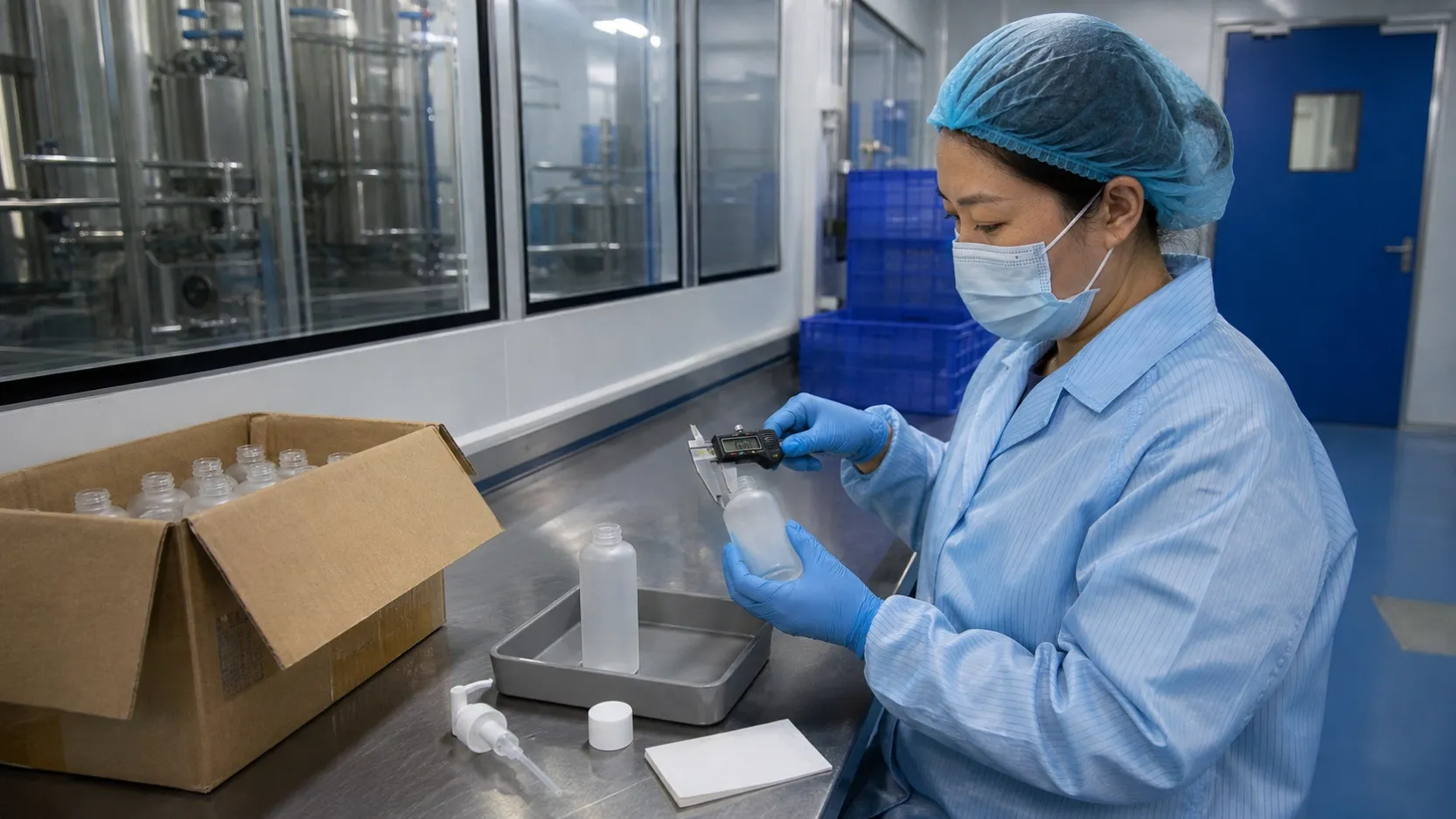
Cosmetic packaging incoming inspection should confirm that each received lot matches the approved specification before it reaches filling. Check shipment identity, supplier records, sampling logic, dimensions and fit, appearance and decoration, functional performance, quantity and lot traceability, then record a release, quarantine or rejection decision. Compatibility and artwork approval are earlier controls; incoming inspection verifies what actually arrived.
Use one receipt-to-release gate
Inspection gate | What to check | Decision evidence |
|---|---|---|
Identity | Purchase order, component code, supplier, lot and quantity | Receiving record matches the shipment |
Sample | Written sampling plan tied to lot and risk | Sample can be traced to the received lot |
Physical condition | Dimensions, fit, appearance, cleanliness and decoration | Results meet the approved component specification |
Function | Closure, pump, liner, seal and relevant leakage checks | Pack performs as required for the intended use |
Disposition | Release, quarantine, deviation or rejection | Status is visible and recorded before use |
This gate is deliberately narrow. It does not replace supplier qualification, formula–packaging compatibility work or production-line checks. It makes sure the component delivered to the factory is the component that the approved product plan expects.
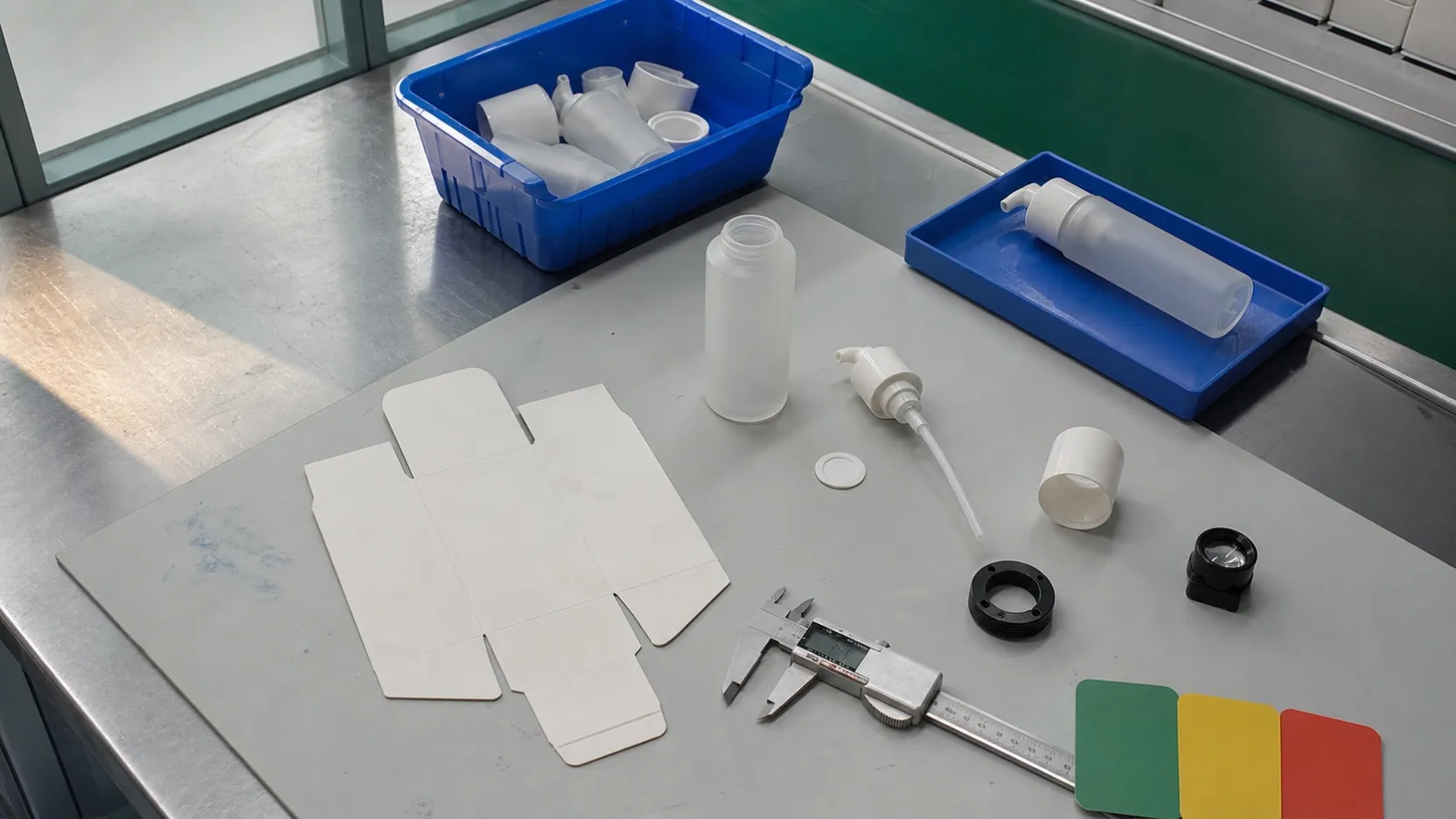
A useful inspection station separates the reference sample, received components and measuring tools so each result can be tied to the correct lot.
1. Match the shipment to controlled records
Start before opening every carton. Match the purchase order, supplier, component code, description, received quantity and supplier lot or batch reference. The FDA cosmetic GMP inspection checklist asks whether raw materials and primary packaging are identified, stored to prevent mix-ups and examined against procedures. It also points to records for received and rejected materials.
- Keep different lots physically separated until their status is clear.
- Confirm that labels on outer containers agree with the receiving record.
- Stop and clarify unexpected supplier, component or lot changes before sampling.
2. Sample against a written component specification
Do not invent one universal sample size. The plan should reflect the component, defect risk, supplier history, lot size and agreed acceptance rules. Record how cartons and units were selected so the sample is not limited to the easiest box to reach.
The specification should name the approved drawing or physical master, inspection method, acceptance criteria and decision owner. If a tolerance is important, write the value and measurement method into the controlled specification instead of relying on memory.
3. Check dimensions and assembly fit
Measure only the features that protect filling, assembly and customer use. For a bottle-and-pump system, this may include neck finish, closure fit, dip-tube length, overall height and carton fit. A jar, tube or sachet needs a different set of checks. Compare results with the approved drawing and reference sample—not a similar component from another project.
- Use calibrated or otherwise controlled measuring tools appropriate to the tolerance.
- Test mating parts together when fit depends on more than one component.
- Escalate a drawing mismatch even when the parts appear usable.
4. Inspect appearance, decoration and cleanliness
Look for scuffs, dents, flash, cracks, contamination, color variation, uneven coating, print shift, missing parts and damage caused by transport. Compare decorated components with the approved physical standard or proof. For artwork controls before purchase, use the skincare packaging artwork review checklist as the earlier approval step.
5. Run the functional checks the pack needs
A component can look correct and still fail in use. Confirm closure engagement, pump actuation, cap retention, liner or seal presence and other agreed functions. Basic leakage checks may be relevant for some packs, but they do not replace a product-specific formula–packaging compatibility evaluation. The intended formula, storage conditions and use pattern still matter.
6. Release, quarantine or reject with a traceable reason
ISO 22716:2007 provides GMP guidance for cosmetic production, control, storage and shipment. In practice, incoming packaging should have a clear status before it can enter production. Record the inspected lot, sample, results, deviations, decision, approver and date. A failed or uncertain lot should remain controlled while the team investigates, requests a concession or rejects it.
Supplier substitutions and component changes should trigger review, not quiet acceptance. Link the decision to the cosmetic filling-line controls used during production so receiving, line setup and finished-pack checks use the same approved component version.
What should a skincare brand ask to see?
- The current component specification, drawing and approved reference sample.
- The sampling method and defect categories used for the received lot.
- Measurement and functional-check records tied to that lot.
- The release, quarantine, deviation or rejection decision.
- The change-control route when the supplier or component differs from approval.
Cosmetic packaging incoming inspection FAQ
Is incoming inspection the same as packaging compatibility testing?
No. Incoming inspection verifies that a received lot matches its approved component requirements. Compatibility testing evaluates how the intended formula and pack behave together under defined conditions.
Should every packaging unit be inspected?
Not always. The sampling and inspection level should be written and risk-based. Critical defects, supplier history and component complexity may change the plan.
Can a brand approve a packaging deviation?
A deviation should be documented and assessed before use. The decision needs clear limits, evidence and approval from the responsible parties; it should not silently replace the controlled specification.
Need a packaging inspection plan?
BIO-TIDE can help evaluate:
✓ Component specification and approval samples
✓ Incoming checks and sampling logic
✓ Formula–packaging and filling dependencies
✓ Release records and supplier changes