Sep 11, 2026Manufacturing & Quality
Cosmetic Filling Line Controls: What Skincare Brands Should Confirm
Review cosmetic filling line controls for setup, fill quantity, packaging identity, in-process checks, reconciliation and deviation handling before skincare production.
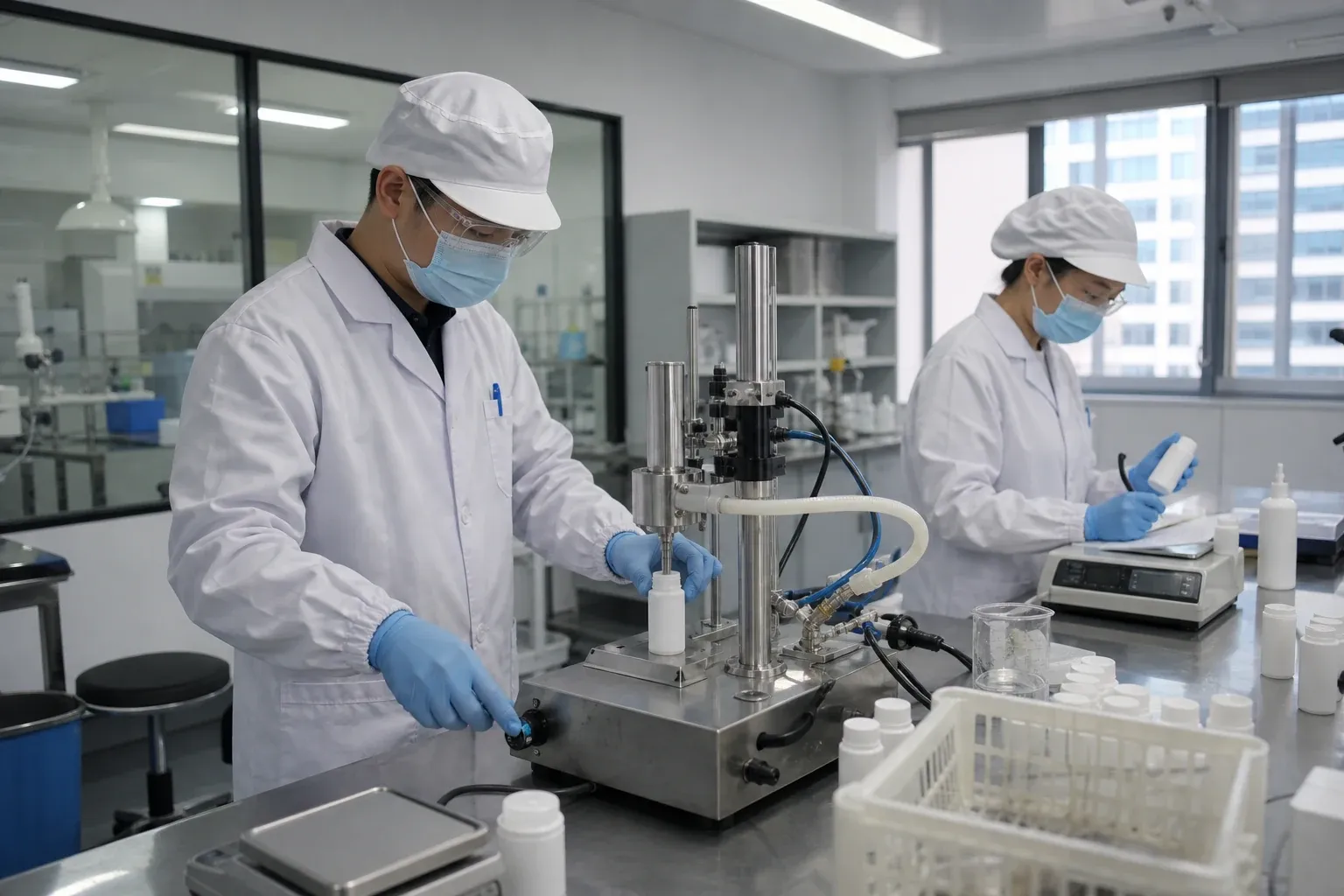
A stable bulk formula is not yet a finished product. During filling, the manufacturer must move that bulk into the correct package at the intended quantity without introducing mix-ups, contamination, avoidable air, poor closures or inconsistent presentation. Small setup errors can become hundreds or thousands of repeated defects.
Skincare brands do not need to operate the line. They should, however, agree on the controls that connect the approved formula, packaging components, batch identity and finished-unit release. This review gives sourcing, product and quality teams a practical set of questions for a manufacturer discussion.
Why filling deserves its own production review
The FDA cosmetic GMP inspection checklist addresses equipment used for processing, transfer and filling, equipment and batch identification, label checks, sampling, and manufacturing records. It provides a useful primary-source basis for reviewing line clearance, component identity and in-process controls.
ISO 22716:2007 provides international GMP guidelines for the production, control, storage and shipment of cosmetic products. Together, these two sources support one practical point: filling should be treated as a controlled production stage with defined setup, checks, records and release decisions. They are reference frameworks, not evidence that a specific factory, product or batch is compliant.
The control plan at a glance
Control point | Question to settle | Typical evidence |
|---|---|---|
Line clearance | Is the previous product and packaging removed? | Signed clearance record |
Component identity | Are the right bottle, pump, cap and label issued? | Approved code and line check |
Fill setup | Are nozzle, speed and target quantity suitable? | Setup record and first-off samples |
In-process checks | What is checked, how often and by whom? | Recorded weight, closure and appearance results |
Reconciliation | Do issued, used, rejected and returned quantities make sense? | Component and unit count reconciliation |
Exception handling | What happens when a result is outside the limit? | Hold, correction and investigation record |
1. Clear the line before the next product starts
Line clearance is the physical and documented check that the filling area is ready for the new job. It should remove or identify leftover bulk, bottles, caps, pumps, labels, cartons, batch documents and coding materials from the prior run. The aim is to prevent a correct formula from entering the wrong package or carrying the wrong identity.
Ask who performs the clearance, who verifies it and what areas are included. A check limited to the main table may miss components in hoppers, bins, conveyors, printers or nearby staging areas. The record should connect the cleared line to the incoming batch and packaging order.
2. Match the approved packaging to the production order
Packaging identity should be checked by controlled item codes, specifications or approved artwork versions, not by general appearance alone. Similar white bottles or pumps can differ in neck size, output, liner, dip-tube length or decoration. The production order should identify each component and the quantities issued.
This step should align with the project’s skincare packaging artwork review and formula–pack compatibility assessment. Artwork approval confirms content and version; compatibility work helps confirm that the selected component can function with the formula. Neither replaces an on-line identity check.
3. Approve the first filled units before routine production
The first units show whether the planned setup works in practice. The manufacturer may need to adjust nozzle position, fill speed, pressure, cut-off timing, container support or closure settings. A low-viscosity serum, foaming cleanser and dense cream can behave very differently on the same compact line.
- Confirm the correct bulk and packaging components are present.
- Check the target fill quantity and the method used to measure it.
- Inspect splash, stringing, foaming, trapped air or product on sealing surfaces.
- Check pump, cap or closure seating and visible damage.
- Confirm coding and label orientation where those steps occur on the line.
Routine filling should begin only after the agreed first-off checks pass. If adjustments are made later, define whether new first-off units need approval.
4. Define fill-quantity checks that fit the product and pack
A fill statement may be based on weight or volume, while the line may use a practical weight check during production. The team should agree on the target, permitted range, tare method, scale suitability, check frequency and response to a result outside the limit. Density and temperature may matter when weight is used to support a volume target.
Do not confuse a generous average with control of individual units. The goal is a stable process that avoids both underfill and unnecessary giveaway. Trends can also show that a hopper level, pressure, nozzle or timing setting is drifting before the line produces a large number of questionable units.
5. Check closure, appearance and package function during the run
Fill quantity is only one attribute. In-process checks may also cover closure engagement, pump or sprayer fit, seal condition, leakage, bottle deformation, label position, code legibility, cosmetic appearance and contamination of exterior surfaces. The relevant set depends on the package and production sequence.
For packs with pumps or airless systems, functional checks should be defined carefully. Priming behavior or output may be assessed on selected units, but destructive or product-consuming checks need a sampling rule so tested units are not returned to saleable stock without a justified process.
6. Protect bulk and open components while filling
Bulk product and clean packaging may be exposed during staging and filling. Covers, controlled transfer, clean utensils, suitable component storage, time limits and defined handling practices help reduce contamination risk. The control should reflect the product, preservation system, opening size, line design and duration of the run.
This protection links back to cosmetic equipment cleaning controls and manufacturing water controls. A released filler still needs correct handling, and a suitable bulk formula still needs protection after it leaves the manufacturing vessel.
7. Reconcile components and finished units
Reconciliation compares what was issued with what was used, rejected, damaged, sampled, returned and produced. Exact equality is not always realistic, but unexplained differences can signal a counting error, mix-up, unrecorded scrap or missing units. Define the acceptable approach and the review owner before the batch is closed.
Finished-unit counts should also connect with batch coding and the cosmetic batch traceability plan. This makes later complaint review or targeted action more reliable than relying on a production date alone.
8. Decide what happens when an in-process check fails
A failed check should not lead to an informal adjustment followed by continued production. The affected time or unit range needs to be identified and placed on hold. The manufacturer should decide whether units can be reinspected, reworked, rejected or investigated, and whether earlier accepted units may also be affected.
Agree how significant events are communicated to the brand and which decisions require approval. These responsibilities belong in the skincare manufacturing quality agreement rather than being negotiated during a live deviation.
Questions to ask before approving the filling plan
- How is line clearance performed and independently checked?
- How are bottle, closure, label and carton versions identified?
- Which first-off attributes must pass before the run continues?
- How are target fill, tare, tolerance and sampling frequency defined?
- Which closure, leak, appearance, coding and function checks apply?
- How are open bulk and components protected during stops or long runs?
- How are rejects, samples, scrap and unused components reconciled?
- How is the affected range identified after an out-of-limit result?
Cosmetic filling controls FAQ
Is fill weight the same as label volume?
Not automatically. Weight may be used as an in-process control, but the relationship to a volume declaration depends on product density, temperature, method and market requirements. The manufacturer should document the conversion or control rationale.
How often should in-process checks be performed?
There is no useful universal interval for every product and line. Frequency should reflect process capability, line speed, package risk, adjustment points and the ability to contain affected units when a check fails.
Should every pump or sprayer be function-tested?
The sampling plan depends on the component, supplier controls, line process and test method. A test that consumes or contaminates product should not be applied to saleable units without a controlled disposition rule.
What records should the brand receive?
The routine release package and retained factory records should be agreed by contract. At minimum, the brand should know which filling checks support release and how detailed records can be retrieved for a complaint, deviation or audit.
Connect the filling plan to the full manufacturing route
Filling controls work best when they are designed with the formula, pack, scale-up plan, specifications, testing and release criteria. BIO-TIDE can coordinate skincare R&D and manufacturing planning within an agreed project scope.
Need to review whether your filling plan covers the right decisions? BIO-TIDE can help evaluate:
- Formula, viscosity and filler fit
- Packaging and closure setup
- In-process checks and sampling
- Traceability, release and exception handling