Sep 11, 2026Manufacturing & Quality
Skincare Packaging Compatibility Testing: A Pre-Filling Checklist
Plan skincare packaging compatibility testing around the final formula, container, closure and dispenser before approving components for filling.

Skincare packaging compatibility testing checks whether the final formula and the intended container can remain safe, stable, functional and presentable together. It is different from checking empty packaging on arrival. Run it with the market-ready bottle, tube or jar before production approval, then record clear pass/fail criteria for the formula, pack and dispensing system.
What compatibility testing should prove
A package can pass incoming inspection and still fail after contact with the formula. Oils, solvents, fragrance components, surfactants, acids and the product's water phase may interact with plastics, coatings, liners, inks, adhesives, elastomers or metal parts. Temperature, light, transport and repeated use can add stress.
The test plan should answer four questions:
- Does the formula stay within its approved appearance, odor, pH, viscosity and weight limits?
- Does the pack keep its shape, seal integrity, decoration and barrier performance?
- Does the pump, dropper, cap or valve deliver the intended dose throughout use?
- Is there any sign of leakage, swelling, cracking, discoloration, corrosion, odor transfer or formula loss?
ISO/TR 18811:2018 treats packaging interaction as part of cosmetic stability assessment and makes an important point: there is no single universal stability protocol. The manufacturer should define and justify the methods, specifications and conditions for the specific product.
Build the matrix around the market-ready pack
Do not test only a laboratory jar if the commercial product will use an airless pump or laminated tube. Keep an inert control where useful, but include the exact pack materials, decoration, closure and dispensing components intended for sale.
Test area | What to compare | Typical warning signs | Decision record |
|---|---|---|---|
Formula | Appearance, odor, pH, viscosity, net weight | Separation, color or odor shift, viscosity drift, weight loss | Baseline vs each checkpoint |
Container | Shape, surface, clarity, coating, print | Swelling, paneling, stress cracking, label lift, ink transfer | Photos and defect rating |
Closure and seal | Torque, liner, crimp, weld, leakage | Loose cap, seal distortion, seepage, dried residue | Leak result and closure data |
Dispensing system | Priming, dose, spray or pump pattern | Clogging, weak return, inconsistent dose, dripping | Dose and function checks |
Contact parts | Spring, ball, gasket, dip tube, pouch | Corrosion, discoloration, brittleness, extraction or odor | Material-specific observations |
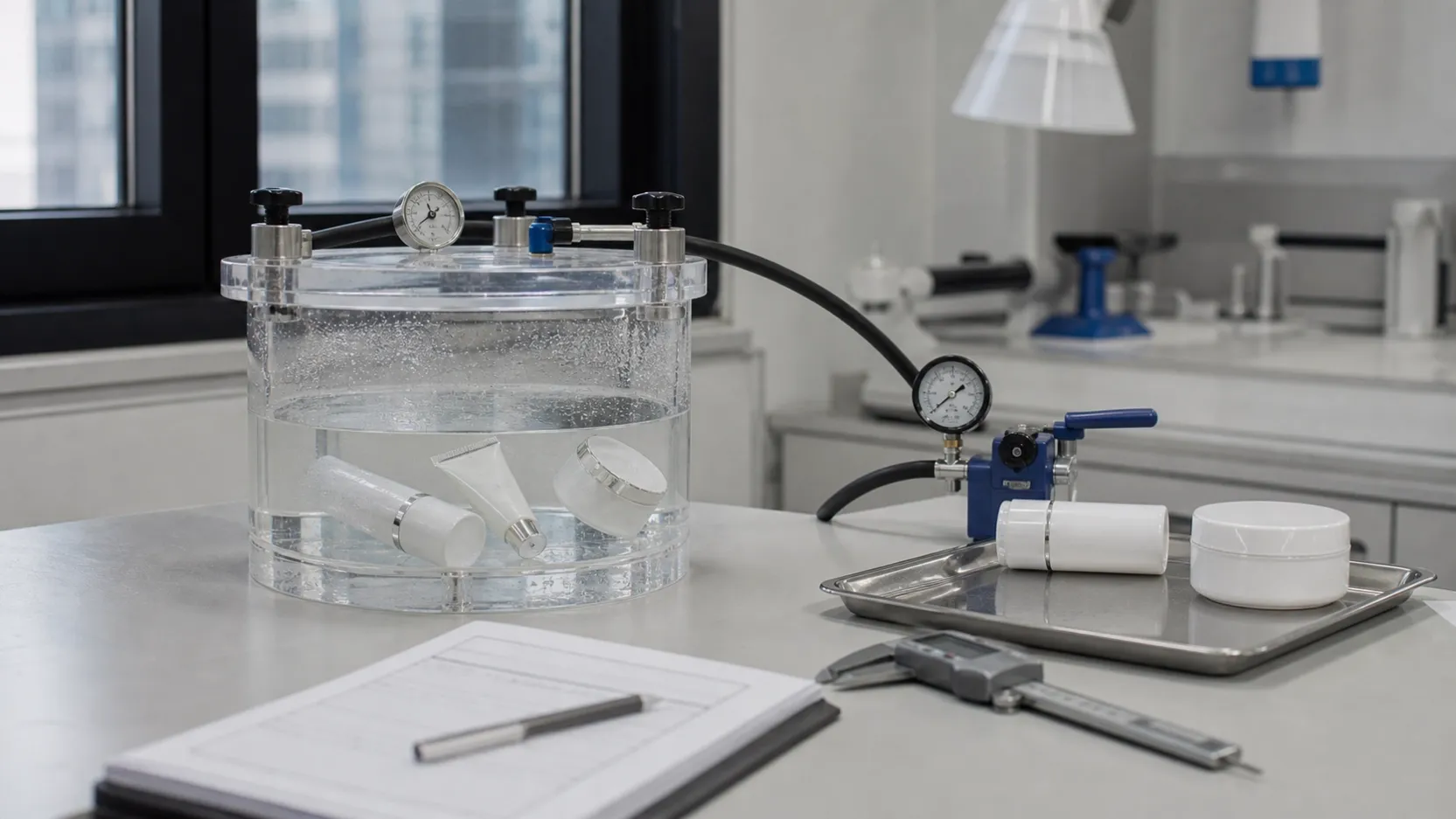
The European Commission's guidelines for the Cosmetic Product Safety Report note that stability testing should use both inert containers and the containers intended for the market when packaging may induce instability. This is a useful planning principle even when the product is being developed for another market.
Test the interfaces most likely to fail
Start with the places where formula, pack and air meet. These interfaces often reveal risk earlier than the main bottle wall.
- Pump and valve: Check priming, return, dose consistency and residue around the outlet.
- Gasket and liner: Look for softening, swelling, shrinkage, staining or loss of seal.
- Tube shoulder and crimp: Inspect for seepage, stress marks and formula drying at the edge.
- Jar thread and inner lid: Check torque feel, leakage after transport simulation and product trapped in the thread.
- Decoration and label: Review rubbing, lifting, color transfer and legibility after handling.
Ask the packaging supplier for material specifications and component drawings. "Plastic" or "airless bottle" is not enough information to compare alternatives or investigate a failure.
Keep compatibility separate from incoming inspection
Cosmetic packaging incoming inspection confirms that empty components match the approved sample and specification before filling. Compatibility testing asks a different question: what happens after the actual formula contacts those components over time and under expected storage, transport and use conditions?
Both controls are needed. Incoming inspection cannot replace contact testing, and a successful compatibility study does not excuse poor lot-to-lot packaging quality. The two records should meet again in the batch release review before shipment.
What brands should send before testing starts
Give the ODM enough information to design a relevant protocol rather than a generic chamber study:
- final or near-final formula code and target specifications;
- complete pack bill of materials and supplier references;
- fill volume, headspace and intended sealing process;
- target markets, launch season and expected logistics route;
- storage orientation and normal consumer use pattern;
- planned claims, shelf-life or period-after-opening assumptions;
- known risks from fragrance, solvents, low pH, high oil load or sensitive actives;
- approval limits and who can accept a deviation.
Add compatibility work to the launch plan early. Waiting until decorated components arrive can turn a packaging change into a production delay. The skincare manufacturing lead-time guide shows where packaging, testing and approvals depend on one another.
When is the pack ready for filling approval?
Approve the pack only when the tested formula and commercial component set meet written criteria, observations are traceable to samples and checkpoints, and any deviation has a documented technical decision. A visually acceptable bottle is not enough if the pump dose drifts or the formula changes beyond its specification.
Need a compatibility plan for a new bottle, tube, jar or airless system?
BIO-TIDE can help review:
✓ Formula risk factors
✓ Packaging material and contact parts
✓ Test matrix and checkpoints
✓ Approval criteria and launch timing
Frequently Asked Questions
What should packaging compatibility testing prove?
That the final formula and the intended container remain safe, stable, functional and presentable together. The plan should confirm the formula stays within approved appearance, odor, pH, viscosity and weight limits; the pack keeps its shape, seal integrity, decoration and barrier performance; the pump, dropper, cap or valve delivers the intended dose; and there is no leakage, swelling, cracking, discoloration, corrosion or odor transfer.
Why can't incoming inspection replace compatibility testing?
Incoming inspection confirms that empty components match the approved sample and specification before filling. Compatibility testing asks a different question: what happens after the actual formula contacts those components over time and under expected storage, transport and use conditions. Both controls are needed, and one cannot replace the other.
Which packaging should be used for the compatibility study?
The market-ready pack. Do not test only a laboratory jar if the commercial product will use an airless pump or laminated tube; include the exact pack materials, decoration, closure and dispensing components intended for sale, keeping an inert control where useful. European Commission guidance notes stability testing should use both inert containers and the containers intended for the market when packaging may induce instability.
What should a brand send to the ODM before compatibility testing starts?
The final or near-final formula code and target specifications; the complete pack bill of materials with supplier references; fill volume, headspace and the intended sealing process; target markets, launch season and logistics route; storage orientation and normal consumer use; planned claims or shelf-life assumptions; known risks from fragrance, solvents, low pH, high oil load or sensitive actives; and approval limits with who can accept a deviation.