Russia Lip Care Market: 7 Decisions Before ODM Sampling
Plan a Russia-focused lip care product by defining format, sensory targets, temperature exposure, packaging, claims, compliance inputs and test gates before ODM sampling.
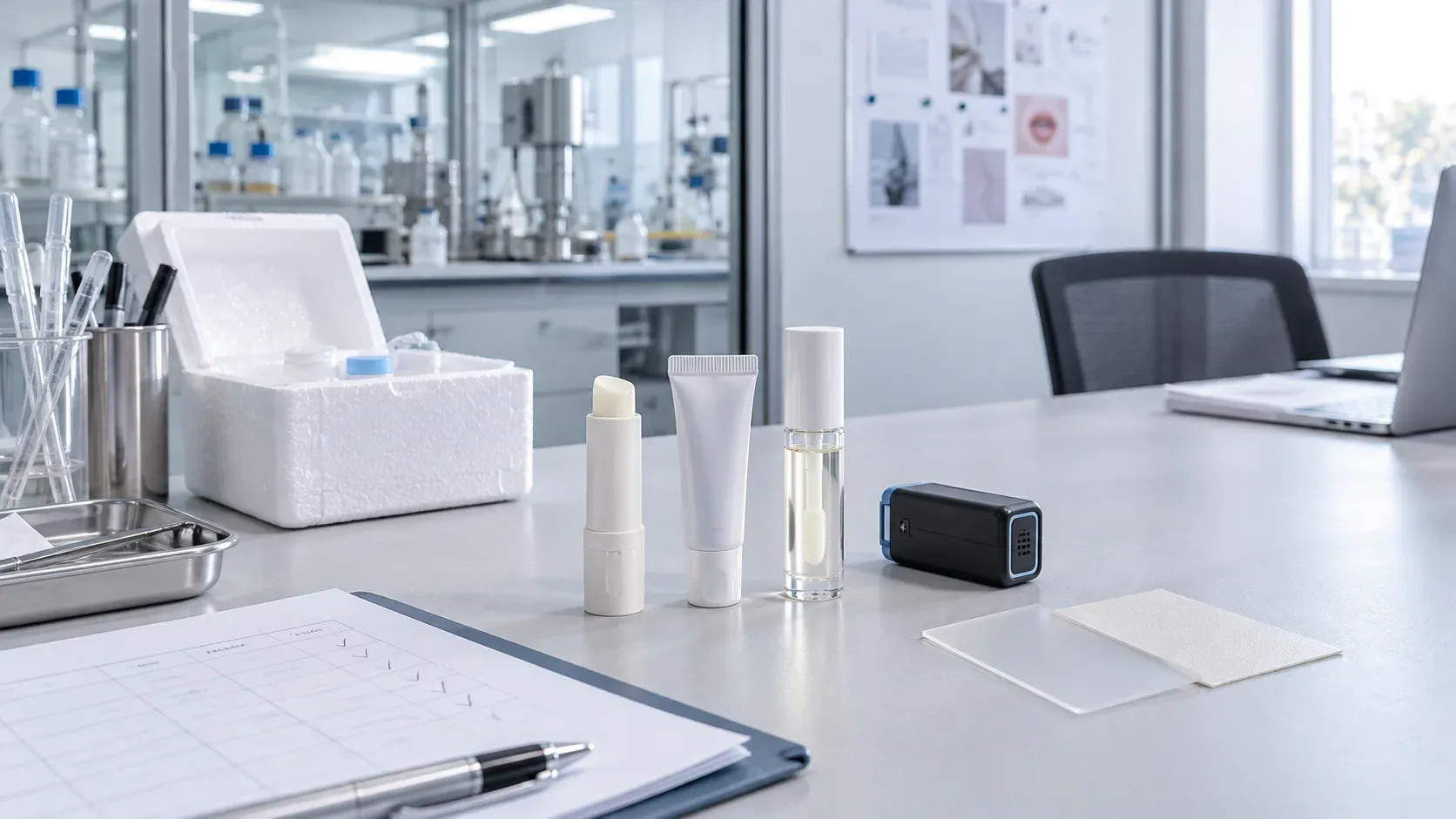
Before asking an ODM to sample lip care for Russia, define seven items: product role, format, sensory target, temperature exposure, packaging system, claim boundary, and test owner. This checklist helps skincare founders and sourcing teams prepare one reviewable brief for Russia or the wider EAEU market. It does not approve a formula, claim, or market entry.
Why a broad lip-care concept creates rework
- A brand team sees demand for lip care and sets a Russia-market launch goal.
- The team asks an ODM for samples before fixing seasonality, format, pack, or claim.
- The ODM receives a concept but not the evidence needed to compare samples against one target.
- Each round may change formula feel, dispensing, artwork, or test assumptions at the same time.
- That can slow approval because the team cannot tell whether a change solved the original product job.
- The bounded decision is to freeze a product-development brief before sampling and change only one controlled variable at a time.
Lock seven decisions before requesting samples
| Decision | What to define before sampling |
|---|---|
| Product role | Year-round daily care, cold-season protection, color-plus-care, or another single job; name the primary buyer and sales channel. |
| Format and routine | Stick, squeeze tube, pot, lip oil, or another format; state when, how often, and over or under which other products it will be used. |
| Sensory target | Glide, payoff, cushion, tack, shine, flavor or fragrance boundary, and the feel that should remain after application. |
| Temperature exposure | The conditions the product and pack should tolerate during storage, delivery, and intended seasonal use; record assumptions instead of using a generic “cold market” label. |
| Packaging system | Component material, fill size, closure or twist mechanism, applicator, decoration, and the exact commercial pack to be tested with the formula. |
| Claims and evidence | Exact cosmetic wording, intended market language, and the finished-product evidence needed to support it. |
| Compliance and test owner | Who will confirm the current market category, ingredient restrictions, label text, conformity route, microbiological plan, and final release decision. |
Use the broader market-specific skincare formula brief when the target user, price architecture, channel, and launch constraints are still open. This page assumes those commercial choices are already narrow enough to brief one lip-care concept.
Choose the product architecture before the ingredient story
Start with how the product must work in the hand and on the lips. Ingredient trends can support a concept, but they cannot replace a defined use experience.
Solid stick or balm
A stick can suit portable, direct application. The brief should define twist-up behavior, payoff, drag, shape retention, cap fit, and residue on the mechanism. If low-temperature use or transport matters, add it to the evaluation plan rather than assuming the wax-and-oil balance will behave the same everywhere.
Semi-solid product in a tube or pot
A softer balm can allow a different cushion and spread, but the dispensing method changes dose control, contact, leakage risk, and consumer handling. Define whether the product should squeeze cleanly, melt on contact, or remain structured after repeated opening.
Lip oil or care-gloss format
For a fluid format, define shine, slip, stringing, migration, wiper performance, applicator pickup, and leakage limits. “Non-sticky” is too vague for sample approval. Convert it into a written comparison method with an agreed reference sample and scoring scale.
Stop condition: if the team is still comparing a stick, tube, pot, and oil as equal options, it is not ready to judge formula samples. Select one architecture or run a documented concept comparison first.
Test the formula and pack as one system
Cold exposure, warm storage, transport, repeated opening, and normal use can affect both formula behavior and packaging function. The relevant conditions depend on the chosen product and distribution route; Russia should not be reduced to one temperature assumption.
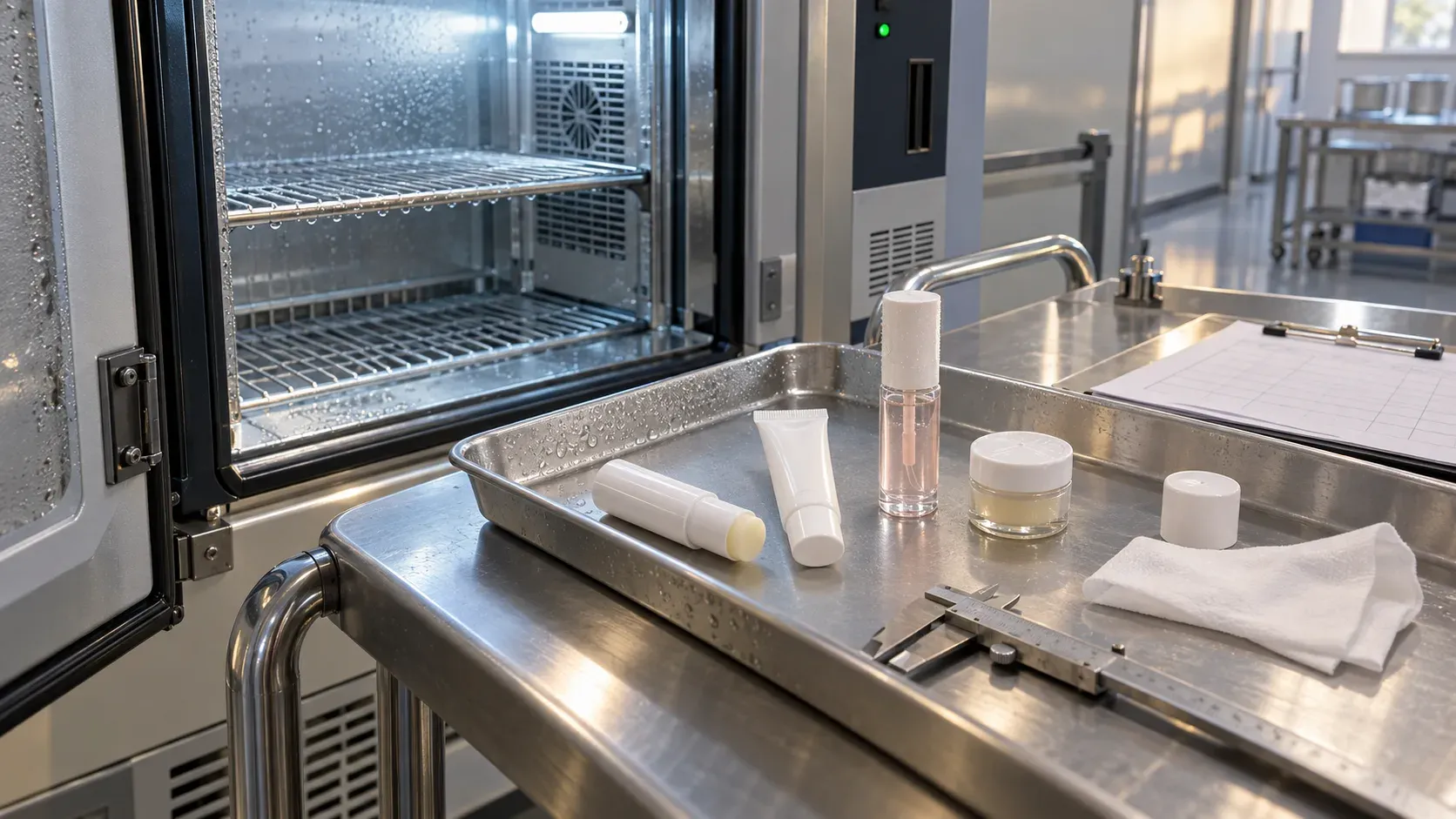
Build the test matrix around the market-ready pack. Compare the same formula and component set at agreed checkpoints, then record:
- appearance, odor, color, sweating, graininess, separation, or surface change;
- twist, torque, cap fit, seal, wiper, applicator, and dispensing behavior;
- net weight or leakage observations where relevant;
- glide, payoff, tack, shine, and after-feel against the approved baseline;
- the sample code, pack lot, condition, checkpoint, result, and decision owner.
Define the actual storage, delivery, and use conditions in the brief. The packaging compatibility checklist owns the full formula-pack test plan. A good-looking empty component is not evidence that a filled lip product will remain functional.
Keep cosmetic claims inside a defined market boundary
The Eurasian Economic Commission's TR CU 009/2011 covers perfumery and cosmetic products placed on the market in consumer packaging and explicitly includes products applied to the lips. It also distinguishes cosmetics from products intended to diagnose or treat disease.
That boundary matters early. Terms such as “repairs cracks,” “heals,” “medicated,” or “therapeutic” may change the regulatory discussion and evidence burden. Do not let marketing copy outrun the product category.
Before artwork approval, have the appropriate Russia or EAEU market owner confirm the current ingredient restrictions, required language, warnings, claims, conformity route, and label responsibilities for the exact product. This article is a planning aid, not a substitute for that review. Connect each proposed claim to a defined finished-product evidence plan.
Match the microbiological plan to the formula risk
Do not assign the same preservation test plan to every product called “lip balm.” Water content, raw materials, packaging, manufacturing, and use can change the risk profile.
ISO 11930:2019 sets out a procedure for evaluating antimicrobial protection for cosmetic products that are not considered low microbiological risk. It also points low-risk decisions to a risk-assessment route rather than to product naming alone.
For a water-containing or water-miscible lip product, discuss preservation efficacy and sample timing before the formula is frozen. For a product proposed as low risk, keep the documented rationale, relevant product data, manufacturing controls, and packaging context. A low-risk conclusion should be an evidence-based decision, not a shortcut based on an anhydrous-looking concept.
Use one sample gate for each round
Approve or reject a round against the brief that existed before the sample was made. Do not introduce a new fragrance, pack, claim, and sensory target in one feedback email.
For each round, record:
- sample and formula version;
- the one decision this round is meant to resolve;
- fixed variables that must not change;
- evaluation method and conditions;
- pass, revise, or stop result;
- reason, evidence, owner, and next step.
Move forward only when the format, sensory target, pack direction, claim boundary, and next test gate still describe the same product. If a material change resets compatibility, stability, microbiological, or claims evidence, write that reset into the plan before the next sample.
Turn the market signal into a sample-ready brief
Not sure which lip-care route fits your Russia plan?
BIO-TIDE can help evaluate:
- ✓ Product role and target routine
- ✓ Format and sensory target
- ✓ Seasonal and logistics assumptions
- ✓ Packaging and test dependencies
- ✓ Claims and market-review boundaries
Review the BIO-TIDE R&D approach, then prepare a non-confidential summary of the seven decisions above. Use the contact page to confirm the approved submission route and data-handling details before providing formulas, supplier documents, personal data, or other confidential files.
Review My Russia Lip Care Brief
The first response should confirm whether the brief is complete enough for a technical discussion, identify missing inputs, and define the next review step. It does not approve the formula, validate claims, confirm market access, or create a production commitment.