Sep 11, 2026Market & Brand Development
Xie Kun on the Next Stage of Skincare ODM: Five Industry Views
BIO-TIDE’s Xie Kun shares five views on formula-led materials, locally relevant skincare research, responsible efficacy, ODM value and active delivery.

Skincare ODM is moving beyond simple contract production. BIO-TIDE’s Xie Kun sees five changes shaping the next stage: finished-formula needs should guide raw material development; formulas should fit the target consumer and use context; efficacy should respect the boundary between cosmetics and medicine; ODM partners should provide a complete development system; and biological actives should be judged inside the finished formula, not only on an ingredient sheet.
The following is an edited English adaptation of his industry viewpoints. It keeps the original development logic while presenting it for international skincare brands and product teams.
1. Let the finished formula define the raw material brief
A common development route starts with a supplier catalogue. The formulator selects from available materials and then tries to build the desired product around them. Xie Kun argues that the direction should increasingly run the other way.
A material can look strong in laboratory data and still underperform in a finished product. Its value depends on the formula’s pH, compatibility, sensory profile, processing conditions and stability. The practical question is not only “Which active should we add?” but “What performance does this finished system require?”
That makes the formulator’s brief more important. Product goals should be translated into measurable material needs, then used to guide supplier screening or custom material development. In this model, raw materials serve the formula instead of forcing the formula to serve the catalogue.
2. Build for the target consumer and use context
Copying an overseas formula system without local validation can miss the way a product will actually be used. Climate, routines, sensory expectations, skin concerns, retail channel and product layering can all change what a good formula looks like.
Xie Kun’s point is not that an imported material or formula is automatically unsuitable. It is that suitability must be tested against the intended user and market. A formula made for humid daily use may need a different sensory balance from one designed for a dry climate or a clinical home-care routine.
For brands, this means starting with a clear skincare product brief. Define the consumer, use occasion, texture, product role and market before asking the laboratory to choose hero ingredients.
3. Respect the boundary between skincare and medicine
Skincare development should respect normal skin physiology and avoid promises that imply instant or medical treatment. Xie Kun places safety, tolerance and barrier support before more advanced goals such as visible brightening or age-care positioning.
The exact legal boundary depends on the destination market and intended use. For the United States, the FDA explanation of cosmetics and U.S. law distinguishes cosmetics from products intended to diagnose, cure, mitigate, treat or prevent disease. That makes claim wording part of product development—not a late marketing edit.
Brands should therefore align formula, evidence and communication before launch. A practical cosmetic claims substantiation plan helps keep the product story clear without turning cosmetic care into a treatment promise.
4. ODM should deliver a development system, not only a batch
An ODM partner adds more value when it explains the logic behind the product. That includes the formula concept, raw material selection, compatibility work, stability planning, scale-up controls and change management—not only mixing and filling.
Transparency matters as well. Inflated active claims, unclear sourcing or unsupported ingredient stories may create short-term marketing appeal, but they weaken long-term product trust. Brands should ask how materials are qualified, how additions are controlled and what evidence supports the finished-product brief.
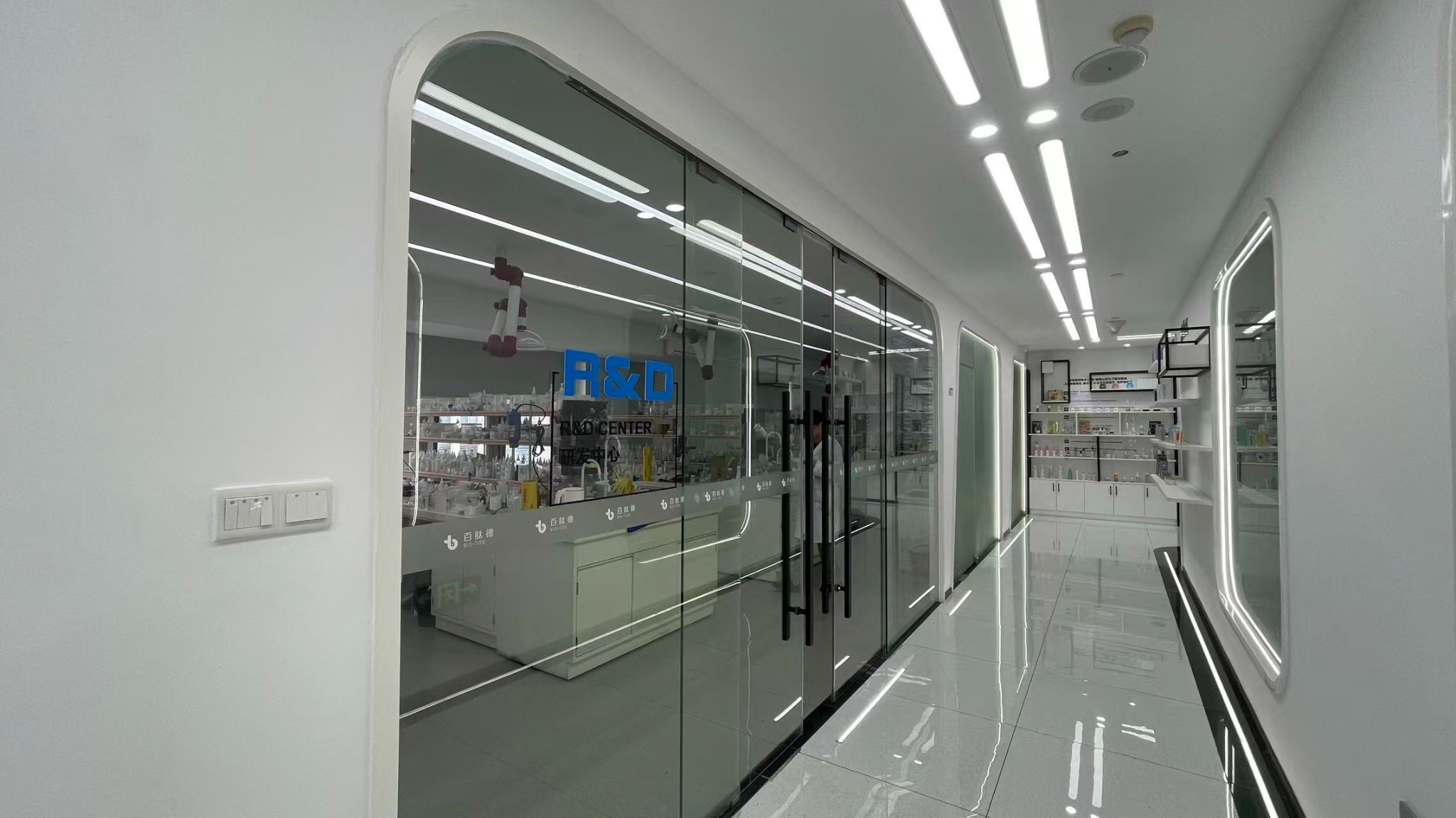
The review can start with a raw material qualification checklist and continue through BIO-TIDE’s skincare R&D and development approach. The aim is a traceable route from product idea to approved formula and production—not a collection of disconnected documents.
5. Active technology must work inside the complete formula
Peptides, recombinant collagen and fermented botanical materials are among the technologies Xie Kun sees as important for performance-led skincare. Their presence alone, however, does not guarantee a useful product.
Stability, compatibility, delivery, packaging and sensory quality all affect how an active system performs over the product’s intended life. Encapsulation, emulsification and other delivery approaches may be useful when they solve a defined formula problem, but they should not be treated as decoration for an ingredient story.
The finished formula still has to balance the product goal, use experience, tolerance and manufacturing control. This is why active selection should be reviewed together with the formula-to-scale-up process, not as a separate marketing decision.
What skincare brands should put into the development brief
- Describe the finished product goal, sensory target and use occasion before listing hero ingredients.
- Name the target consumer, launch market, climate or routine conditions that may affect product fit.
- Separate cosmetic care claims from medical treatment language early in development.
- Ask the ODM partner to explain material selection, formula logic, validation and scale-up controls.
- Evaluate biological actives in the complete formula and pack, not only through supplier data.
These questions turn a broad concept into a development path that the brand, formulator, material supplier and manufacturer can review together.
Discuss your product-development route with BIO-TIDE
Planning a skincare product around a clear consumer need? BIO-TIDE can help review:
✓ Formula route and product positioning
✓ Raw material brief and active strategy
✓ Testing, claims and market context
✓ Scale-up and manufacturing controls
Frequently Asked Questions
Why should the finished formula guide raw material selection?
A material can look strong in laboratory data and still underperform in a finished product. Its value depends on the formula's pH, compatibility, sensory profile, processing conditions and stability. Product goals should be translated into measurable material needs and then used to guide supplier screening or custom material development, so raw materials serve the formula rather than forcing the formula to serve the catalogue.
Where is the boundary between skincare claims and medical claims?
Skincare development should respect normal skin physiology and avoid promises that imply instant or medical treatment. The exact legal boundary depends on the destination market; in the United States, the FDA distinguishes cosmetics from products intended to diagnose, cure, mitigate, treat or prevent disease. Claim wording is therefore part of product development, not a late marketing edit.
What should an ODM partner provide beyond mixing and filling?
A development system, not only a batch. That includes the formula concept, raw material selection, compatibility work, stability planning, scale-up controls and change management. Transparency also matters: brands should ask how materials are qualified, how additions are controlled and what evidence supports the finished-product brief, since inflated active claims or unclear sourcing weaken long-term product trust.
How should biological actives such as peptides be evaluated?
Inside the complete formula, not only on an ingredient sheet. Their presence alone does not guarantee a useful product; stability, compatibility, delivery, packaging and sensory quality all affect how an active system performs over the product's intended life. Encapsulation or emulsification is useful when it solves a defined formula problem, not as decoration for an ingredient story.