Sunscreen Manufacturing Cost: 7 Inputs Your ODM Needs Before Quoting
Get a useful sunscreen ODM quote by defining the market, protection target, formula, testing, packaging, quantity and responsibility split before pricing.

A useful sunscreen manufacturing quote needs more than a target SPF and order quantity. Your ODM also needs the launch market, product format, protection and claim direction, testing route, packaging, quantity plan and responsibility split. Without these inputs, a low unit price is only a rough assumption—not a comparable commercial offer.
If you are still estimating the full project, start with the broader skincare manufacturing cost guide. This article focuses on the sunscreen decisions that make a supplier quote usable.
Why sunscreen quotes need a tighter brief
Sunscreen is not priced like a basic moisturizer with one added active. The intended market can change the regulatory route, permitted ingredients, required label format and evidence plan. In the United States, sunscreen products are regulated under the OTC drug framework, and the FDA’s sunscreen requirements include defined labeling and effectiveness-testing conditions. The launch market therefore needs to be known before a manufacturer can confirm the development route.
The protection target also creates testing work. ISO 24444:2019, confirmed as current in 2026, specifies an in-vivo method for determining SPF. It does not set your project price, but it shows why a proposed SPF value must be connected to a real test plan rather than treated as a marketing number.
The 7 inputs that make a sunscreen ODM quote useful
Quote input | What the brand should decide | Why it affects cost |
|---|---|---|
1. Launch market | Country or region, sales channel and launch sequence | Changes the regulatory, ingredient, label and evidence route |
2. Product format | Lotion, cream, fluid, stick or other defined format; target skin feel and finish | Changes raw materials, processing, filling equipment and packaging options |
3. Protection and claims | Target SPF direction, UVA or water-resistance direction, and exact claim boundaries | Changes formulation work, test design, timing and evidence needs |
4. Formula route | Ready formula, adapted platform or fully custom development | Changes R&D rounds, samples, documentation and change risk |
5. Packaging system | Fill size, tube or bottle, closure, decoration and supplier responsibility | Changes component MOQ, compatibility work, filling setup and unit cost |
6. Quantity plan | First order, annual forecast and expected reorder pattern | Changes material buying, line setup, component pricing and inventory exposure |
7. Responsibility split | Who supplies the pack, testing, artwork, registration support and freight | Prevents missing services from appearing later as surprise charges |
1. Name the market before asking for an SPF formula
Do not ask for one “global sunscreen” unless the intended markets and review path are already clear. Give the manufacturer one priority market first, then list possible expansion markets separately. A market-specific decision at the start is usually cheaper than reformulating or rebuilding artwork after testing.
Use a market-specific skincare formula brief to record the first launch route, target user, climate, routine and commercial limits.
2. Describe the finished product, not only the protection number
Two products with the same target SPF can require different work. A light facial fluid, a rich body lotion and a portable stick do not share the same sensory target, process or pack. State the intended use area, finish, color direction, rub-in, residue tolerance and application experience.
The manufacturer can then decide whether a ready platform, an adapted formula or a custom route is realistic. A clear skincare product brief also reduces sample rounds caused by subjective feedback.
3. Separate the claim wish list from the test plan
Write the desired claims, but mark them as targets until the regulatory and test route is agreed. “SPF 50,” “broad spectrum,” “water resistant” and “suitable for sensitive skin” are different evidence questions. Ask which tests are included in the quote, which are external, how many samples are needed and what happens if the result supports narrower wording.
Do not compare two quotations if one includes testing and the other does not.
4. Match the packaging to the formula and filling line
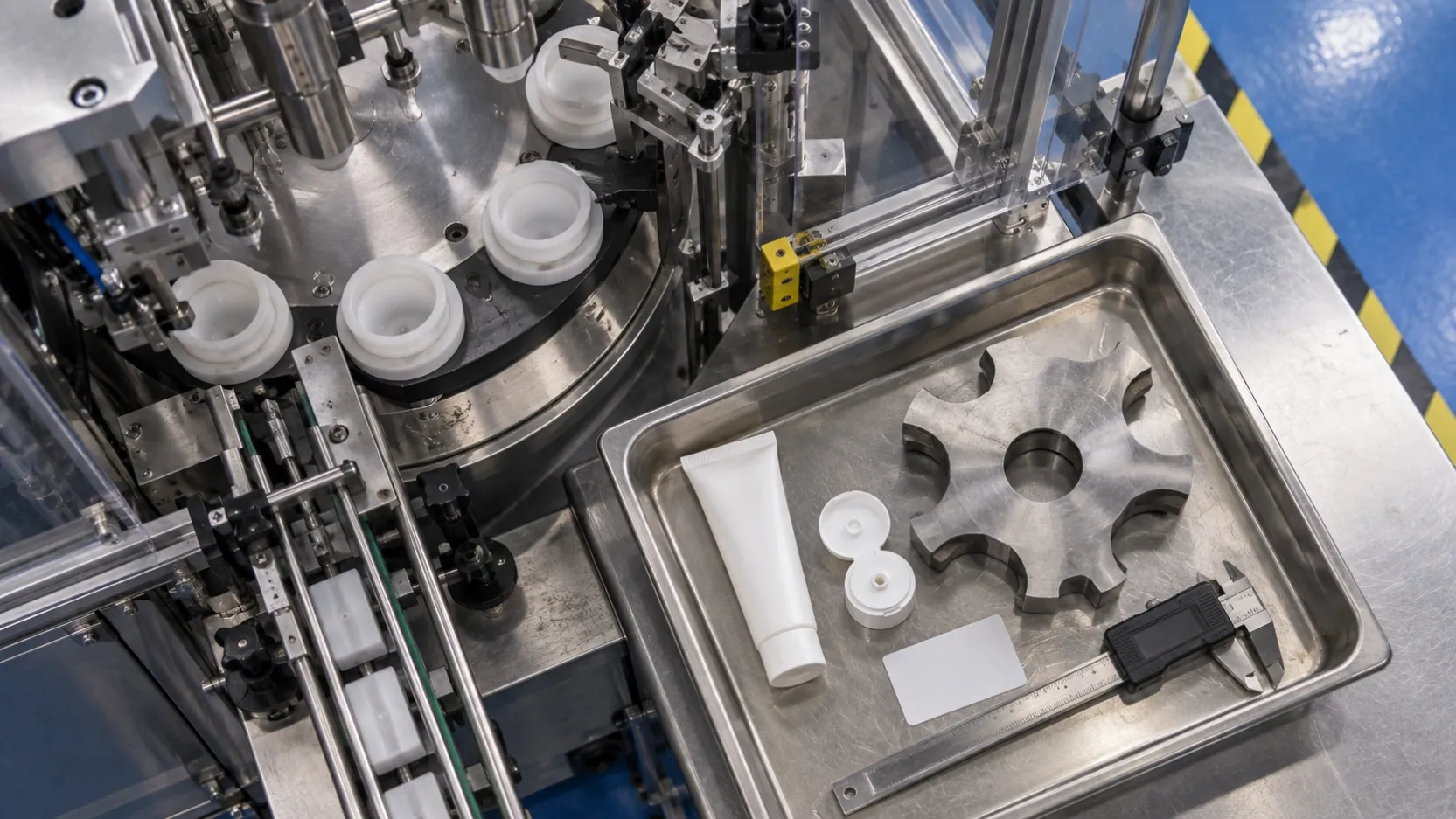
A low component price can create higher costs if the pack leaks, deforms, blocks, dispenses poorly or needs manual filling. Give the ODM the actual pack type, fill size, closure, decoration and expected supplier. If packaging is undecided, ask for clearly labeled options rather than one blended unit price.
Plan skincare packaging compatibility testing with the market-ready formula and component. It answers a different question from visual incoming inspection.
5. Give both the first order and the forecast
MOQ is not only a factory preference. It can be driven by a UV-filter or specialty-material purchase, a custom tube print run, a filling-line setup or the amount needed for testing and retention. Tell the ODM the first-order target and a realistic annual forecast. This helps separate a pilot route from a repeat-production route.
6. Make one-time and repeat costs visible
Ask the quotation to separate formula development, samples, testing, artwork or plate charges, packaging tooling, registration support, bulk manufacturing, filling and freight. A lower first unit price may hide more one-time charges or exclude required work.
7. Define the approval and change boundary
State who approves formula, pack, artwork and testing decisions. Also agree which changes require a new quote. A different pack supplier, fill size, protection claim or formula revision can change both cost and schedule. Tie the commercial quote to the same version used in stability testing.
How to compare two sunscreen quotations fairly
Normalize the assumptions before comparing the total. Use the same market, formula route, claim direction, pack, quantity, test scope and Incoterm or delivery boundary. Then check:
- Which work is included, optional or excluded?
- Are tests quoted as estimates or confirmed third-party fees?
- Is packaging based on a stock component or a custom order?
- Does the unit price include filling, coding and secondary packing?
- What event triggers a revised price or a new sample round?
- Which payment, lead-time and validity terms apply?
A quote is ready for comparison only when the scope is comparable.
FAQ
Can an ODM quote sunscreen before the formula is final?
Yes, but it should be presented as a range with clear assumptions. A firmer quote usually follows agreement on the market, formula route, protection direction, pack and quantity.
Does a higher SPF target always mean a higher unit price?
Not automatically. Formula design, permitted materials, sensory target, test route, pack and production scale interact. Ask the manufacturer to explain the assumptions rather than using SPF alone as a price shortcut.
What usually changes sunscreen MOQ?
The main drivers can include material purchasing, packaging MOQs, filling-line setup and the quantity needed for testing or retained samples. The limiting factor is project-specific.
Need a quote brief your ODM can price?
BIO-TIDE can help evaluate:
- Launch market
- Protection and claim direction
- Formula and packaging route
- Order quantity and test scope
Review My Sunscreen Quote Brief